
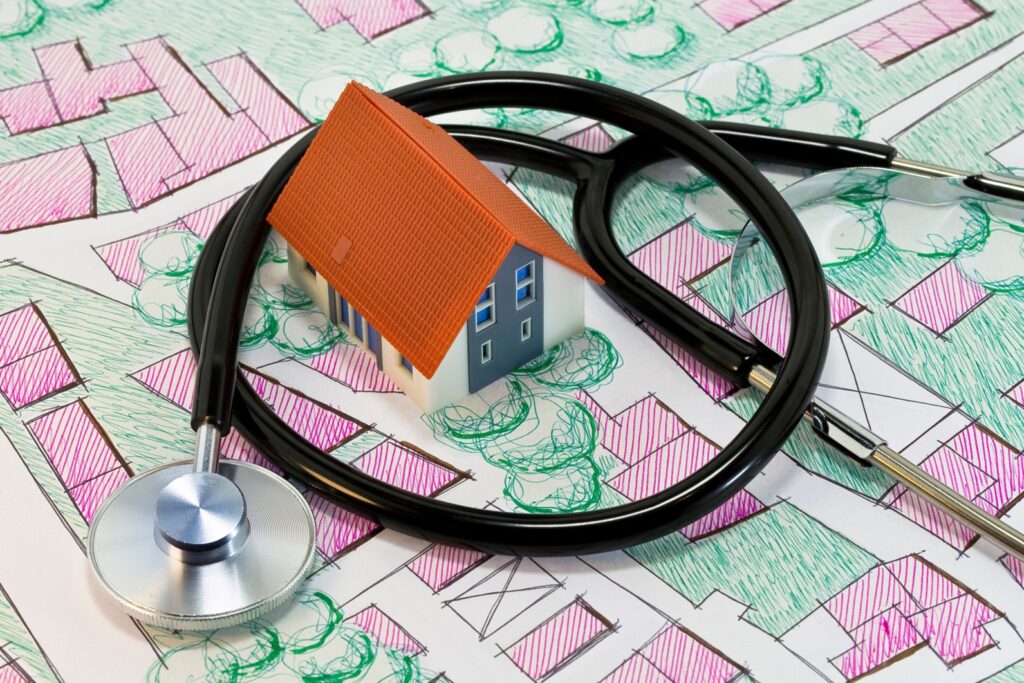
A new Curia report on healthy homes argues that the fastest way to ease NHS pressures is through warmer, safer, better-designed homes – with insights from Peter Dowd MP and local leaders across the North West.
Curia’s new Healthy Homes, Healthy Communities report delivers a clear message: improving Britain’s housing is no longer a matter of urban planning alone. It is a central health challenge, one that shapes everything from life expectancy to NHS demand. Drawing on the first Sprint Workshop held as part of Chamber UK’s Get Britain Growing North West Conference, the report sets out how poor-quality homes deepen inequality and place avoidable pressure on hospitals, primary care, and social care systems.
The argument begins with a simple but powerful observation. A person’s home is the setting where health is either protected or undermined. Cold rooms, damp walls, unsafe layouts, limited accessibility, and fuel poverty are not merely discomforts; they drive respiratory illness, cardiovascular disease, falls, excess winter deaths, and loneliness. These harms disproportionately affect deprived and ageing communities, reinforcing cycles of disadvantage.
Curia frames this as a question of fairness. If people in the most vulnerable areas are the ones most likely to live in unhealthy homes, then tackling those environments is a moral, economic, and public health necessity. The report challenges national and local leaders to stop treating housing and health as separate policy streams and instead recognise the home as foundational infrastructure for a thriving society.
What the Healthy Homes Sprint Found
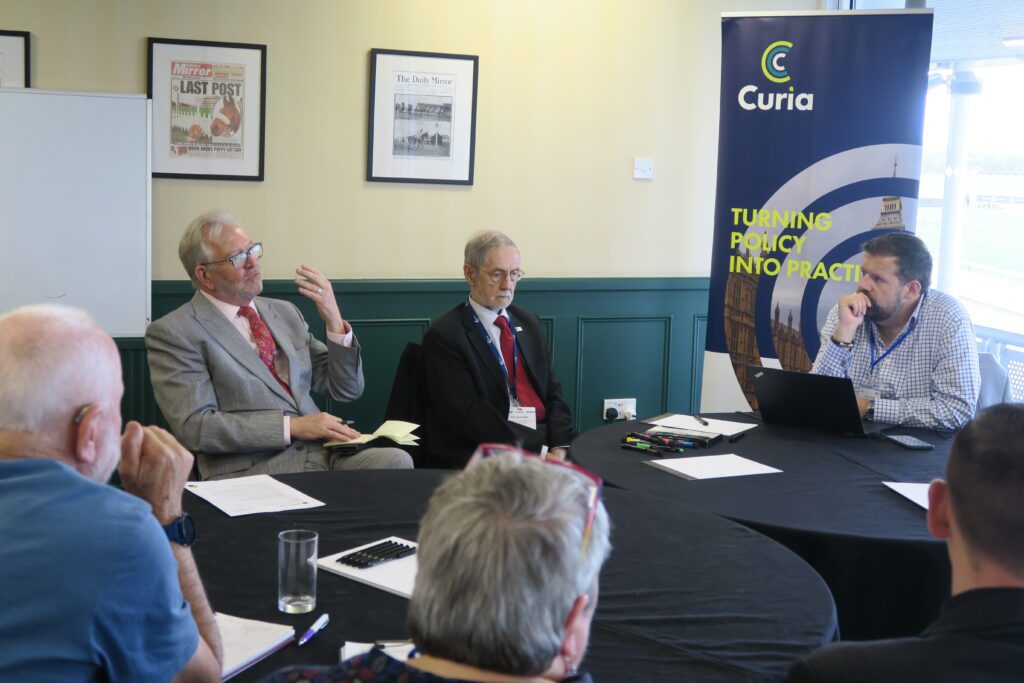
The workshop brought together local authority leaders, housing specialists, NHS representatives, planners, and innovators to interrogate the links between home environments and health outcomes. Among those contributing to the discussion was Peter Dowd MP, who emphasised how small, proactive interventions – such as the widespread introduction of smoke alarms decades ago – can significantly reduce harm when embedded at scale. His reflections underscored the workshop’s central ambition: moving from diagnosing problems to implementing practical solutions.
One of the key contributions came from Sefton Councillor James Hansen, who presented the group’s emerging framework: Pathways to Healthy Homes. This model sets out two interdependent priorities that must be tackled together if the country is to reverse the effects of unsafe and inefficient housing:
- Creating New Healthy Homes – ensuring future housing developments are designed to prevent health inequalities before they arise, incorporating high standards for air quality, accessibility, daylight, insulation, and sustainability.
- Improving Existing Homes – addressing the large stock of cold, damp, and structurally unsafe properties that currently fuel illness and disadvantage across the North West and beyond.
These pathways rest on a shared vision of the home as an active contributor to wellbeing rather than a neutral backdrop. Achieving this requires rethinking planning systems, construction standards, and community engagement so that every new or upgraded home supports physical and mental health, independence, and social connection.
Workshop participants highlighted the diverse health issues linked to poor housing: asthma and COPD, anxiety and depression, injuries from falls, digital exclusion, and the broader stresses associated with fuel poverty. Retrofitting emerged as one of the highest-value interventions, reducing hospital admissions, improving energy efficiency, and lowering household costs – all while supporting the shift to a low-carbon economy.
Crucially, the workshop made clear that healthier homes are not simply an aspiration; they are a cost-saving measure. The Building Research Establishment estimates that poor housing costs the NHS more than £1.4 billion per year. Curia’s report argues that even modest interventions could significantly reduce that burden.
From Retrofitting to Planning Reform
The report sets out a comprehensive set of reforms spanning planning, construction, regulation, and community co-design. These include:
- Embedding the Future Homes Standard within local plans so that new builds meet higher thresholds for energy efficiency and environmental safety.
- Mandatory Health Impact Assessments for major planning applications, enabling local authorities to assess how proposed developments will influence long-term population health.
- A strengthened Warm Homes Plan, replacing fragmented regional schemes with a single national framework designed to target fuel poverty more effectively.
- Expansion of Home Improvement Agencies, which provide practical support for older and disabled residents who need adaptations to live safely and independently.
- A national focus on indoor air quality, including proposals for a public register of volatile organic compounds and wider use of affordable home sensors.
These reforms demonstrate the breadth of action required – from regulating the materials that go into a home, to funding retrofits, to embedding public health expertise directly into planning committees. The report also recognises the importance of digital inclusion, noting that many modern home safety and heating systems rely on connectivity that some households lack. Tackling digital exclusion is therefore essential for ensuring that vulnerable groups benefit from modern technologies designed to keep homes safe and warm.
How National, Regional and Local Leaders Can Act
Curia’s report is deliberately structured around shared accountability. Improving homes at scale cannot be left to one department or sector. Instead, the report calls for co-ordinated action across national government, integrated care systems, combined authorities, and local councils.
Nationally, Curia proposes a Healthy Homes and Prevention Taskforce, bringing together the Department of Health and Social Care, the Ministry of Housing, Communities and Local Government, and the Department for Energy Security and Net Zero. This taskforce would align funding, regulation, and policy goals – areas that have historically operated in silos.
At the regional level, the report recommends Healthy Homes Partnerships across ICS footprints. These would pool budgets, share data, and co-ordinate joint programmes such as retrofitting, home adaptations, and community-based prevention schemes.
Locally, the report urges councils to embed public health officers within planning and housing teams, expand local Healthy Homes Hubs, and invest in participatory design processes that give residents real influence over neighbourhood change.
A New Direction for Fairer, Healthier Communities
Curia’s Healthy Homes, Healthy Communities report draws a direct line between Britain’s housing crisis and the health inequalities that hold communities back. Its conclusions are clear: the home is healthcare infrastructure and improving it should be treated with the same seriousness as investing in hospitals or clinics.
With contributions from Peter Dowd MP and leaders across the North West, the report sets out an ambitious but practical roadmap for national, regional, and local action. If implemented, its recommendations could reduce NHS demand, lower energy bills, improve independence for older residents, strengthen communities, and help ensure that every person – regardless of postcode – has the chance to live well, safely, and with dignity.
To find out more about Curia’s Health, Care, and Life Sciences Research Group and the Housing and Infrastructure Research Group, contact Partnerships Director, Ben McDermott at ben.mcdermott@chamberuk.com