

Dr Melinda Rees
CEO, PsyomicsDelivering the NHS’s 10 Year Health Plan for mental health will depend on scalable collaboration and clinically grounded digital assessment tools like Psyomics’ beseenTM, which helps capture patient need once, early, and consistently so clinicians can act faster and focus time where it matters most.
Partner content: Psyomics is a member of the Curia, Health, Care, and Life Sciences Research Group.
The NHS’s 10 Year Health Plan for England promises better access and prevention in mental health. However, delivering it will depend on new models of collaboration and technology like Psyomics’ digital assessment platform, beseenTM, which brings clarity, speed, and consistency in care to six million adult NHS patients (soon to launch for children’s mental health and neurodiversity, too).
Mental health has moved from the margins to the centre of NHS reform. The 10 Year Health Plan for England’s focus on prevention, early intervention, and digital access reflects a recognition that mental health must be treated with the same urgency and precision as physical illness.
For too long, the system has relied on crisis management rather than prevention, and on overstretched professionals forced to navigate incomplete information. Now, the challenge is delivery: translating national ambition into everyday reality for patients and clinicians.
The Secretary of State for Health and Social Care’s plan calls for three major shifts – from hospital to community, analogue to digital, and sickness to prevention. Nowhere are these more urgent or more achievable than in mental health.
The Access Gap
Demand for mental health services has never been higher. Waiting lists for children, adults, and neurodiverse patients have surged, with many waiting months for assessments or therapy. Clinicians spend valuable time gathering basic information, patients are rarely able to access mental health services outside office hours, while patients repeat their story multiple times before receiving appropriate support.
The result is a system overloaded at the front door and inconsistent in outcomes. Delivering the NHS’s new commitments to mental health – faster access, earlier intervention, and prevention – requires a new way of thinking: intelligent triage, structured assessments, and scalable digital infrastructure.
This is where Psyomics’ work is transformative.
The Psyomics Model: From Assessment to Action
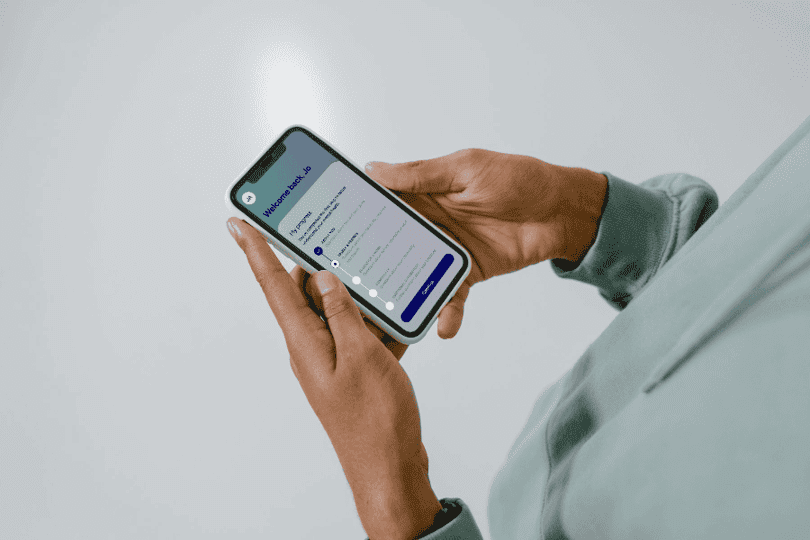
Psyomics’ digital platform, beseenTM, created by clinicians and scientists from the University of Cambridge, bridges the gap between patient need and clinical capacity. Its model is simple but powerful: use structured, biopsychosocial assessments to capture each patient’s story once, in depth, and share it with the right clinician at the right time.
“Digital innovation isn’t about replacing clinicians – it’s about giving them time back to care.”
The platform allows patients to record symptoms, social factors, and life context before their appointment. Clinicians then receive a clear summary highlighting potential risks, comorbidities, and suggested pathways, allowing faster, better-informed decisions.
This approach has been shown to
- Reduce waiting times by enabling clinicians to prioritise complex cases.
- Improve engagement by reducing the need for patients to repeat their story.
- Increase accuracy in diagnosis by identifying patterns and comorbidities early.
- Support equity by standardising assessments across age, gender, and socioeconomic background.
From community mental health teams to talking therapy services, children’s mental health services, and neurodiversity pathways, Psyomics is demonstrating that innovation – when clinically grounded and ethically implemented – can directly advance the 10 Year Plan’s aims.
Delivery Through Partnership
What differentiates Psyomics’ approach is not just technology, but collaboration. The company’s success in supporting NHS trusts lies in how it integrates with existing care pathways, EPRs, and works with clinicians as partners, not vendors.
Each deployment is co-designed with NHS teams to reflect local priorities, workforce capacity, and patient demographics. This aligns directly with the Government’s wider vision for local delivery within a national framework.
The NHS is rightly cautious about risk and safety, and partnership models like Psyomics’ show that innovation can be introduced to provide increased caseload and waitlist visibility. By embedding evidence-based evaluation, transparent governance, and measurable outcomes from day one, the platform provides what policymakers are calling for: accountable innovation that delivers real-world results.
Prevention as Practice
One of the core ambitions of the 10 Year Health Plan is prevention – identifying and addressing problems before they escalate. Mental health is the most compelling case for this shift.
Digital assessment tools allow early detection of psychological distress, social risk factors, and potential comorbidities. This helps clinicians intervene sooner, reduce crises and connect patients with community-based support rather than acute services, such as the Emergency Department.
“Every early assessment is a step towards prevention – and prevention is the foundation of productivity.”
In adult community care, the Psyomics platform captures nuanced information about mood, trauma, sleep, and family dynamics – turning the patient’s voice into structured data that clinicians can act upon. In children and young people’s services, it enables earlier triage and more tailored interventions, giving families faster answers and reducing stress during long waiting periods.
Prevention is no longer just a public health concept; it is becoming operational through tools like these.
The Future of Shared Delivery
The NHS’s next decade will be defined by delivery – by the ability to turn aspiration into measurable change. In mental health, that means scaling what works.
To achieve this, health leaders must
- Empower ICSs to adopt proven technologies that improve access and equity.
- Invest in digital-first pathways that free clinical time for complex care.
- Measure success by outcomes, not activity, ensuring prevention is rewarded.
- Build ethical confidence, ensuring AI and data use are transparent, fair, and co-designed with patients.
The NHS cannot do this alone. It will take a network of partners – innovators like Psyomics, clinicians, academic experts, and community organisations – to make prevention-led, data-informed mental health care a national reality.
From Vision to Impact
The early progress of the 10 Year Health Plan shows that reform is possible when delivery is shared. Mental health can and should be the leading example: a field where technology, clinical expertise, and patient voice come together to deliver lasting change.
As Psyomics’ experience shows, innovation is not an end in itself but a means to deliver faster, fairer, and more compassionate care. The future of the NHS will be measured not by plans written, but by lives improved.