

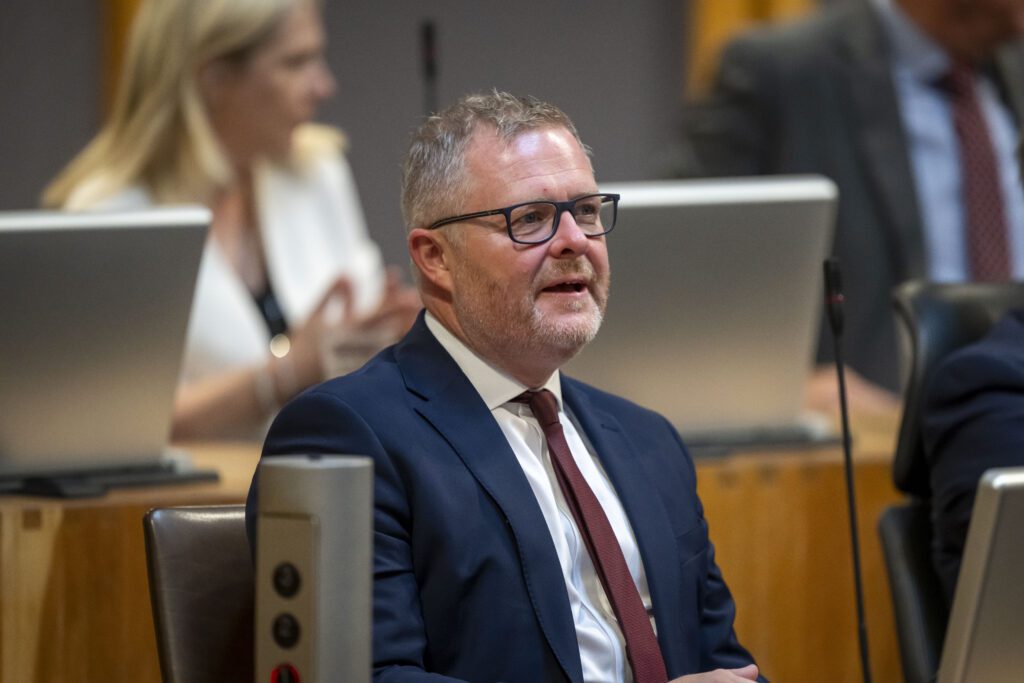
Jeremy Miles MS/AS
Cabinet Secretary for Health and Social Care, Welsh GovernmentThe Welsh Government is building a community-first NHS in Wales by shifting care closer to home, prioritising prevention, integrating services across professions, and investing in workforce wellbeing to create a healthier, more accessible system for all.
At the heart of the Welsh approach to health and care services is a belief that we should provide as much care as possible as close to people’s homes as possible.
We are designing services to support people to live healthy, independent and fulfilled lives, with an emphasis on preventative healthcare, using the skills of our talented NHS workforce.
We’re building health services around communities, rather than expecting communities to fit around services.
We’re doing this because the majority of people will receive most of their NHS care in primary care, not in hospital.
Our approach is evident in the work we’ve undertaken to transform primary care services – from pharmacy to optometry – as we’ve moved more care into local communities to make it easier for people to access NHS services.
In April, we will introduce a new dental contract, which will prioritise people who need active treatment rather than automatically recalling everyone every six months, whether they need treatment or not. It will be fair for patients and fair for dentists.
Our reforms are captured in our Primary Care Model, which has seen Wales move away from the traditional model where your GP surgery operates in isolation. It sees GPs working alongside nurses, pharmacists, physiotherapists, mental health practitioners and social care professionals. These teams know their communities and can provide seamless, joined-up care that addresses not just immediate health concerns, but the wider factors that keep people well.
Our investment continues in strengthening community-based social care services and improving hospital discharge processes, meaning people leaving hospital get the support they need at home. It also means people can remain independent for longer, and families caring for loved ones can get co-ordinated support rather than navigating a maze of different services.
We have brought in new legislation and provided significant funding to expand the range of services delivered in primary care optometry.
The focus is to improve access to eye health services in the community and in hospitals, enabling patients to access services delivered by the right professional, in the right place, across the entire eye care pathway of primary care optometry and specialist hospital eye care.
Embracing digital innovation is key going forward. Our virtual consultations programme has expanded dramatically, giving people the option to see specialists without lengthy travel. Our AI-supported diagnostic tools are helping clinicians spot conditions earlier. These are genuine improvements that respect people’s time while delivering excellent care.
Dedicated professionals who make our NHS work in Wales
None of this is possible without the dedicated professionals who make our NHS work every day. That’s why workforce planning sits at the absolute heart of our strategy.
We’ve expanded medical school places and created new routes into healthcare professions. Our Train, Work, Live campaign showcases Wales as an outstanding place to build a healthcare career, and we’re seeing encouraging results in recruitment.
We continue to invest in our workforce through enhanced training opportunities, better career pathways, and improved working conditions. We’re supporting staff wellbeing because we know that healthcare professionals who feel valued and supported deliver better care.
The best healthcare system is one that keeps people healthy in the first place. Our public health initiatives are about building foundations for lifelong wellness, starting from the earliest years.
We’re also tackling health inequalities head-on, recognising that where you live and your circumstances shouldn’t determine your health outcomes. Our programmes address obesity, smoking and alcohol misuse, but they also tackle the factors that impact our health – housing, employment, education and community cohesion.
Our community-based approach means public health isn’t something done to people – it’s something we create together. Community health teams work with local organisations, schools and businesses to create environments where healthy choices are easy choices.
We haven’t forgotten waiting times – timely access to treatment is a priority for the public and for me.
We are making real progress in reducing the longest waits and the overall waiting list thanks to targeted investment, changes to the way planned care is delivered to make the NHS more productive, and an unrelenting focus on driving down waiting times.
There’s still work to do, especially in some parts of Wales. But improvements are well underway, with a focus on reducing waiting times, investing in our workforce, prioritising prevention and integrating services. This will benefit everyone in Wales.
I see the dedication of our healthcare professionals and the resilience of communities across Wales. Together, we’re creating a healthier Wales for everyone.
To download the full journal or purchase a print copy of Chamber UK, visit: www.chamberuk.com/publications