
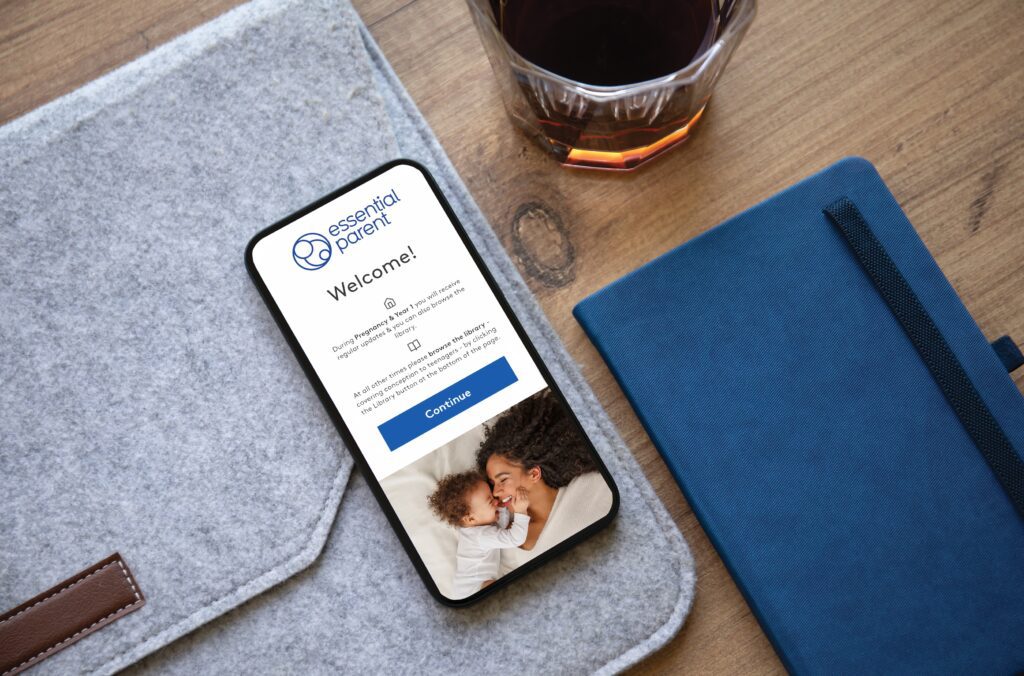
Partner content: Essential Parent shows how multilingual, preventative digital tools can reduce inequalities, support overstretched staff, and deliver strong economic returns.
From Theory to Practice: Prevention That Actually Delivers
The new women’s health report sets out a clear argument: investing in women’s health is not a cost centre, but an engine for growth, fairness, and workforce sustainability. Yet for all the modelling and macroeconomics, policymakers are entitled to ask a simple question – where is this happening in practice?
One of the most instructive answers comes from a case study included in Curia’s recent report The Women’s Health Dividend: the Economic Case for Action in the UK from Essential Parent. It is not a speculative pilot or a glossy app looking for a problem. It is a live, independently evaluated service[1] already operating across multiple systems, and it directly informed the report’s conclusions about what works.
Essential Parent’s mission is straightforward but ambitious. It creates localised, multilingual apps that function as digital prevention tools, supporting pregnancy, infant feeding, neonatal health, early child development, and the wider women’s health agenda. The focus is prevention, equity, and productivity – what the report calls a “Women’s Health Dividend”.[2] In other words, if you design targeted interventions properly, you can improve outcomes for women and families while strengthening the workforce and delivering a positive return on investment.
A Greater Manchester Case Study that Shaped National Thinking
The Greater Manchester pilot conducted by Essential Parent1 is one of the clearest examples of that dividend in action, and it is why the case study features in the report’s evidence base.
Greater Manchester Combined Authority commissioned Essential Parent to deliver a digital health library aligned with its 8-Stage Early Years Model. The offer was comprehensive: more than 2,000 clinician-authored articles and videos on pregnancy, infant care, child health, and women’s health. Midwives, health visitors, and early years staff could “prescribe” tailored digital bundles through a secure system, while parents accessed everything via a personal “My Content” dashboard. Generic content could be sent automatically, and local NHS and council materials could be co-branded and embedded so families saw a joined-up system rather than a maze of disconnected services.
From 2021, the programme was piloted in Bury Council and Rochdale Borough Council and evaluated independently by Health Innovation Manchester, with oversight from a steering group feeding into the Greater Manchester School Readiness Board. That governance structure matters: this was not a tech trial running in isolation, but a system-level intervention scrutinised by local leaders. The findings went straight into the national report because they showed, with real numbers, what many strategies still only promise on paper.
Narrowing Inequalities, Not Widening Them
One of the great fears around digital health tools is that they risk entrenching inequality. Those with the best devices, data plans, and digital confidence benefit most; those already at the margins fall further behind. The Greater Manchester evaluation suggests that it does not have to be that way.
Parents without English as a first language were significantly more likely to register for Essential Parent than census data would predict. In Bury, 9.4 per cent of registrants were from non-English speaking backgrounds, compared with 3.1 per cent in the wider population. In Rochdale, the figures were 15.2 per cent versus 5.7 per cent. That is not a marginal shift – it is strong evidence that a multilingual, locally embedded offer can actively narrow access gaps for English for Speakers of Other Languages (ESOL) and minority ethnic families.
For a report focused on the economic and moral costs of regional and demographic disparities in women’s health, such as that published by Curia, this matters. It shows that carefully designed digital tools can be part of the solution, not just another source of inequity. It is one reason the report calls for each integrated care system to procure multilingual women’s health apps with local signposting as part of a wider inclusion agenda.
Freeing-up Frontline Time and Generating a Real Return
The workforce story is just as compelling – and just as important to the Curia report’s wider conclusions about productivity.
By automating information packs and replacing printed leaflets with digital prescribing, the pilot freed up around 1,100 staff hours over just 12 weeks across 51 staff. When annualised, that equated to roughly £183,000 of capacity released across the two localities. At a time when midwifery, health visiting, school nursing, and early years teams face chronic vacancy pressures, this is not a nice-to-have efficiency gain; it is a precondition for being able to focus limited time on families with complex needs.
The economic evaluation told the same story. After costs, the net benefit was around £68,800 per locality, with a recurring return on investment estimated at about 4:1. That is entirely consistent with the Curia report’s broader modelling, which shows that targeted women’s health interventions – whether in contraception, heavy menstrual bleeding or menopause support – routinely deliver benefit–cost ratios well above 2:1.[3] Essential Parent’s experience helped validate that modelling in practice.
Staff feedback reinforced the numbers. Professionals rated the platform highly for usefulness and quality and reported using it weekly or even daily. Their comments were simple but telling: parents could access evidence-based information safely in one place; resources were easy to share; and digital “packs” reassured families that the guidance they received was trustworthy and clinically grounded. This combination of professional confidence and parental trust is precisely what national strategies say they want to cultivate.
From One Case Study to a National Delivery Model
Since the Greater Manchester pilot, Essential Parent has expanded across London, Birmingham, Cheshire, and Merseyside, while remaining integrated in the original localities. Shifting from a purely web-based system to the web-based system integrated into apps, the apps now include translation into more than 100 languages, data analytics for commissioners, a research section funded through National Institute for Health and Care Research (NIHR) to support inclusive recruitment, regional public health alerts, and automated content pathways across maternity, health visiting, school nursing, and immunisation services.
In the context of Curia’s women’s health report, this evolution is not just a growth story for a single company. It shows that a co-commissioned, multilingual digital tool can be commissioned once and scaled across integrated care boards, NHS Trusts, local authorities, Women’s Health Hubs, and Family Hubs. It gives practical expression to some of the report’s key recommendations: using neighbourhood hubs as platforms for standardised, evidence-based information; lifting frontline capability through digital tools that free staff time; and embedding prevention in the everyday fabric of services rather than confining it to short-term pilots.
That is why the case study was not tucked away as a side note. It formed part of the evidence that underpinned the report’s core thesis: targeted women’s health interventions can deliver a genuine “Women’s Health Dividend” – better outcomes for women, greater equity for families, and measurable gains for the NHS and the wider economy.
A Call to Act on What we Already Know
The lesson for national and local decision makers is stark. We do not need to wait for perfect data or another round of pilots to start acting on prevention, equity, and workforce sustainability. We have live examples – like Essential Parent – that show it is possible to reach those furthest from services, support overstretched staff, and deliver a clear financial return.
If Curia’s women’s health report is to be more than another document on the shelf, commissioners and policymakers should treat this case study as a template, not an outlier. Investing in multilingual, preventative tools that work for women and families on the ground is not a distraction from economic priorities – it is one of the most direct ways to achieve them.
This article was sponsored by Essential Parent. For further information about the Essential Parent programme, contact diana.hill@essentialparent.com.
[1] Health Innovation Manchester. Evaluation Report: Essential Parent Bury and Rochdale Pilot, October 2021. Bradley Quinn, Director of Insight, HIN. Caroline O’Donnell, Intelligence Analyst, Health Innovation Network
[2] The Women’s Health Dividend: the Economic Case for Action in the UK
[3] The Women’s Health Dividend: the Economic Case for Action in the UK