


Deiniol Brown
Reporter – Politics UKThere were a number of stereotypes I had been told before attending this year’s Lib Dem party conference.
Among the discussions, the theme of Liberalism emerged as a central point of debate.
Firstly, that it was full of old white men in sandals and ill-fitting Hawaiian shirts, and secondly, that everyone in attendance would have very similar yet mutually exclusive interpretations of obscure tax policies.
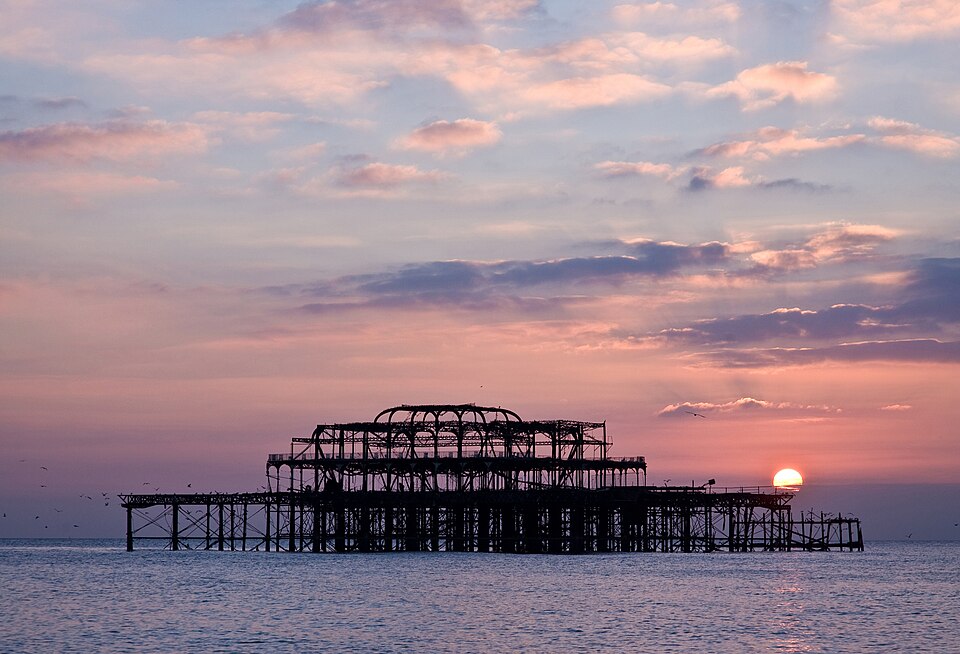
Upon entering The Grand Hotel on Brighton’s seafront, I found the accuracy of these stereotypes to be staggering. The sea of polite pensioners milling around and taking full advantage of the free bowls of chips made the conference’s wistful backdrop seem an apt choice of location.
However, as I shuffled with the crowds between different talks, I was surprised by the quality and depth of the debates happening around me. Alongside self-deprecating jokes about Richmond upon Thames, discussions of the values that underpin our state and society took centre stage — something I rarely see in British party political discourse.
Stand Before You Can Run
Despite this, the traditional criticism of the Lib Dems — that they (let alone the public!) don’t know what they stand for — really shone through.
The enthusiasm and depth of the debates on panels, which would often descend into excruciating audience interaction by the end, belie the lack of clarity the party has in its ideology and its policy offerings.
Beyond a conviction that liberalism, in an enormous variety of forms, is the best political ideology for Britain, the party’s base seemed devoid of identity and wholly underprepared for the contemporary political landscape.
While other parties offer both clear priorities and aim for a style of delivery, the Lib Dems lack either.
Immigration, fiscal responsibility, public services, the environment, you know which parties place these issues at the heart of their agendas. Natural party of government, understands the problems facing people like me, free Palestine, take our country back. These phrases each strongly evoke one of the other parties. You know which.
The closest Lib Dem equivalents are a focus on care, which is closely tied to Ed Davey’s personal history, a tilt towards the EU, and a resistance to Donald Trump and Elon Musk… This is not strong enough.
Yet, the party boasts 72 MPs and is an electoral force to be reckoned with, showing that there is a huge appetite for moderate liberal politics in Britain, and relevance could be in reaching distance.
The Strange Death of the Liberal West
The lack of vigour in the Lib Dems’ beliefs is particularly troubling at a time when liberalism around the world is in crisis.
The political philosophy that was taken for granted as the core idea underpinning Western democracy and the international system has fallen out of favour with voting publics and leaders alike.
In a world where the US has elected a movement that has constructed their image around being anti-liberal, and where young people in many countries are increasingly favouring dictatorship as a mode of government, the need for a strong, relevant case for liberalism has never been more urgent.
And now, having seen a glimpse of a post-Liberal future in the last few years, I think people may be ready to be convinced again that liberalism is the least-worst option.
The Lib Dems should be the natural home for this kind of movement. However, the absence of a clear identity, coupled with the shortage of vibrancy and momentum in the party, has restricted its abilities.
The conference struggled to turn liberal principles into solutions for the challenges Britain faces today. Members were either hung up on parochial issues of property tax or impossibly big questions of morality.
Having convincing answers to the leading issues of today, rooted in a clear liberal philosophy, would go a long way to garnering a larger, maybe younger, following. But whilst the Lib Dems tie themselves in knots over small issues and fail to nail their colours to any available mast, the liberal argument more broadly, is going unmade.
Think Harder
One ray of hope for the Lib Dems which was much discussed around the conference was the “Britain Project”, a new think tank whose launch party is being held today.
From its first publication setting out the organisation’s ‘vision’, it seems the Britain Project wants to find those strong liberal answers to today’s problems. Identifying that liberalism has been for a long time, and continues to be, at the heart of British politics, it aims to bring the liberal perspective to the foreground once again.
Unfortunately, responsibility for many of the problems plaguing the world today – societal division, inequality, global fragmentation – could reasonably be laid at the feet of liberalism. Whether that’s in the form of Thatcher’s neoliberalism or a newer Silicon Valley liberalism, it’s understandable how societies around the world are becoming increasingly sceptical of liberalism’s offering.
Therefore, “reinventing” liberalism, as the Britain Project promises to do, is not a bad start.
So, whilst liberalism is still central to many Brits’ political ideologies, my visit to the conference ultimately demonstrated that it still needs to find its feet as a future for Britain, not just as a past or fading present.
You can still get a copy of our new edition of ChamberUK. Our parliamentary journal.
Photo Credit: Diliff