


Joe Meighan
Public Affairs, European Movement UKThe Bayeux Tapestry’s late-summer visit to the UK reminds us that geography has always mattered. Keir Starmer oversaw a significant thaw in the UK’s relationship with Europe. Andy Burnham does not need to start again. The question is: how much deeper will he take it and could it lead to EU membership?
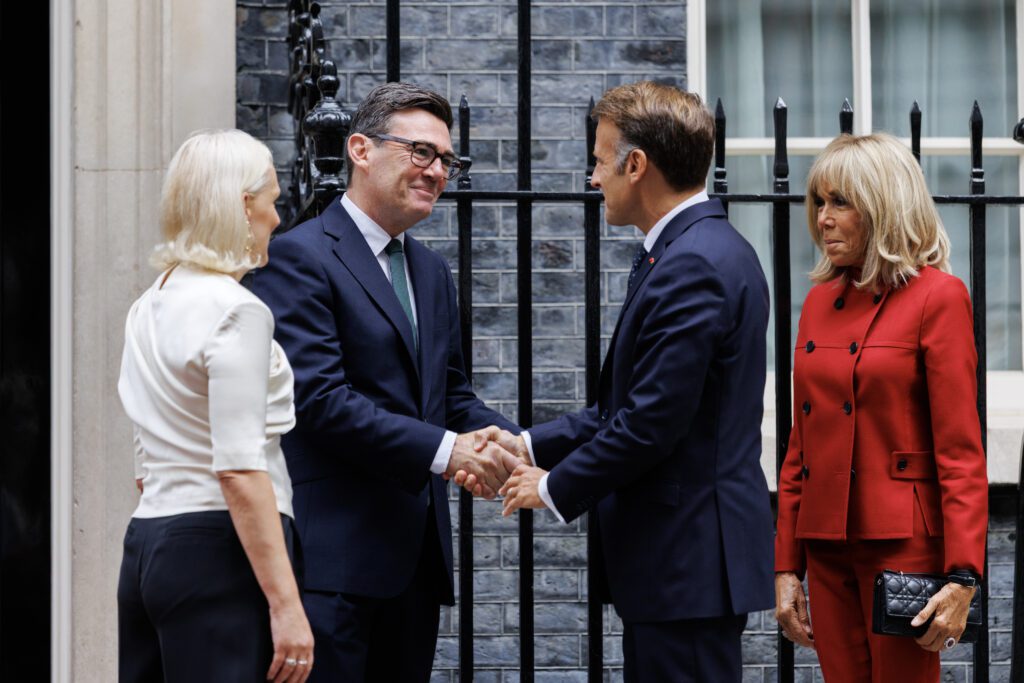
(Photo: Lauren Hurley/No 10 Downing Street)
Britain is rebuilding its European relationships. The question is where they lead.
Britain and France have spent the best part of a thousand years arguing, competing and cooperating with one another. Few countries know each other better, and few relationships matter more to Britain’s place in Europe.
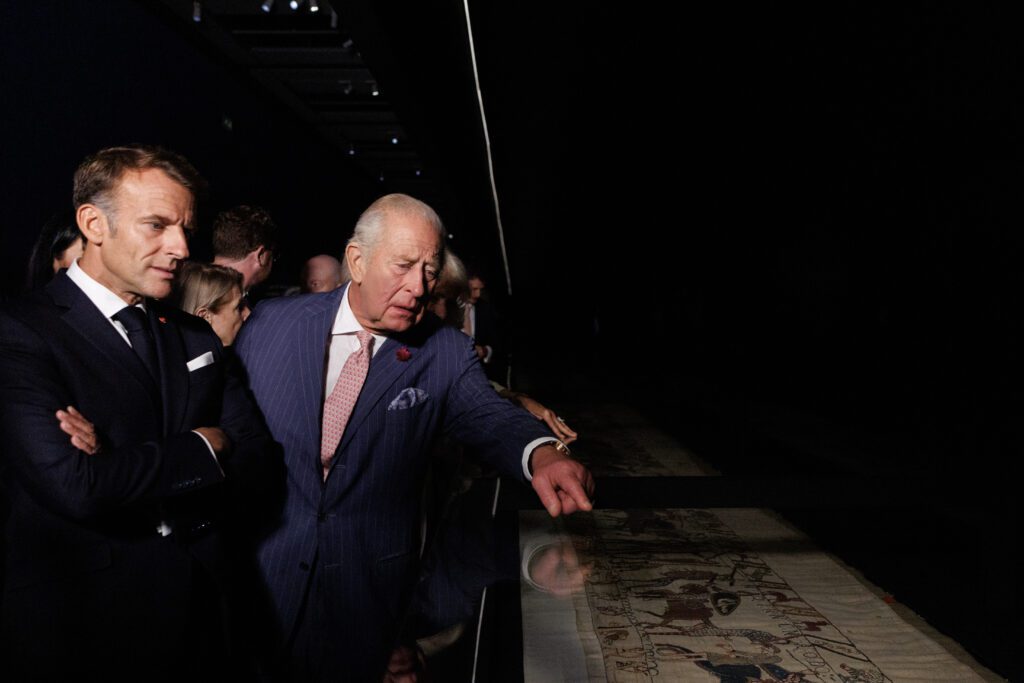
The Bayeux Tapestry’s journey to Britain is therefore a fitting backdrop to Emmanuel Macron’s visit. It depicts perhaps the most famous chapter in our shared history, not exactly one of friendship, but the story since has been of two countries becoming increasingly bound together.
Today, we are neighbours, major economies and Europe’s two nuclear powers. Our security, energy, trade and politics are deeply connected. In a world becoming less predictable, the relationship matters more, not less.
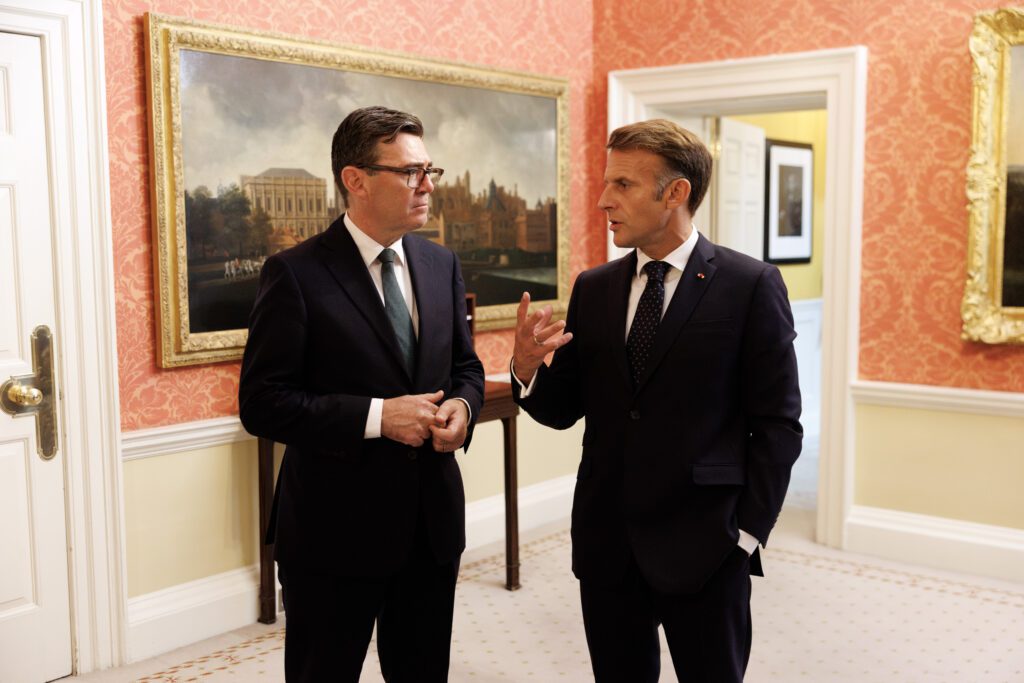
So, the question for Andy Burnham and Emmanuel Macron is not simply how they maintain the renewed warmth of recent years. It is what Britain and France can now achieve with it, and where this renewed European diplomacy is ultimately meant to lead.
From rebuilding trust to using it
Keir Starmer deserves credit for helping to repair the relationship with France. His much-discussed “bromance” with Macron was sometimes treated as diplomatic theatre, but the trust they built had practical value.
Britain and France helped lead the Coalition of the Willing in support of Ukraine and worked increasingly closely on European defence and security. Macron’s decision to award Starmer the Légion d’honneur before he left office was a rather French flourish, but also a recognition of how far the relationship had come.
Burnham does not need to start again. He inherits a relationship stronger than it has been for years. Now he needs to use it.
There is plenty on the table. Britain and France can deepen cooperation on energy, defence and Ukraine. They need to work together on migration, an issue neither side of the Channel can solve alone. France can also be an important partner as Britain tries to turn the wider UK-EU reset into concrete agreements.
There is a bigger question sitting behind all of this. If Britain increasingly recognises that its security, prosperity and influence depend on deep cooperation with its European neighbours, how long can we continue pretending that a collection of bilateral deals is an adequate substitute for being fully involved in the structures where so many of those decisions are made?
Britain is rebuilding its European relationships
France is not the only example. Britain’s relationship with Germany has also deepened significantly. The Kensington Treaty has created a framework for closer cooperation across defence, security, economic growth, migration and people-to-people links.
It is another welcome sign that Britain is rebuilding relationships damaged during the Brexit years. The same pattern can be seen elsewhere across the continent.
We are rediscovering, country by country and agreement by agreement, something that should never really have been in doubt: Britain is a European country with European interests.
Strong bilateral relationships matter. They give Britain influence. They build trust. They allow practical cooperation on defence, energy, migration and trade.
Bilateralism, though, has limits. France cannot negotiate on behalf of the European Union. Germany cannot give Britain access to the Single Market. Twenty-seven separate friendships cannot reproduce the political and economic advantages of sitting at the table as a member.
That should force us to ask a more ambitious question.
Are we content to spend the coming years negotiating individual pieces of European cooperation from the outside, seeking access here, exemptions there and a sectoral agreement somewhere else? Or should Britain begin seriously considering whether the logical destination of all this relationship-building is full membership once again?
There is a danger that we become so focused on winning individual concessions that we settle for scraps from the table when Britain could once again have a seat at it.
The reset cannot be the destination
The UK-EU reset has been a measured success. Relations are better. Trust has been rebuilt. Britain is once again approaching its European partners as partners rather than political opponents.
That matters. However, there comes a point when better relations must produce agreements and tangible benefits, and another point beyond that when we must ask whether those agreements are enough.
Reducing barriers to food and agricultural trade would help British businesses and consumers. Linking emissions trading systems and improving electricity trading make sense when our energy infrastructure is already connected. A meaningful youth mobility agreement could restore opportunities that younger Britons have lost. Greater cooperation on defence procurement and industrial capacity is increasingly essential to Europe’s security.
We should, of course, pursue all of these things. We should, though, be clear about what they are: partial solutions to a much bigger problem.
For too long, the British debate has treated every small piece of closer European cooperation as an end in itself: an SPS agreement, an energy deal, a defence partnership or a mobility scheme. Each is valuable. Each is worth securing.
Taken together, they tell us something.
They tell us that Britain is steadily trying to rebuild many of the practical advantages of European membership without yet confronting the political question of membership itself. That cannot be avoided forever.
The relationship with France matters because France is one of our closest and most important partners. The relationship with Germany matters for the same reason. But these relationships should be bridges towards a deeper European strategy, not permanent alternatives to one.
The Bayeux Tapestry reminds us just how long the British and French stories have been intertwined. Almost a thousand years later, geography still matters. So do shared interests.
The reset was necessary because our relationship with Europe had become needlessly difficult. But Britain cannot remain permanently in a state of “resetting” its relationship with its own continent.
We have rebuilt much of the goodwill. We are rebuilding the friendships. We are negotiating our way back into cooperation, piece by piece.
The next question is the most important one.
At what point does Britain stop asking what scraps of European cooperation it can secure from the outside and start asking whether it should once again take its place as a full member?