

Jo Bekis
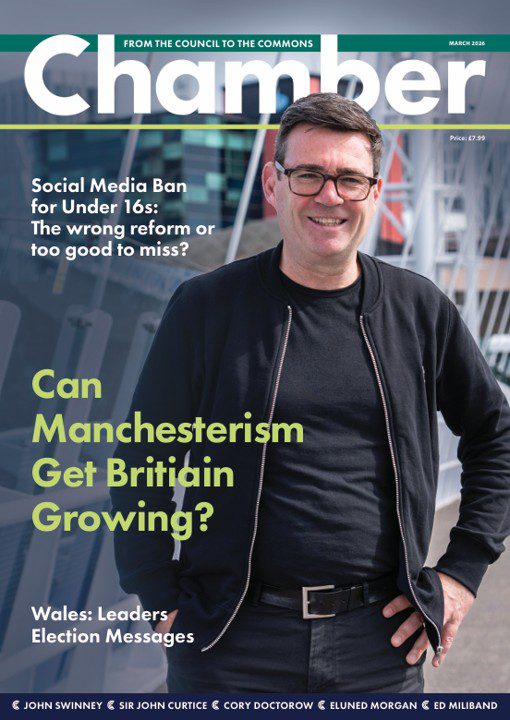
Chief Executive, UK Healthcare and Life Sciences Innovation (UKHLSI)Andy Burnham’s first address as Prime Minister did not announce a detailed NHS programme. It did, however, establish the principles that are likely to shape his government’s approach to health, care and the life sciences: prevention, devolution, public service integration and a greater focus on the social conditions that determine whether people live well. (Photo: Kirsty O’Connor/No 10 Downing Street)
Andy Burnham used his first speech outside Downing Street to promise a “new political model and a new economic model”. For health and care leaders, the most significant indication of what this could mean came in his commitment to build “a more preventative state” that invests in people’s success rather than continuing to pay for failure.
That phrase provides the clearest organising principle for the new government’s emerging health agenda.
It suggests an attempt to move beyond an NHS policy defined primarily by hospital activity, waiting lists and crisis management. Instead, health could be treated as the product of decisions made across housing, education, employment, local government, public services and the wider economy.
The central challenge will be turning that broad ambition into a deliverable programme.
Prevention as an economic policy
Burnham did not present prevention solely as a public health objective. He connected better health, employment, welfare spending and fiscal sustainability.
His commitment to provide young people with more mental health support was presented alongside plans to reform education, help more people into work and reduce the welfare bill fairly. This is a significant framing. It positions mental health investment not as an additional cost to be justified after other priorities, but as part of the country’s economic infrastructure.
That could create opportunities for a more joined-up approach between the NHS, schools, further education, local authorities, employers and employment services. It may also strengthen the case for measuring the value of health interventions through workforce participation, productivity and reduced economic inactivity, rather than through NHS savings alone.
However, a preventative state will require patience and a different approach to public spending. Prevention frequently creates benefits across several budgets and over longer periods than the annual financial cycles within which NHS organisations operate. The department funding an intervention may not be the organisation that eventually receives the financial benefit.
The Government’s promised ten-year plan will therefore need to explain how it will support multi-year investment and recognise value across health, social care, welfare and the economy.
Mental health moves closer to the centre
The direct reference to mental health support for young people was one of the clearest health commitments in the speech.
Burnham placed this within a wider argument about life chances, employment and the country’s future workforce. This may signal a mental health strategy that reaches beyond clinical services and considers early intervention, education, family support and community provision.
The test will be whether the commitment is supported by workforce capacity, sustainable funding and practical reform of fragmented pathways. Additional support cannot be delivered through aspiration alone when children and young people continue to face variation in access, long waits and difficult transitions between services.
One of Burnham’s ministerial team at the Department of Health, Professor Ann Keen, said:
“Andy Burnham’s first speech combined honesty about where politics has failed with optimism about what government can still achieve.”
As an adviser to independent policy institute Curia and its Health, Care and Life Sciences Research Group that works closely with UKHLSI, Keen continued:
“Those who know him will recognise the focus on moral purpose, devolution and practical delivery.”
That combination of moral argument and delivery focus is likely to define how the new government presents mental health reform. The expectation will be that government not only expands support but also demonstrates visible improvements in access and outcomes.
Devolution will reshape health accountability
Burnham’s promise to take power “into every postcode in the land” has major implications for the organisation of health and care.
His experience in Greater Manchester has long been associated with place-based leadership and the view that health outcomes cannot be separated from housing, transport, employment and economic development. As Prime Minister, he now appears ready to apply that philosophy more widely.
For integrated care systems, local authorities and mayoral combined authorities, this could mean greater influence over the design of services and the use of public resources. It could also accelerate the development of neighbourhood models that bring primary care, mental health, social care, public health and community support together around local populations.
But devolution creates risks as well as opportunities. Greater local freedom can enable innovation, but it can also increase variation if responsibilities, funding and national standards are unclear.
A credible model will therefore need to combine local flexibility with national expectations for access, quality, safety and outcomes. Devolution cannot become a mechanism through which central government transfers responsibility without transferring sufficient resources or authority.
Rough sleeping signals a wider health mission
Burnham said his first instruction would be to end rough sleeping.
Although presented as a social mission, this is also a major health commitment. People experiencing homelessness face severe health inequalities, complex mental health needs and significant barriers to accessing consistent care.
Making rough sleeping an immediate priority indicates that the Government may take a broader view of the factors determining health. Council housing, affordability, mental health, employment support and public services were all connected within the same speech.
For the NHS, this could encourage stronger partnerships with local government, housing providers, charities and community services. It could also reinforce the case for designing services around people whose needs do not fit neatly within a single institution or clinical pathway.

Stronger public control and the role of industry
Burnham’s commitment to place life’s essentials under stronger public control will prompt questions about how the new government views the relationship between the state and independent providers.
The speech did not set out a detailed position on private or voluntary sector involvement in healthcare. Nor did it suggest that all services would be brought directly into public ownership. However, the language indicates that affordability, accountability and public value will feature prominently in future decisions.
His commitment to use public procurement to support British industry may also have direct implications for the life sciences, medical technology and health innovation sectors.
Government and NHS procurement could be used more deliberately to support domestic manufacturing, research, digital capability and resilient supply chains. That could create opportunities for British companies, but it will require procurement models that allow innovative smaller businesses to compete and provide evidence of value.
The Government will also need to avoid creating tension between supporting domestic capability and ensuring that NHS patients receive timely access to the most effective technologies available.
A communications strategy built around authenticity
The structure and presentation of the Prime Minister’s first day were themselves part of the message.
Burnham’s former Director of Communications at the Department of Health, Sian Jarvis CB, said:
“For someone who worked for Andy Burnham in government, today’s communications were unmistakably his. Beginning with an early morning visit to a homelessness shelter before heading to the Palace and then an unscripted speech outside No.10, no notes, no autocue, he signalled that he intends to govern from the ground up rather than the top down.
“It reinforced his message that he wants to speak directly to the country rather than through the machinery of government. It was a carefully choreographed sequence, but it didn’t feel over-produced.
“It was confident, authentic and disciplined and very well executed. It was a class act.”
That approach matters for health reform because public trust will be essential to any significant change in services.
Burnham has presented his government as one that will acknowledge failure, speak plainly and focus on practical problems. Maintaining that trust will depend on whether people experience improvements in their own communities, rather than simply hearing national announcements.
The delivery test
This was a speech about direction rather than detailed policy. It established a set of values: prevention, care, devolution, public accountability and investment in people.
For healthcare, those principles could support a significant shift towards earlier intervention, integrated local services and closer alignment between health and economic policy. They could also strengthen the position of mental health, housing and community support within the Government’s wider programme.
But the risks are equally clear. Prevention can become a slogan without long-term funding. Devolution can increase variation without minimum standards. Integration can remain an ambition if organisations continue to operate through separate budgets, data systems and accountability structures.
The promised ten-year plan will therefore be the first major test. Health and care leaders will be looking for detail on funding, workforce, social care, local accountability, prevention and the role of industry.
Burnham’s first speech placed care at the heart of his government. The task now is to build the institutions, investment and delivery mechanisms capable of making that commitment visible in people’s lives.