

Paul Davies MP
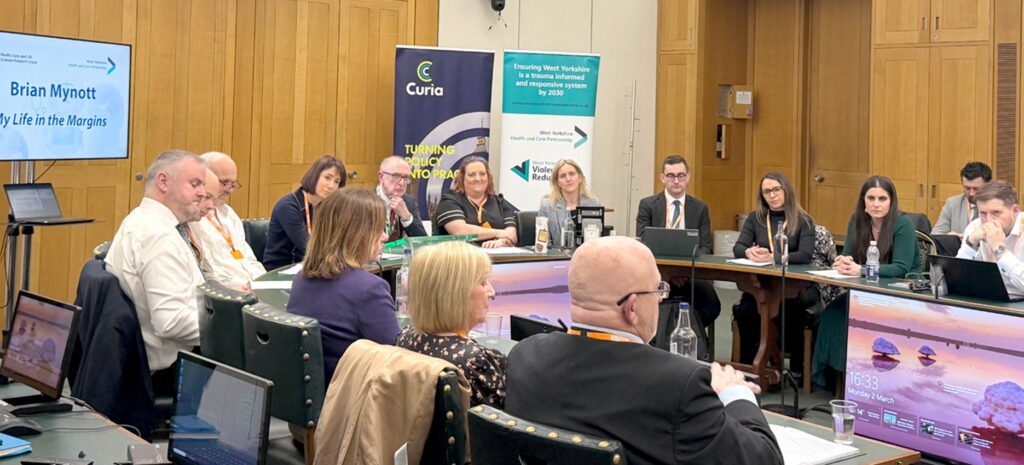
Member of Parliament for Colne Valley and Chair, All-Party Parliamentary Group for Tackling Loneliness and Connected CommunitiesThis article on Trauma Responsive Practice is taken the foreword of a joint report from Curia and UKHLSI in partnership with the West Yorkshire Health and Care partnership. The report was drafted following a Parliamentary Roundtable which took place on the 2nd of March 2026. You can find the report here.
Across Parliament and across the country, there is growing recognition that trauma responsive practice is not a niche concern for one service, profession or sector. It is a national issue that touches every part of public life, from health and education to policing, justice, employment and community life.
Trauma does not recognise departmental boundaries, political ideologies or geographic borders. It affects individuals, families and communities everywhere, and our public services are increasingly dealing with its consequences every day.
Trauma Responsive Practice Is a National Issue
The case for trauma responsive practice has never been stronger. We are living through an increasingly uncertain period, shaped by economic pressure, social instability and global conflict. These pressures are not abstract. They are felt in our communities, in our schools, in our workplaces and across our public services. If we are serious about prevention, early intervention and long-term reform, we must also be serious about understanding trauma and responding to it properly.
Trauma responsive practice is both compassionate and practical. It is an evidence-based approach that can improve outcomes, reduce long-term costs and help build stronger, healthier and more resilient communities.
Building Consensus Across Politics and Public Services
One of the most important aspects of the discussions reflected in this report is the extent to which this agenda already commands cross-party support. The parliamentary roundtable and reception, hosted by myself as Chair of the All-Party Parliamentary Group for Tackling Loneliness and Connected Communities, brought together representatives from different political parties, professions and sectors. They were united by a shared understanding that trauma affects every part of society and therefore requires a whole-system response.
This is not a party-political issue. It is a human issue, a public service issue and, increasingly, a national policy issue. The fact that leaders from health, local government, policing, academia and the voluntary sector are working together on this agenda demonstrates that meaningful change will only happen through collaboration across traditional boundaries.
The discussions also focused heavily on the North of England, and rightly so. As a Member of Parliament in West Yorkshire, I know the North faces significant challenges, including higher levels of socio-economic and health inequality, alongside significant levels of adverse childhood experiences. However, the North is also leading the way in developing trauma responsive approaches, with pioneering work taking place across West Yorkshire, Greater Manchester, Humber and North Yorkshire, and beyond.
The North of England’s Leadership in Trauma Responsive Practice
These areas are showing what can be achieved when local leaders, public services and communities work together around a shared vision. The North of England therefore provides not only a case for change, but also a model for how change can be delivered: locally led, partnership-based and grounded in lived experience and evidence.
What became clear throughout both the roundtable and the reception is that the evidence base already exists. We understand the impact of adverse childhood experiences. We understand the links between trauma and long-term health, social and economic outcomes. We understand the importance of early intervention, trusted relationships and community support. The sessions demonstrated that we no longer need to test whether trauma responsive practice works. We now need to move from evidence to action and implementation.
That is the challenge now facing policymakers, public services and communities alike. We must ensure that the learning, innovation and best practice already emerging across the North of England and across the country are not lost. They must be embedded, scaled and supported through national policy and local leadership. This will require coordination, resource and a long-term commitment to prevention and system change.
The discussions in Parliament, and captured in this report, demonstrate that if we get this right, trauma responsive practice has the potential not only to improve individual lives, but also to strengthen public services, reduce long-term demand and build healthier, more resilient communities across the country.
The task now is to move from conversation to action.

You can still get a copy of our new edition of ChamberUK. Our parliamentary journal.