
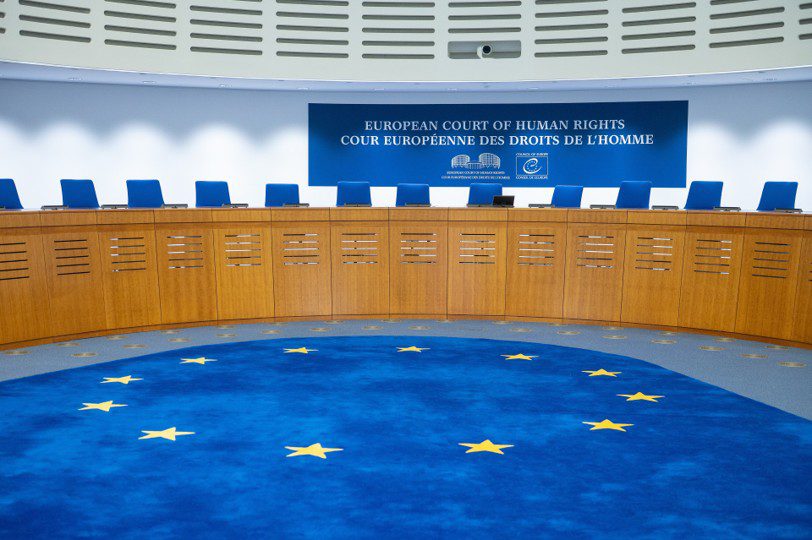
European Convention on Human Rights (ECHR) withdrawal would do little to address illegal migration while creating serious constitutional, diplomatic and security risks for the United Kingdom, according to a major new report launched this week by the Conservative European Forum (CEF).
Authored by former Attorney General Rt Hon Dominic Grieve KC, the report argues that leaving the European Convention on Human Rights has become a “false solution” to a complex and pressing challenge. Instead of pursuing withdrawal, Grieve calls for reform of the Convention’s application in migration cases, closer cooperation with European partners, and practical measures to improve returns and border enforcement.
The report, Patchwork Quilts and Threadbare Solutions: Why Proposals to Control Irregular Migration by Leaving the ECHR Would Not Work, directly challenges the growing argument within Conservative circles that departure from the Convention is a necessary prerequisite for tougher immigration controls.
According to the report, the evidence does not support claims that the ECHR has significantly obstructed the UK’s ability to deport foreign criminals or control irregular migration. Between April 2016 and June 2021, only 922 foreign national offenders successfully appealed deportation on human rights grounds, representing around 3.5 per cent of all deportation cases. Appeals based solely on Article 8 family life rights accounted for an even smaller proportion.
Since 1980, there have been only twenty-nine judgments by the European Court of Human Rights concerning removals from the UK, with just thirteen resulting in findings against the Government. The UK was found in breach of the Convention only once in 2023 and once in 2024.
ECHR Reform Rather Than Withdrawal
Rather than advocating withdrawal, the report calls for substantial reform of how Convention rights are interpreted in immigration cases.
Grieve argues that Article 3 protections concerning healthcare and prison conditions should be more narrowly applied, while Article 8 family life considerations require firmer guidance for immigration tribunals and officials. He also supports domestic reforms including changes to the Human Rights Act, a strengthened public interest test in immigration cases, and the introduction of a single appeals route modelled on the Danish system.
“The current Conservative policy to leave the ECHR is not merely flawed and incapable of delivering its stated objectives to tackle illegal migration – it is actively preventing us from developing policies that could work,” Grieve said.
The report also highlights the opportunity presented by the recent European migration summit in Chișinău, where several countries discussed reforming migration frameworks and strengthening cooperation on returns.
Among its recommendations are a new European sanctions regime targeting countries that refuse to accept the return of their nationals, closer collaboration with the European Union, and renewed UK access to key security databases including Eurodac and the Schengen Information System (SIS II).

Constitutional and Security Risks
A significant section of the report focuses on the wider consequences of withdrawing from the Convention.
It argues that leaving the ECHR would create substantial constitutional difficulties across the UK. Convention rights are embedded within the devolution settlements for Scotland, Wales and Northern Ireland, while the Belfast/Good Friday Agreement explicitly commits the UK to incorporating Convention rights into Northern Irish law.
The report warns that withdrawal could undermine political stability in Northern Ireland and provoke fresh disputes over the interpretation of the peace settlement.
Beyond domestic concerns, Grieve argues that departure from the Convention could damage Britain’s standing within the Council of Europe and potentially jeopardise aspects of UK-EU security cooperation. Existing arrangements covering law enforcement cooperation, passenger data sharing, extradition processes and access to criminal intelligence systems could all come under pressure.
The report notes that abandoning the ECHR would not remove many of the legal protections currently available to migrants, as the UK would remain bound by a range of international treaties and longstanding common law principles, including obligations relating to non-refoulement.
A European Solution to a European Challenge
The report concludes that irregular migration is a challenge shared across Europe and one that requires coordinated international action rather than unilateral withdrawal from established legal frameworks.
CEF President Sir David Lidington said the Conservative Party was right to prioritise migration but argued that proposals to leave the ECHR required much greater scrutiny. He pointed to previous examples, including the Brighton Declaration negotiations, as evidence that meaningful reform of the Convention can be achieved through political engagement.
Former Justice Secretary Sir Robert Buckland similarly argued that the UK should seize the opportunity to shape reforms already being discussed across Europe rather than embarking on a lengthy withdrawal process.
The argument for leaving the ECHR deserves a great deal more scrutiny and scepticism than it has so far received
Sir David Lidington KCB CBE
CEF Chair Stephen Hammond said the report demonstrated that leaving the Convention would solve none of the practical problems at Britain’s borders while risking lasting damage to the Union and international security partnerships.
The report concludes that any future Conservative migration strategy must move beyond what it describes as the “threadbare solution” of ECHR withdrawal and instead focus on practical reforms, stronger international cooperation and more effective administration of the asylum and deportation system. As debate over migration continues to dominate politics across Europe, Grieve’s intervention seeks to reframe the discussion around reform rather than withdrawal.

You can still get a copy of our new edition of ChamberUK. Our parliamentary journal.
Photo Credits: Mickaël Schauli and Attorney General’s Office