
Ahead of the King’s Speech tomorrow, can the Prime Minister hold onto his job? History may provide some context for Sir Keir Starmer.
In June 1995, John Major reached for one of the most dramatic weapons available to a wounded Prime Minister: he told his critics to “put up or shut up.” Facing months of internal briefing, division over Europe and a party that seemed to be slowly consuming itself, Major resigned as Conservative leader while remaining Prime Minister, forcing his opponents either to challenge him openly or fall back into line. He won the contest against John Redwood, but the deeper weakness remained. Less than two years later, the Conservatives were swept from office.
The comparison with Keir Starmer is not exact, but it is now impossible to ignore. Starmer has not resigned as Labour leader in order to recontest the job. He has not invited a ballot. But his message to Labour MPs is strikingly similar: there is a process, use it – or stop destabilising the Government.
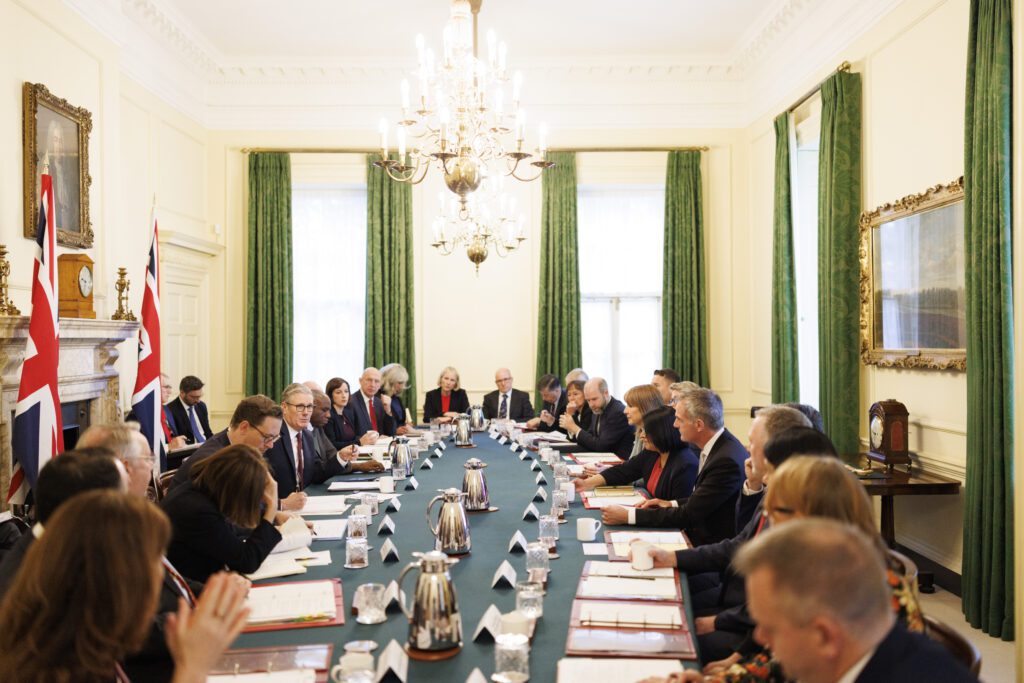
That was the essence of his statement to Cabinet today. Downing Street said Starmer told Cabinet Ministers he was not resigning, that Labour’s leadership process had not been triggered, and that the country expected the Government to “get on with governing.” He also warned that the previous 48 hours had been destabilising and had carried an economic cost.
This is the modern version of Major’s gamble. Starmer is trying to expose the gap between dissent and organisation. Labour MPs may be angry. Some may want him gone. But unless a rival can gather the required support and step forward, the Prime Minister’s argument is simple: noise is not a process.
The number matters less than the name
The danger for Starmer is that the numbers are moving. More than 80 Labour MPs have now reportedly called for him to resign or set out a timetable for departure, while Miatta Fahnbulleh and Jess Phillips have become the first ministers to resign and urge him to go. Yet the central problem for his opponents remains unresolved: a leadership challenge does not begin simply because enough MPs are unhappy. Under Labour’s rules, a contest can be triggered if the leader resigns or if 20% of Labour MPs nominate a challenger.
That distinction is crucial. A rebellion against a leader is not the same thing as a campaign for an alternative. Labour’s critics of Starmer appear to share a diagnosis – that the Prime Minister has lost public trust after damaging election results – but they do not yet appear to share a single prescription. Some look to Wes Streeting. Others may prefer Angela Rayner. Others would like time for Andy Burnham to return to Parliament. That division gives Starmer room to survive, at least for the next couple of hours.
This is where the Major analogy becomes useful. Major did not win in 1995 because he resolved the underlying problems of his party. He won because he forced his critics to reveal whether they had the numbers, the candidate and the courage to act. Starmer is attempting something similar without calling a contest himself. His line is: if you can replace me, do it properly. If not, stop weakening the Government.
Tomorrow’s King’s Speech has changed meaning
Under normal circumstances, the King’s Speech is a programme for government. It marks the start of a new parliamentary session and sets out the Government’s proposed policies and legislation. This year’s speech is scheduled – some may say purposefully – for Wednesday 13 May 2026.
But tomorrow it will be read through a very different lens. It will not simply be judged as a legislative agenda. It will be judged as a survival document.
The expected programme is not insignificant. House of Commons Library analysis suggests possible legislation on asylum reform, British Steel nationalisation, financial services, digital ID, Special Educational Needs and Disabilities reform, energy independence, water sector reform, the abolition of NHS England and wider reforms connected to the 10 Year Health Plan, as well as criminal justice and national security measures.
In calmer times, that would be the story: a Government trying to move from diagnosis to delivery. In the current climate, every line will be read politically. Does the speech show grip? Does it speak to voters who have turned away from Labour? Does it give anxious MPs something to defend on doorsteps? Does it suggest that Starmer has heard the scale of anger inside and outside his party?
If the answer is yes, the King’s Speech may buy him time. If the answer is no, it may accelerate the sense that the Government is continuing in office but losing authority.
The market pressure changes the stakes
One of the most important differences between internal party drama and a governing crisis is that markets respond. Reuters reported that long term UK borrowing costs rose sharply today, with 20 year and 30 year gilt yields reaching 5.12% and 5.80% respectively, amid concern over political instability and the possibility of a change in fiscal direction.
That matters because it gives Starmer’s allies a second argument. They are not just saying a leadership contest would divide Labour. They are saying instability has consequences beyond Westminster. In that context, the Prime Minister’s defence becomes less about personal survival and more about continuity, fiscal credibility and national stability.
But that argument cuts both ways. If MPs conclude that Starmer himself has become the source of instability, then appeals to order may not save him. The strongest case for staying becomes weaker if the act of staying prolongs the crisis.
What happens next?
There are three likely phases.
First, Starmer will try to use the King’s Speech to reassert the basic function of government. The message will be discipline, delivery and contrast with opposition parties. He will want the debate to move from personality to programme.
Second, his critics will test whether the parliamentary numbers can be organised around one candidate. The key question is not how many MPs are unhappy. It is whether a credible challenger is prepared to own the challenge publicly.
Third, Cabinet behaviour becomes decisive. So far, the most visible Cabinet response has been public support, silence or ambiguity. But if senior ministers begin to conclude that the King’s Speech has not changed the mood, private pressure for an orderly transition could grow.
The immediate lesson from Major is clear: “put up or shut up” can win a contest, but it cannot by itself rebuild authority. Major forced his critics into the open and survived. Yet survival did not become renewal.
That is Starmer’s challenge now. Tomorrow’s King’s Speech must do more than fill the parliamentary timetable. It must give Labour MPs a reason to believe that the Prime Minister still has a route back to the country. Otherwise, the question will no longer be whether Starmer can silence his critics. It will be whether his critics can finally agree what comes after him.
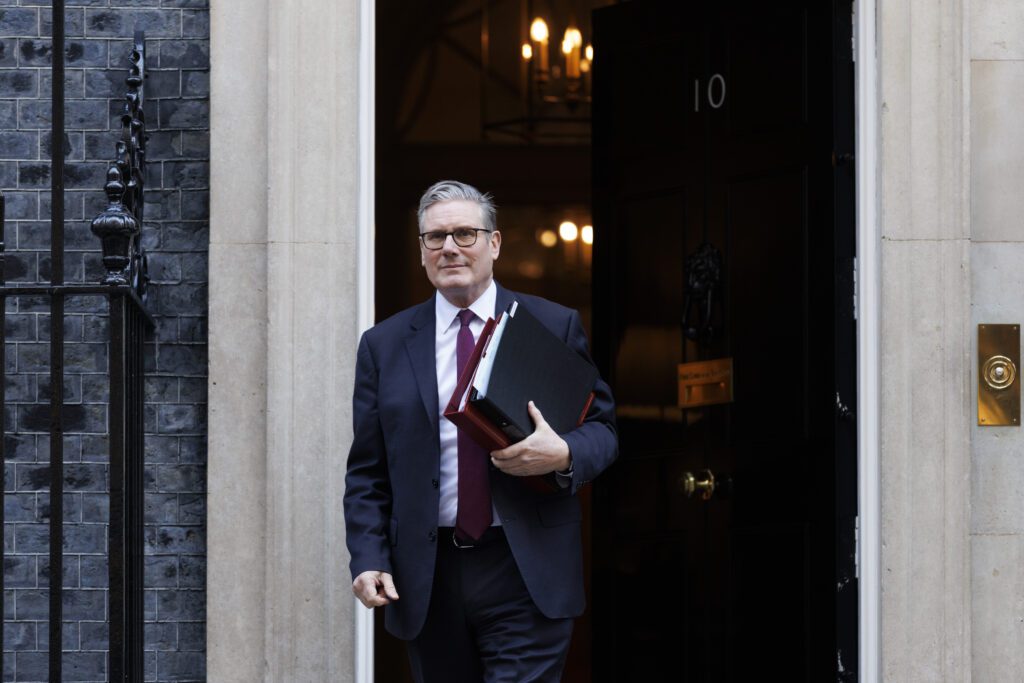
(Picture: Simon Dawson/No 10 Downing Street)