


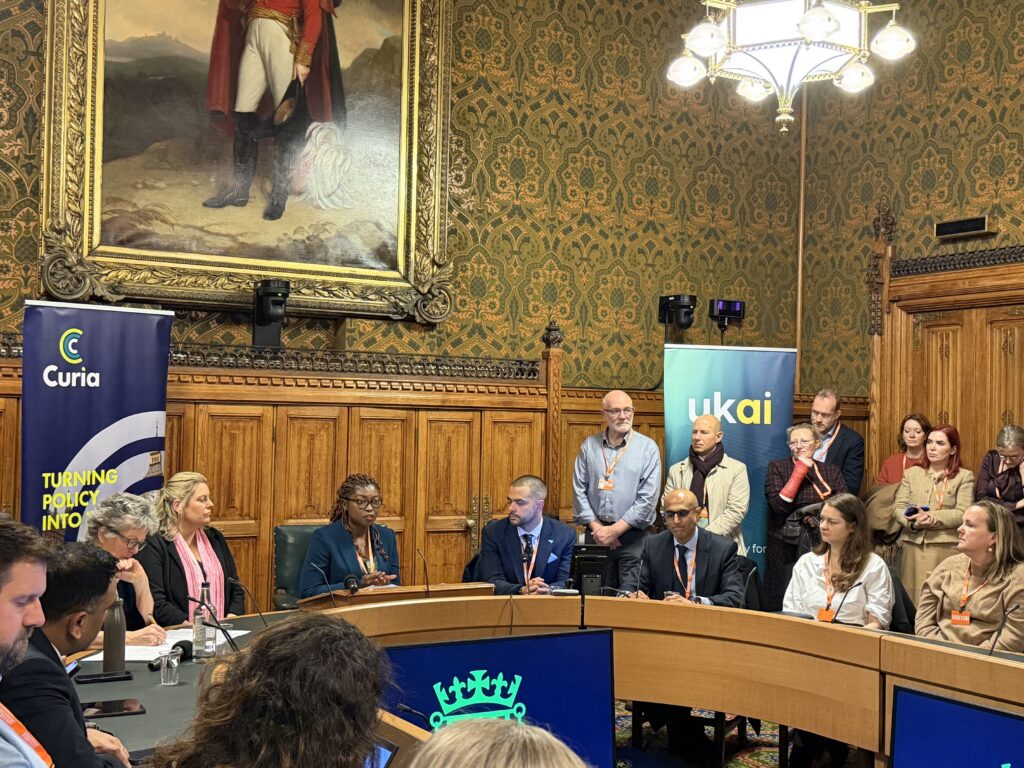

Adama Ibrahim
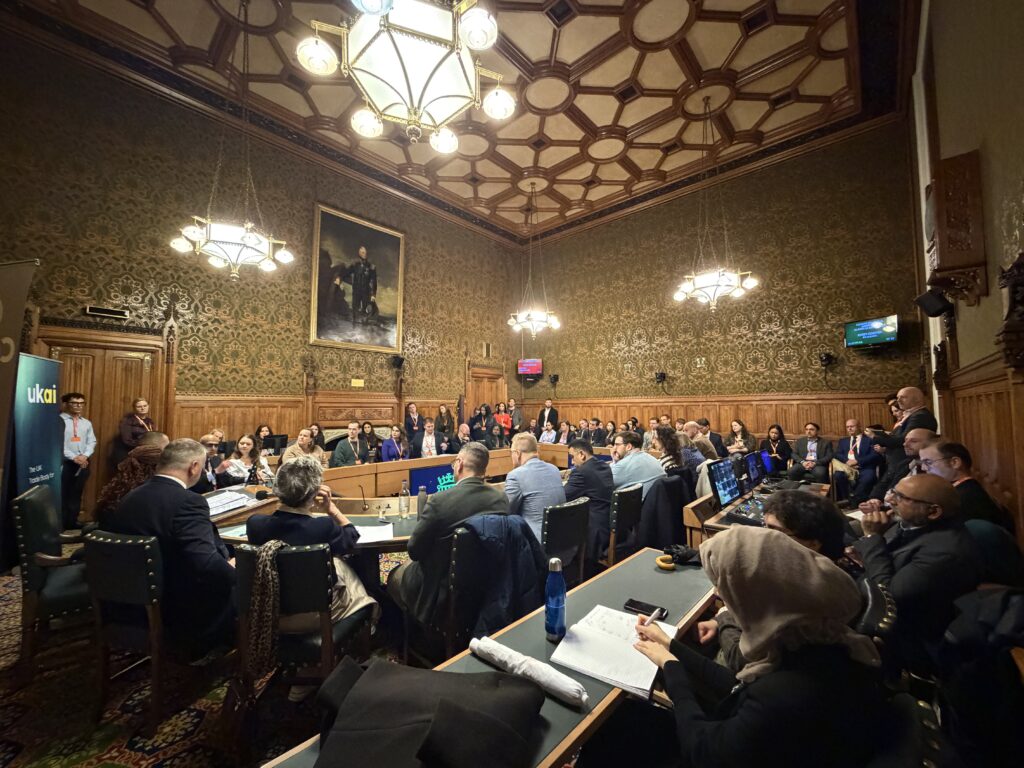
UKAI Life Sciences Working Group (Panel Chair)Following the publication of the Curia and UKAI AI Is Ready. Is the System? report, Adama argues the UK’s problem is not AI innovation but delivery – fragmented healthcare systems and slow adoption are the real barriers. She calls for aligned infrastructure, regulation, and culture to move from pilots to scalable impact in healthcare. (Photo: UKAI Life Sciences Working Group member, Adama Ibrahim chaired the Parliamentary session, kindly hosted by Shadow Equalities Minister, Mims Davies MP.)
When we convened these discussions in Parliament to help produce the AI Is Ready. Is the System? report, the objective was to move the conversation from pilots to scalable infrastructure, from policy statements to practical delivery.
The UK has not lacked ambition since the publication of the Government’s AI Opportunities Action Plan. We have committed to AI at scale and articulated a vision for research excellence and preventative healthcare. We have world-class scientists, innovative companies, and a health system rich in data. But ambition alone does not deliver outcomes. The pathway from strategy to routine clinical practice is complex – and, at times, uncomfortable.
AI does not simply automate existing systems. It exposes their imperfections.
Throughout these sessions, we heard repeatedly that the barriers to scale are not rooted in a lack of technology. They lie in fragmented governance, legacy infrastructure, unclear ownership, and cultural hesitation. In secondary care, clinicians face multiple logins and siloed data. In primary care, digital maturity varies by locality. Startups encounter data access processes that outlast their funding cycles. Boards hesitate because liability is not always clearly defined.
None of these issues are insurmountable, but they require coordinated leadership.
The Real Barrier: From AI Innovation to Healthcare Implementation
One of the strongest messages from industry during the course of this programme was that deployment, not invention, is the bottleneck. Even if no new AI tools were built from tomorrow, it would take years to embed what already exists. That should focus our attention. This means that by the time they are deployed, they may largely become out of date. Measurement, evidence generation, and clear pilot exit criteria are essential. Trust is built through lived experience in real clinical settings, not through PowerPoint presentations.
At the same time, the global environment is moving rapidly. International markets are experimenting with direct-to-patient AI-enabled tools. Investment is flowing toward jurisdictions that provide clarity, interoperability, and predictable regulation. If the UK allows caution to become delay, we risk losing not only economic advantage but also the opportunity to shape standards aligned with our values of fairness, transparency, and safety.
Prevention illustrates the scale of the prize. Genomic risk scoring and predictive analytics can identify vulnerability years before disease manifests. Yet prevention is still funded from the same constrained budgets as acute care. If we are serious about shifting from reactive to preventative medicine, our funding and evaluation models must reflect that intent.
Trust must also remain central. Concerns about bias and representation are legitimate. AI systems learn from data, and if that data fails to reflect the diversity of our population, outcomes will differ. Transparency in training data, subgroup performance monitoring, and meaningful public engagement are not optional extras – they are foundational to confidence.
From Insight to Action
Within the UKAI Life Sciences Working Group, our role is to bridge sectors. We bring together small and medium-sized businesses (SMEs), established industry, clinicians, and policymakers to ensure that solutions are co-designed and grounded in real need. Collaboration must replace transaction. Safety case methodology must evolve with adaptive AI. Infrastructure must be treated as a national asset, not a discretionary upgrade.
Above all, culture matters. Fear based environments do not innovate. Curiosity, openness, and shared learning accelerate adoption. We must normalise iterative improvement rather than demanding perfection before first deployment.
This report does not represent the end of a conversation. It marks the beginning of a more coordinated phase of work over the course of the year ahead. The challenge is not whether AI will shape healthcare. It is already doing so. The question is whether we shape that transformation deliberately – in line with British principles of safety, accountability, and equity – or allow it to happen unevenly.
The opportunity is significant. So too is the responsibility.
If we align infrastructure, regulation, funding, and culture, the UK can lead not only in discovery, but in delivery – improving outcomes for patients while strengthening our life sciences ecosystem for the future.
Get Involved
To find out more about the UKAI Healthcare and Life Sciences Working Group, contact Partnerships Director, Ben McDermott at benmcdermott@ukai.co.