
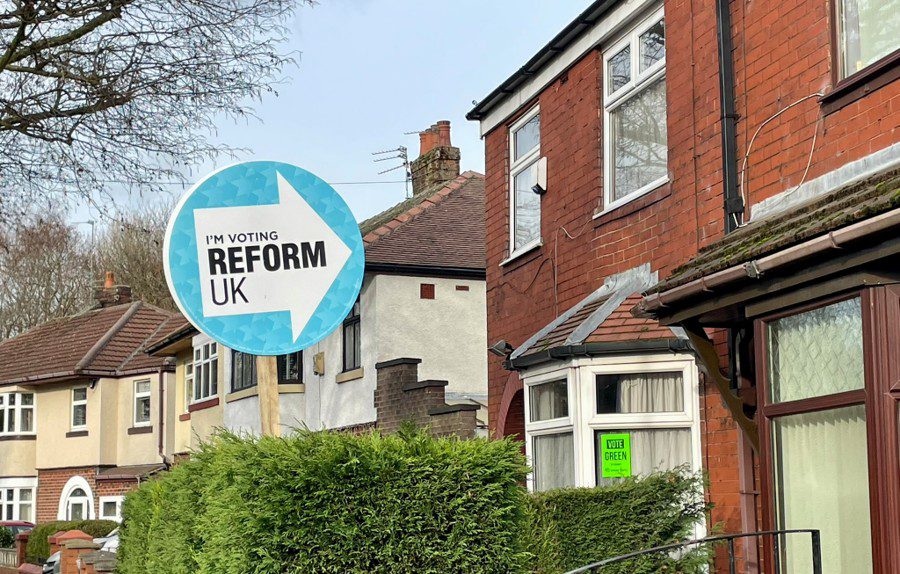
The result in Gorton and Denton was not simply a localised tremor. It was a political signal flare.
A seat that should have been secure fractured. Progressive voters splintered. Protest sentiment surged. Labour was pushed into an uncomfortable third place. The symbolism matters more than the arithmetic. It suggests that parts of Labour’s coalition no longer feel instinctively anchored to the party.
For Sir Keir Starmer, this is a political turning point. The tightly controlled approach often associated with his former chief strategist, Morgan McSweeney, was designed to neutralise risk and win power. It did that effectively in 2024. But the by-election suggests that a risk-averse and all too often chaotic style of governing may now be suppressing connection rather than strengthening it.
What lessons could Starmer learn in time for The King’s Speech?
The King’s Speech must therefore do more than outline legislation. It must demonstrate that Labour has listened – and that it is prepared to move from cautious consolidation to confident delivery. The king’s speech is a crucial moment for Labour’s future.
Here is what that would require in practice.
1. A Cost of Living Guarantee That Is Felt, Not Promised
On the doorstep, the language was not ideological. It was grounded in real life experiences: rent, food, debt, bills.
The Government’s growth narrative has not yet translated into personal reassurance. The King’s Speech could change that by introducing a Cost of Living and Household Security Bill structured around three pillars.
First, energy market protection. Strengthened regulatory powers for Ofgem to intervene on pricing practices, clearer tariff transparency rules and an automatic social tariff for low-income households would show immediate responsiveness.
Second, debt resilience. Expanding breathing-space protections and regulating high-cost credit providers more aggressively would position Labour as a shield against financial precarity.
None of this is headline-grabbing in isolation. Collectively, it would signal that growth is being converted into protection.
2. An NHS Access and Delivery Bill With Measurable Targets
The NHS conversation on the doorstep was not about structural reform. It was about appointments.
An NHS Access and Delivery Bill should focus narrowly and visibly on patient experience.
That could include statutory transparency requirements obliging local health systems to publish real-time data on GP appointment availability and waiting times. It could mandate a clear national recovery timetable for NHS dentistry, including reform of the dental contract to incentivise NHS provision rather than private drift.
Workforce measures should be specific: expanded training places tied to underserved areas, streamlined recognition of international qualifications and retention incentives in high-pressure specialisms.
Most importantly, the Government should attach measurable 12-month delivery benchmarks to the legislation. Without timelines, reform feels rhetorical.
3. A Credible Migration and Local Services Framework
Immigration emerged repeatedly in voter conversations, often intertwined with concerns about housing and public services.
The King’s Speech should therefore outline a Migration Control and Community Support Bill built on two parallel tracks.
On enforcement and processing, it should commit to significantly reducing asylum backlogs through expanded casework capacity and faster initial decision timelines. Clearer removal pathways for failed claims would reinforce credibility.
But equally important would be a Local Impact Fund, automatically triggered in areas experiencing sharp population increases. Funding for school places, primary care expansion and housing support must accompany policy changes.
This approach avoids hyperbole while acknowledging practical pressures. It positions Labour as serious, not reactive.
4. Institutional Reform and Political Integrity
Cynicism is not an abstract problem. It is a mobilising force.
A Democratic Standards and Accountability Bill could strengthen lobbying transparency, close loopholes around political donations and formalise clearer investigatory powers for parliamentary standards bodies.
Electoral safeguards – including measures to reinforce ballot secrecy and polling station integrity – would respond to concerns raised during the by-election itself.
Labour has historically defined itself as a reforming party. Reasserting that instinct would help counter the perception that politics is self-protective.
5. A Neighbourhood Renewal and Local Pride Act
One of the most striking features of the by-election was the emphasis on visible decline: fly-tipping, unkempt streets, unreliable buses.
Although the Government has distanced itself from ‘levelling up’, a Neighbourhood Renewal Act should equip councils with stronger enforcement powers against environmental crime, including increased fines and faster prosecution pathways.
It could also establish minimum service standards for local bus routes in underserved urban areas, backed by devolved funding settlements. Connectivity is not glamorous, but it is foundational to opportunity.
Finally, ring-fenced high street recovery grants tied to occupancy targets would demonstrate commitment to local economic vitality.
These measures may appear granular. That is precisely their strength. Voters measure competence in daily encounters with public space.
6. Reframing Growth as Progressive Mission
Perhaps the most politically sensitive lesson from Gorton and Denton is that some progressive voters now look elsewhere for moral clarity.
The King’s Speech should embed fairness metrics directly into the Government’s economic programme. That could mean legislating for annual inequality reporting linked to fiscal decisions, or tying industrial strategy funding to regional wage growth targets.
Explicitly connecting clean energy investment, manufacturing expansion and technology growth to job creation in towns that feel politically peripheral would reinforce Labour’s historic purpose.
This is not about creating a confidence surrounding their narrative vs ideological repositioning. Progressive voters need to feel that competence and conviction coexist.

A Moment That Demands Response
By-elections often amplify dissatisfaction. But they also clarify direction.
The coalition that brought Labour to power was broad. Keeping it intact requires more than disciplined messaging. It requires visible impact in people’s lives.
If the King’s Speech reads as cautious and technocratic, it risks confirming the sense of drift that underpinned the by-election result.
If instead it offers tangible cost-of-living protections, measurable NHS delivery, credible migration control paired with community investment, institutional reform, and neighbourhood renewal – framed within a confident progressive growth story – it could mark the start of a second phase of this Government.
Turning points are rarely announced in real time. But the result in Gorton and Denton has created one.
The only question now is whether Labour treats it as a setback to manage – or as an opportunity to introduce new measures to right the wrongs of its record in government thus far.
For Keir Starmer, there is still time to reset.
(Image: Rcsprinter123)