
Update 14:30: Scottish Labour Leader, Anas Sarwar has called on the Prime Minister to resign.
11.10: No.10 Director of Communications, Tim Allan has resigned
The sudden departure of Morgan McSweeney from the centre of government has exposed a fragility at the heart of Number 10 that goes well beyond one individual. In Westminster, the question now being asked is not simply who replaces him, but what Project Starmer actually is – and whether it can function without the figure who did so much to design and enforce it.
For the past four years, McSweeney was not some invisible hand quietly guiding events from the shadows. His presence was well known, widely felt, and often decisive. He was central to Labour’s transformation from a party traumatised by the 2019 defeat into a tightly disciplined election winning operation. His focus was rarely ideological in a traditional sense. Instead, Project Starmer was built as a reaction against what had come before – not Corbyn, not the Conservatives, not chaos, not risk.
At its core, Project Starmer fused fiscal caution, cultural restraint, institutional reassurance, and uncompromising message discipline. It was designed to signal seriousness after years of perceived excess, and stability after a Conservative era defined by volatility. The offer to the country was deliberately narrow but legible: competent, cautious, and safe. McSweeney built the operating system that made that possible.
That is why this weekend matters. This is not just a reshuffle or a staffing change. It is a stress test of whether Starmer’s leadership model can survive contact with the realities of governing.
The McSweeney method – and where it breaks
McSweeney’s real influence lay less in public strategy than in internal architecture. Decision making was centralised. The circle of trusted voices was deliberately small. Candidate selection, media handling, internal dissent, and political signalling were all tightly controlled. Labour had not operated with this level of discipline for a generation.
In opposition, it worked. The party detoxified its brand, neutralised Conservative attacks, reassured markets, and persuaded a wary electorate that it was safe to hand Labour the keys again. But campaigning is not governing. The traits that deliver clarity in opposition can quickly become liabilities in office.
The disorder seen over the weekend was not driven by ideological splits or factional warfare. It was organisational shock. Too much authority, judgement, and connective tissue sat with too few people. Even with Darren Jones appointed as Chief Secretary to the Prime Minister, McSweeney’s exit has revealed how thin the senior operational bench in Number 10 really is.
Starmer’s dilemma: control or coalition
The appointment of Vidhya Alakeson and Jill Cuthbertson as joint Chiefs of Staff signals an attempt to rebalance the centre of power. It moves away from the singular authority that defined the McSweeney era and towards a more distributed leadership model inside Number 10.
Implicit in this shift is an admission that the conditions of government demand something different from the machinery of opposition. Project Starmer was engineered to win power by minimising risk and narrowing the party’s voice. In office, that same centralisation now threatens to slow decision making, narrow perspective, and insulate the centre from political reality.
Frustration has been building across the system. Ministers, backbenchers, metro mayors, and party stakeholders increasingly describe a culture that feels closed and transactional, where authority flows downwards but feedback struggles to travel back up. The joint Chiefs of Staff model appears designed to widen the aperture – bringing more policy depth, organisational experience, and internal connectivity into the heart of government.
The danger for Starmer is not an organised revolt, but something quieter and more corrosive: drift, disengagement, and the steady erosion of authority as momentum leaks away.
What if Starmer leaves Number 10?
As speculation about Starmer’s future grows, the weekend has inevitably reopened questions about Labour’s direction should his leadership end earlier than expected. Three broad paths stand out.
First, continuity.
A successor could attempt to preserve the core instincts of Project Starmer: fiscal caution, cultural restraint, institutional reassurance, and tight message control. This would calm markets and senior stakeholders, but without serious reform to how government operates, it would risk repeating the same weaknesses now exposed.
Second, a managerial pluralist turn.
Labour could retain its commitment to stability while loosening internal control, empowering Cabinet ministers, Parliament, and local leaders. This would represent a shift from campaign mode to governing coalition, reducing the risk of future Number 10 shocks. It would, however, require a leader genuinely comfortable with shared authority.
Third, ideological reorientation.
Less likely in the short term but not impossible is a move towards a clearer ideological project – one that offers more than competence and repair. This would energise parts of the party and sharpen Labour’s political story, but it would also reopen electoral risks that Project Starmer was explicitly designed to close down.
The deeper problem
The immediate headline is McSweeney’s exit. The deeper issue is that Labour has not yet adapted fully from opposition to government. Project Starmer succeeded by narrowing the party’s offer and controlling its voice. Governing requires the opposite – expansion of talent, trust, and clarity of purpose.
Right now, the government struggles to explain to ordinary voters what it is actually doing. The five national missions exist on paper, but they have not yet been translated into a story that cuts through beyond Westminster. Voters do not experience missions. They experience wages, bills, public services, and whether life feels more or less secure than before.
Downing Street does not look unsettled because one adviser has gone. It looks unsettled because too much depended on him in the first place.
Starmer now faces a choice. He can treat this moment as an unfortunate aberration, or as a warning that the operating system built to win power is no longer sufficient to exercise it. If Project Starmer is to endure, it will need less command and control politics and more resilient political infrastructure – including a clearer, more human explanation of what this government is for.
Whether it evolves, fractures, or gives way to something new will shape not just Labour’s stability, but its identity in power for years to come.
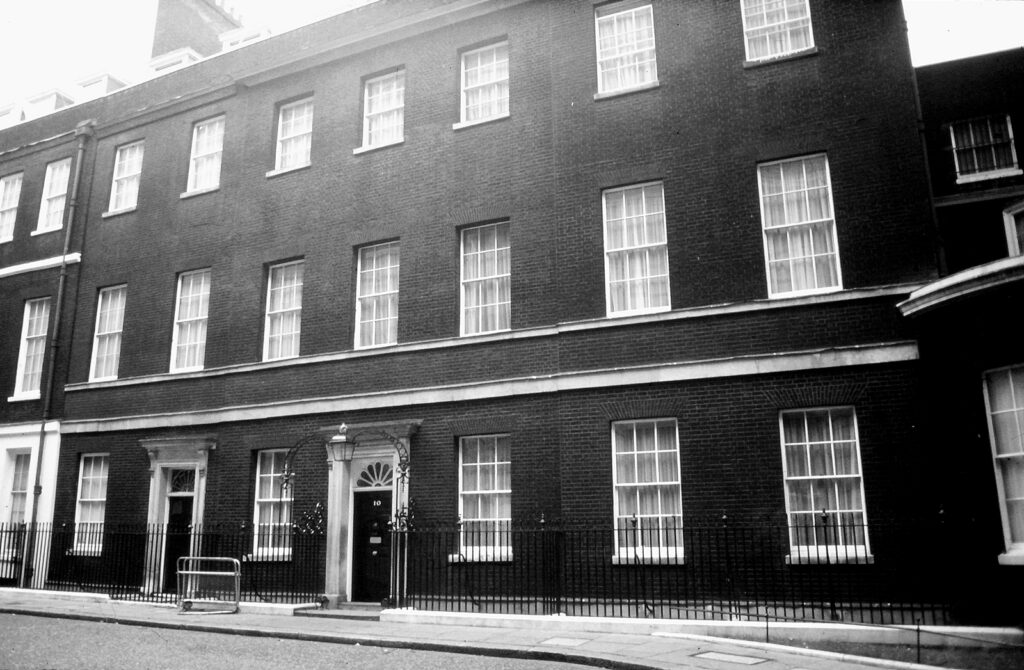
(Image: Geograph Britain and Ireland_)