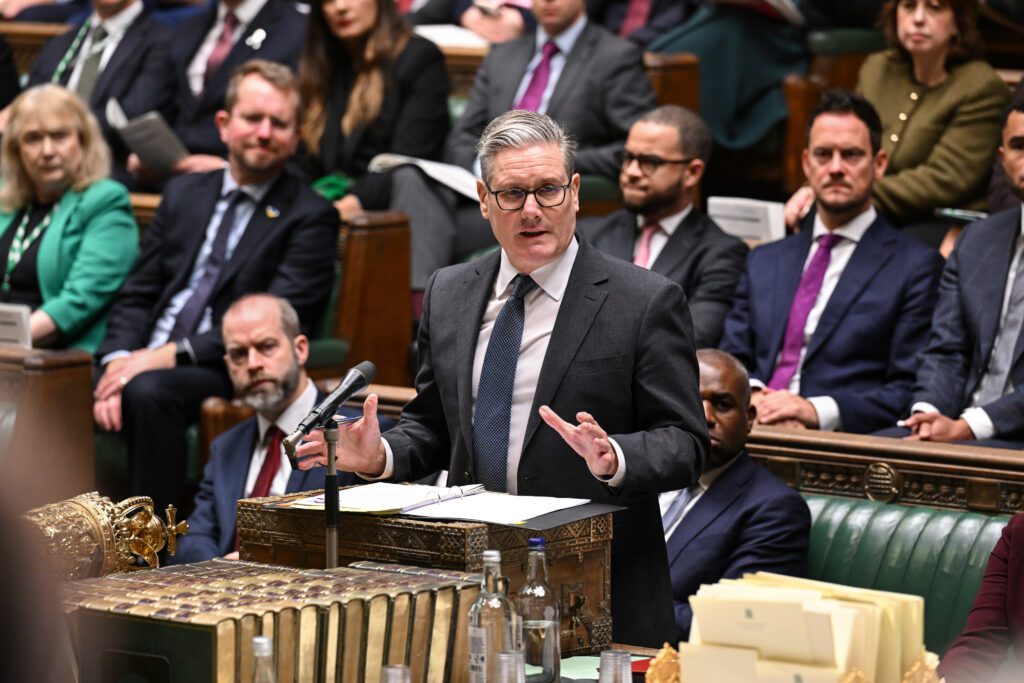

UK politics in 2025 unfolded against a backdrop of instability rather than consolidation. Early optimism following the 2024 general election gave way to a more unsettled mood, shaped by voter impatience, weak trust in institutions, and a sense that political change – promised heavily during the General Election – had not yet translated into everyday improvement.
Politics UK’s early year polling analysis captured this shift clearly, highlighting how fluid voter intention had become, and how fragile party loyalties now appeared. Rather than a settled post-election alignment, the data pointed to an electorate open to switching, disengaging, or expressing dissatisfaction through alternative parties – benefitting Reform, and later in the year, the Greens.
This volatility became one of the defining political conditions of the year. For the Government, 2025 was less about ideological debate and more about confidence, credibility, and delivery under pressure. This is a theme that resulted in a collapse in government confidence.
Reform UK and the fragmentation of the vote
One of the most visible expressions of this instability was the continued prominence of Reform UK. Politics UK’s analysis of whether Reform’s polling surge had stalled treated the phenomenon not as a curiosity, but as a signal of wider political fragmentation.
The key issue was not simply Reform’s electoral prospects, but what its support revealed about disaffection with mainstream politics. Throughout 2025, Reform functioned as a barometer for protest sentiment, particularly among voters who felt that neither economic policy nor public services were improving fast enough. Gaining support from the left and right, Reforms success rests in creating a cross-country vehicle for dissatisfaction from left to right.
This fragmentation was further illustrated during the local elections. Politics UK’s local election predictions map showed how political change was unfolding unevenly across regions, reinforcing the idea that UK politics can no longer be understood through national swing alone.
Local elections increasingly acted as proxy referendums on competence and delivery, amplifying the political consequences of underperformance in public services and local government.
Fiscal reality and the politics of constraint
Economic policy sat at the centre of political debate throughout 2025. The core challenge was persistent: expectations for improvement were high, while fiscal room for manoeuvre remained limited.
Politics UK’s coverage of the Spring Statement framed it as a political as well as economic moment, asking whether fiscal events could meaningfully shift public sentiment or arrest the rise of political challengers.
This question followed the Government through the year. The Labour Spending Review in June set out departmental priorities and spending allocations, but also exposed the tension between ambition and affordability.
The review illustrated a broader political reality in 2025: even when spending rises, they often feel insufficient against rising demand, particularly in health and local services.
That fragility was underlined dramatically by the early leak of the Autumn Budget. Chamber UK published insight which focused on the political damage caused by process failure and the perception of loss of control at the centre of government.
The subsequent explainer from Politics UK on the Budget itself detailed measures such as minimum wage increases and fiscal discipline, but also left unresolved whether incremental economic gains would be enough to restore confidence.
As 2025 closed, the economic question remained open: could stability and caution deliver visible improvement quickly enough to satisfy an impatient electorate.
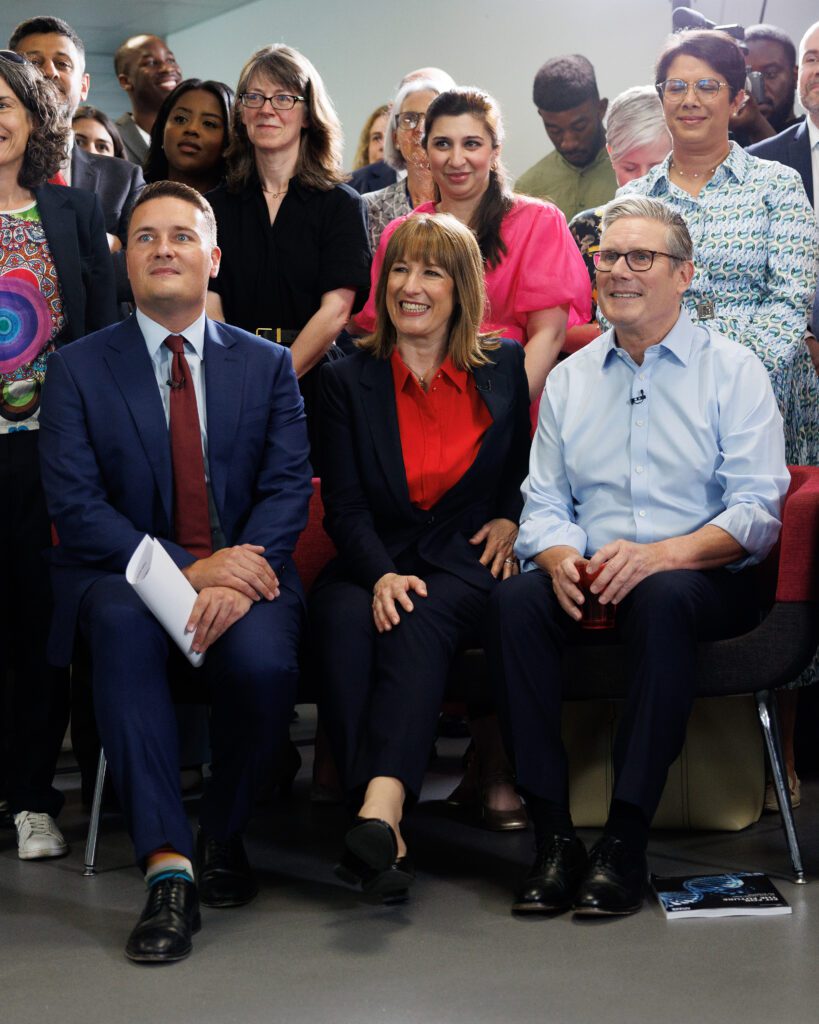
The NHS as the defining delivery test
Health policy emerged as the most significant proving ground for UK politics in 2025. The NHS was treated not merely as a policy area, but as the ultimate test of the state’s ability to translate reform into lived experience.
Politics UK’s coverage traced the reform agenda from design to early implementation. The rollout of artificial intelligence early warning systems highlighted the Government’s reliance on technology to improve safety and productivity in a system under strain.
Alongside innovation, the strategic direction of reform was set out through analysis of the 10 Year Health Plan for England, with prevention placed at its core.
This emphasis on prevention was widely seen as necessary, but politically difficult. Prevention delivers benefits slowly, often beyond a single parliamentary term, while political pressure is immediate.
Equity became a crucial dimension of the debate. Policy institute, Curia’s examination of healthcare equity warned that reform risked entrenching inequalities if implementation failed to address access, geography and social determinants of health.
By late summer, attention shifted firmly to delivery. Curia’s analysis of building a neighbourhood based NHS framed reform as a decade long project rather than a quick transformation.
This framing acknowledged a central political truth of 2025: the success of reform would be judged not on vision, but on whether patients and staff felt tangible improvement.
The year ended with an exclusive opinion article from the Secretary of State for Health and Social Care, Wes Streeting as he explained how the 10 Year Health Plan for England was delivering for patients, signalling progress while implicitly recognising how much remained unfinished.
Innovation, life sciences, and national capacity
Beyond immediate political pressures, 2025 also saw renewed focus on the UK’s long term economic and scientific strengths. Analysis of the life sciences sector breakfast hosted by IQVIA and supported by Curia with Life Sciences Minister, Baroness Merron argued that innovation alone is insufficient without effective adoption, particularly within the NHS.
This linked industrial strategy, health reform and economic growth, reinforcing a recurring theme of the year: the UK’s challenge is not a lack of ideas, but the ability to implement them at scale.
What 2025 settled in UK politics and what it did not
By the end of 2025, several political realities had become clearer.
Voter volatility is now a structural feature of UK politics, not a temporary phase. Fiscal constraint is likely to shape policy choices for years, limiting the scope for dramatic intervention. NHS reform is underway, but its success depends on sustained delivery rather than headline announcements.
Yet many questions remain unresolved as the country moves into 2026. Will economic policy improve living standards fast enough to stabilise public confidence. Will NHS reforms translate into visible gains for patients and staff. Will technology driven innovation build trust or generate new political tensions.
Looking ahead
2025 did not deliver political closure on several entrenched issues. Instead, it exposed the scale of the challenge facing UK politics. Promises have been made, strategies set and reforms launched. For the Government, the coming year will be defined less by intention and more by proof.
If 2025 was about revealing constraints and testing narratives, 2026 will be about whether delivery can finally catch up with expectation.
Over the coming days, Chamber UK and Curia will set out the key opportunities and risks for the Government as we look forward to 2026.
(Image: UK Parliament)