

Peter Dowd MP
Member of Parliament for Bootle, Chair, Liverpool City Region APPG & Chair, All Party Parliamentary Group, Genetic, Rare and Undiagnosed ConditionsPeter Dowd MP warns that the key to tackling rising NHS pressure may start at home – literally with healthier homes – as new evidence shows how smarter, safer housing could transform health outcomes across the North West.
The first Sprint Workshop of the Get Britain Growing North West Conference on healthier homes placed housing at the centre of the health and care conversation – recognising that the quality, safety, and accessibility of the home are fundamental determinants of wellbeing. The theme Healthy Homes, Healthy Communities – Housing Infrastructure and Health brought together local authority leaders, housing and planning specialists, NHS representatives, and innovators to examine how the places people live can either drive or prevent ill health.
Opening the discussion, participants were reminded that the Sprint methodology is built around practical outcomes. Each Sprint seeks not merely to diagnose systemic challenges but to produce implementable solutions that can shape policy, commissioning, and local delivery. In that spirit, this workshop aimed to translate evidence and local experience into a coherent framework for action – one that demonstrates how the home environment can be designed, adapted and managed to improve health outcomes and reduce demand on NHS services.
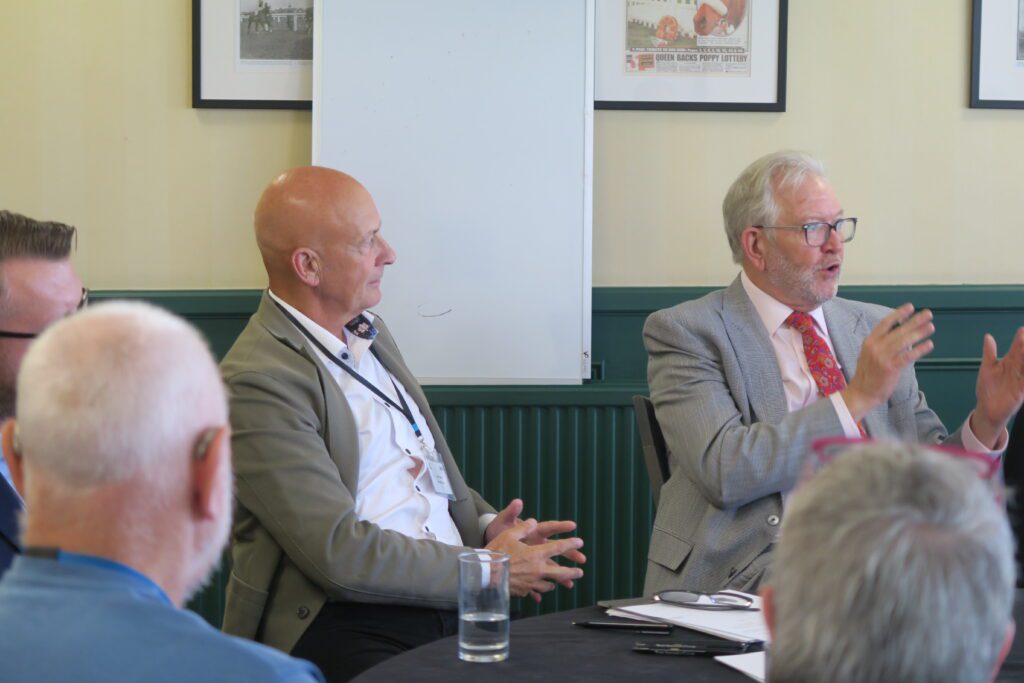
I was pleased to be asked to co-facilitate this session and began by placing the issues of health and housing within the wider political and economic landscape. Drawing on experience of regional leadership in Merseyside, a straightforward, low-cost preventive measure – specifically, the introduction of smoke alarms decades ago – had dramatically reduced domestic fire deaths. This illustrated the transformative potential of proactive, place-based prevention. The same mindset must now be applied to housing. By investing in healthier, more efficient homes, the country could reduce long-term healthcare costs, improve workforce participation and deliver measurable social value.
I would like to thank those participants for their enthusiasm for creating new solutions to overcome some of the biggest challenges affecting the North West.
The conversation about housing is, fundamentally, a conversation about fairness. Poor-quality housing, fuel poverty, and unsafe environments remain concentrated in deprived and ageing communities, creating preventable inequality. Addressing this imbalance requires not just national strategy but local empowerment – giving councils and communities the ability to act decisively, supported by sustainable funding and joined-up policy between the Department of Health and Social Care (DHSC), Ministry of Housing, Communities and Local Government (MHCLG), and local integrated care systems (ICSs).
Priorities for creating healthier homes
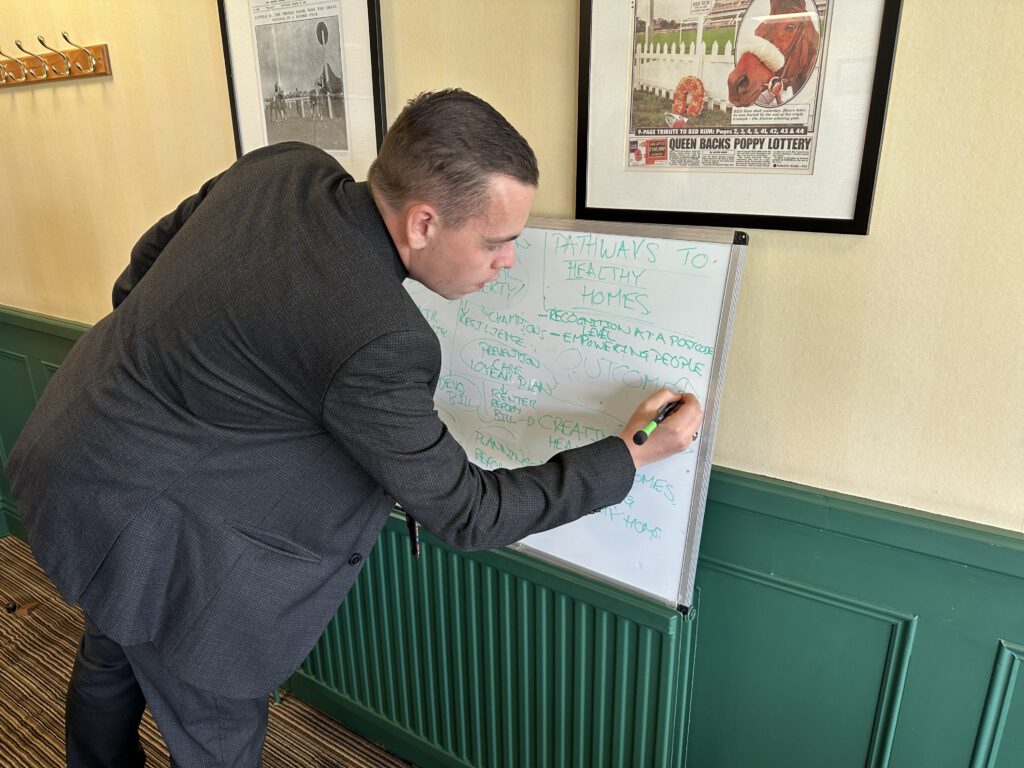
We were pleased to hear from Sefton Councillor, James Hansen who led the presentation back to the wider group. He introduced the sprint group’s concept of Pathways to Healthy Homes. This framework divided the challenge into two interdependent priorities:
- Creating New Healthy Homes – ensuring that new housing developments are designed to prevent future health inequalities, with high standards of air quality, accessibility, and sustainability.
- Improving Existing Homes – tackling the large stock of cold, damp, and unsafe properties that currently drive illness and disadvantage.
Underpinning both pathways is a vision of the home as an active contributor to health. This requires rethinking planning systems, construction standards, and community engagement, so that every new or refurbished home promotes wellbeing, accessibility, and social connection.
Throughout the discussion, participants drew attention to the breadth of housing-related health issues – from respiratory illness and falls to loneliness and digital exclusion. The group’s evidence was clear: investing in healthy homes delivers savings across the system. Retrofitting reduces hospital admissions. Accessible design keeps people independent for longer. Energy-efficient construction cuts both emissions and bills. And empowering residents through co-design fosters community resilience.
The workshop concluded with a shared understanding that housing is healthcare infrastructure. As the NHS grapples with rising demand, workforce pressures, and an ageing population, the case for prevention through the built environment has never been stronger. The recommendations emerging from this Sprint set out a pathway for national, regional, and local partners to embed housing improvement into the health and care system’s core mission: enabling people to live well, safely, and independently in the place they
To find out more about the report, and the work of Curia’s Health, Care, and Life Sciences Research Group and the Housing and Infrastructure Research Group, contact Partnerships Director, Ben McDermott at ben.mcdermott@chamberuk.com