
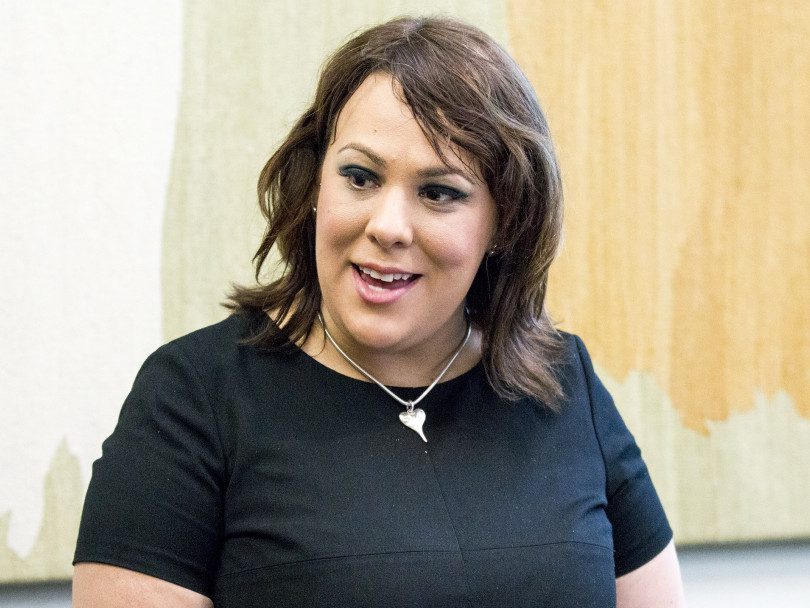

Paula Sherriff
Former MP and Founder of the All Party Parliamentary Group on Women’s HealthAdvisor to Curia’s Health, Care, and Life Sciences Research Group
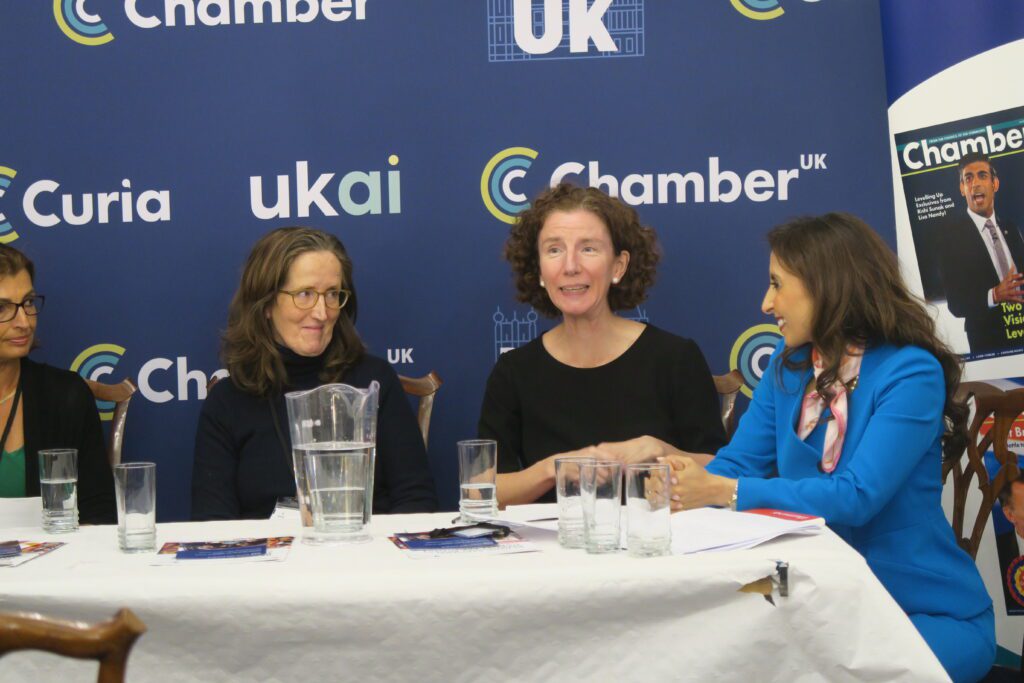
Following a recent Curia women’s health panel with system leaders and Parliamentarians, Paula Sherriff writes exclusively for Politics UK. Women’s health is no longer a side issue – it is shaping workforce participation, NHS capacity and economic resilience, and the cost of inaction is already being paid.
For too long, women’s health has been treated as a niche issue – something to be addressed when time, budgets and political attention allow. That approach is no longer sustainable. Women’s health is economic policy, public service reform and social justice rolled into one, and the cost of continued inaction is already being felt across the workforce, the NHS and local communities.
At Curia’s recent panel discussion, which brought together parliamentarians, clinicians, researchers, digital innovators and campaigners, there was striking consensus. We are not short of evidence. We are not short of ideas. What we are short of is delivery, accountability and the political will to treat women’s health as a core priority rather than an optional extra.
Women’s Health as Economic Infrastructure
This matters because the economic consequences are now impossible to ignore. Women aged 45 to 64 are the fastest growing segment of the UK workforce. Yet thousands are leaving work or reducing hours due to unmanaged menopause symptoms, untreated gynaecological conditions and years long waits for specialist care. That represents lost productivity for employers, reduced tax revenue for the Exchequer and increased pressure on already stretched public services.
When women cannot access timely, effective care, the impact ripples far beyond individual health. It affects family income, workplace retention, caring responsibilities and community resilience. This is not a women’s issue in isolation. It is a structural failure with national consequences.
From Fragmentation to Delivery: Fixing a System Built Around Services, Not Lives
One of the most persistent problems is fragmentation. Women’s health services are still organised around systems rather than lives. Sexual and reproductive health, general practice and gynaecology are commissioned separately, creating artificial barriers to joined up care. Clinicians described having the skills and capacity to help women quickly but being prevented from doing so by commissioning rules that make no clinical sense.
The result is duplication, delay and frustration. Women are bounced between services, conditions worsen unnecessarily and inequalities widen, particularly for those already facing barriers due to income, language or geography. This is not inefficiency by accident. It is inefficiency by design.
There are clear solutions. Women’s health hubs are one of the most promising. Where implemented properly, they bring together multidisciplinary expertise in community settings, offering a single front door for menstrual health, contraception, menopause support, cervical screening and gynaecology triage. Evidence shows they reduce waiting lists and improve patient experience, yet access remains uneven and dependent on postcode.
That patchiness is itself an inequality. As long as access depends on where a woman lives, too many will continue to put up with symptoms they should never have been expected to tolerate. Scaling women’s health hubs should be a national priority, not a local experiment reliant on short term funding or individual champions.
Digital tools also have a role to play, but only if they are treated as enablers of care rather than add ons. Well designed, evidence based digital support can reduce pressure on frontline staff and improve access for women who struggle to navigate traditional pathways. But fragmented procurement and short-term commissioning mean digital innovation is too often bolted on, then quietly dropped.
If women’s health is genuinely a priority, digital tools must be embedded into core pathways, funded sustainably and designed around real needs, not novelty or procurement convenience.
Research and economic data matter too, but evidence without implementation changes nothing. Women remain under represented in clinical trials, and conditions such as endometriosis, heavy menstrual bleeding and menopause continue to be under researched and under diagnosed. Meanwhile, stark inequalities persist in maternal outcomes, with Black women significantly more likely to die during pregnancy or shortly afterwards.
None of this is inevitable. These outcomes reflect choices about what we fund, what we measure and who we listen to. For years, women’s pain was dismissed, trivialised or normalised. Changing that has required women to speak openly and persistently about their experiences, often at personal cost. Lived experience has driven progress where policy alone did not.
But storytelling is not enough on its own. We now need leadership that turns evidence into action and pilots into policy. That means clear national direction on women’s health hubs, commissioning reform that enables joined up care, and accountability mechanisms that make women’s health outcomes visible and measurable.
For Curia’s Health, Care, and Life Sciences Research Group, the economic opportunity is clear. The task now is to help move the debate from agreement to implementation – to bring together policymakers, clinicians, industry and the third sector around delivery models that work at scale, not just in pockets.
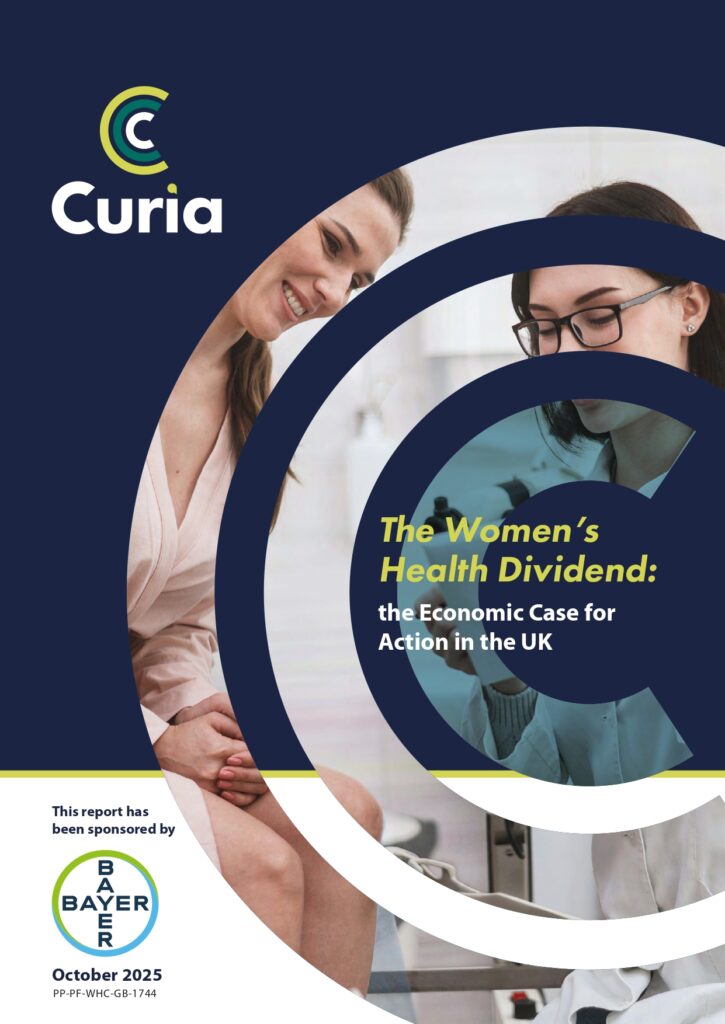
the Economic Case for Action in the UK
The cost of inaction is already being paid – by women forced out of work, by an NHS dealing with avoidable complexity, and by an economy missing out on talent, productivity and potential. The question is no longer whether we can afford to prioritise women’s health. It is whether we can afford not to.
We know the problems. We know what works. What remains is the choice to do things differently.