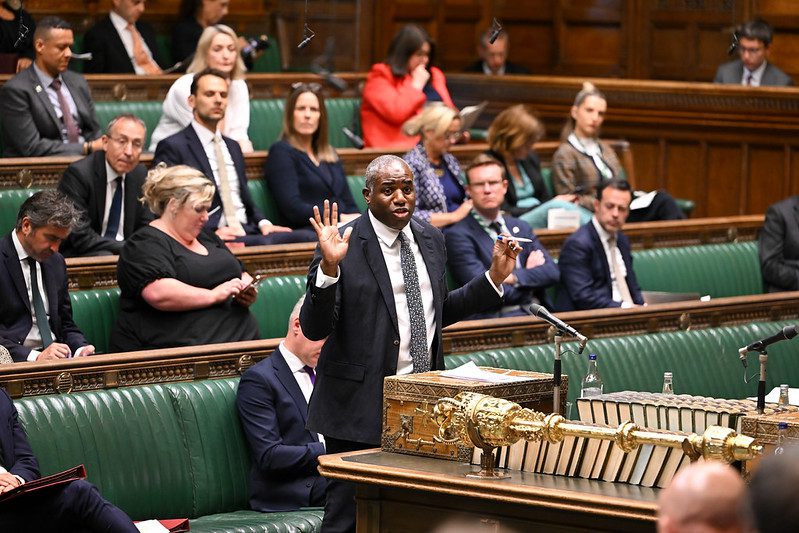

There have been few seismic shifts in judicial operations as significant as the recent pledges to scrap trials by jury for most offences carrying likely sentences under three years, as announced by David Lammy in early December. Such reforms, however, are no stranger to Britain’s historical judicial reforms.
The introduction of Diplock courts in Northern Ireland, to circumvent the endemic culture of witness intimidation which was inextricable from paramilitary violence at the time, is arguably the closest parallel in recent years.
Furthermore, the Criminal Justice Act 2003 allowed juryless trials where there is a risk of jury tampering, and the Victims, Witnesses, and Justice Reform (Scotland) Act 2025 abolished the “not proven” verdict and altered jury rules, while proposals for juryless rape trials were debated (and ultimately scrapped).
Thus, the notion that Lammy’s proposals feel more radical than those that precede them is not unfounded; few peacetime reforms in modern English criminal justice have threatened to reshape the role of the jury as profoundly as the proposal to curtail jury trials in this manner. Where previous restrictions on jury trials were exceptional (war, terrorism, fraud complexity), Lammy’s proposal is systemic: it would reallocate a vast category of ordinary criminal cases away from juries.
The Court System Hierarchy
The court system in England is typically structured as follows:
- Summary offences are less serious criminal offences, tried exclusively in a Magistrates’ Court (or equivalent), with simpler procedures and lighter penalties like fines or short jail terms.
- Crimes more serious than this, albeit still relatively less severe, are known as ‘either-way’ offences and may be tried in either a Magistrates’ Court or a Crown Court at the defendant’s discretion.
- The most severe offences (rape, murder, GBH) are exclusively tried in a Crown Court.
David Lammy’s recent proposals will remove juries from many “either-way” offences and thus create a stricter dichotomy upon which the Magistrates’ and Crown Court will reign more supreme.
Why Has This Been Proposed?
The primary motivation for this has been stated as a move to curb the backlog of cases, which is stated to have reached 80,000. Lammy is adamant that it is to be cleared within a decade if Parliament agrees to slash the number of jury trials.

Image: Prime Minister Keir Starmer with Deputy Prime Minister and Justice Secretary – Simon Dawson / No 10 Downing Street
Looking towards the Canadian model of judge-only trials, the Deputy Prime Minister, who is facing a backbench rebellion over the proposals, has urged Labour MPs and the public to back the pledge, which is to be implemented in thousands of criminal cases in England and Wales.
Yet, this week, evidence has emerged in a report that this policy may only make a trivial difference in a court system which has been inundated with cases for over a decade. According to a new report by the Institute for Government (IFG), the controversial plan to restrict jury trials will unlock only “relatively modest reductions in demand given the scale of institutional upheaval.”
The report stated figures showing that time savings from judge-only trials will be marginal at best, amounting to less than 2 per cent of Crown Court time, a figure radically different from the 20% faster justice delivery rate that was quoted by the Deputy Prime Minister.
What This Means for the Legal Profession
Since the meteoric ascension of Artificial Intelligence in recent years, entire sectors and professions have been on the brink of collapse and in a perennial state of precarity. The legal profession, especially that of barristers, perhaps viewed itself as “recession-proof.”
A career that is exemplified by oral advocacy and the human-driven process of presenting an argument, one that many suspected of “either-way” offences hope a jury may take pity or understanding in, should surely be unimpeachable in the face of generative AI models.
Yet, in a profession where AI has already proven hegemonic and time-saving in research and letter drafting, it can be thought that the creeping, increasing de-personalisation of criminal trials may pave the way for AI to fill the vacuum of judge-led cases. This proposal, then, may have far greater ramifications than a mere circumvention of the due process model and Peelian principles of law and order that our nation’s historic legal culture has long heralded as world-class.
Should We Be Worried?
Ultimately, the new proposals have sent shockwaves across the nation and the judiciary. Though, perhaps not all of it is entirely warranted. On one hand, juries are far more than merely procedural assets for the court system, but rather a check on state power (the viability of the Crown Prosecution Service in their role) as well as a safeguard against professional or political bias through its vigorous and meticulously enforced selection process.
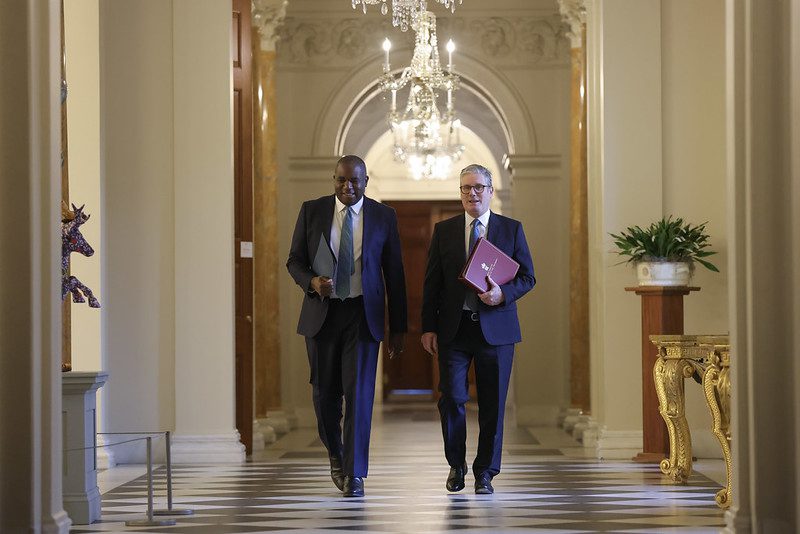
Image: Prime Minister Keir Starmer with Deputy Prime Minister and Justice Secretary – Simon Dawson / No 10 Downing Street
If either-way offences are removed from juries, the state is effectively removing the constitutional, unspoken bond that connects the everyday layperson to cases which are in the public interest, regardless of if they’re deemed “petty” by the state or by the sentence it carries.
That being said, the facts of the proposals need to be properly considered in assessing the possible hysteria which routinely arises from pledges such as this one. The slippery slope argument is arguably the most common when the state announces perceived unprecedented shifts (though history has proven this not necessarily to be unprecedented).
Critics may look backwards to 1934 when Adolf Hitler introduced the People’s Court (Volksgerichtshof) upon being dissatisfied with some defendants being acquitted after the Reichstag Fire trial and abolished juries, replacing civic judgment with ideologically aligned courts.
Yet, this faces a few problems in trying to forge a parallel to the British judicial system. Historically, when Britain has weakened the role of juries, it has been in exceptional circumstances. Wartime jury restrictions were temporary, as were Diplock courts in Northern Ireland; both were enacted in the name of national protection and pragmatism during economically strained and politically unstable circumstances.
Indeed, it is unclear whether the government’s intentions are purely pragmatic and temporary to curb the current backlog, and if this judicial reform will remain. What we can infer, however, is that the country has a constitutional pattern of re-adjustment and “getting back to normal” once the conditions which justified said reforms were rectified.
Conclusion
Ultimately, the reforms pledged by Lammy are not necessarily historically unprecedented; our nation’s governments have traditionally taken interventionist measures in the weakening and strengthening of the judiciary in response to various politically and economically strained circumstances.
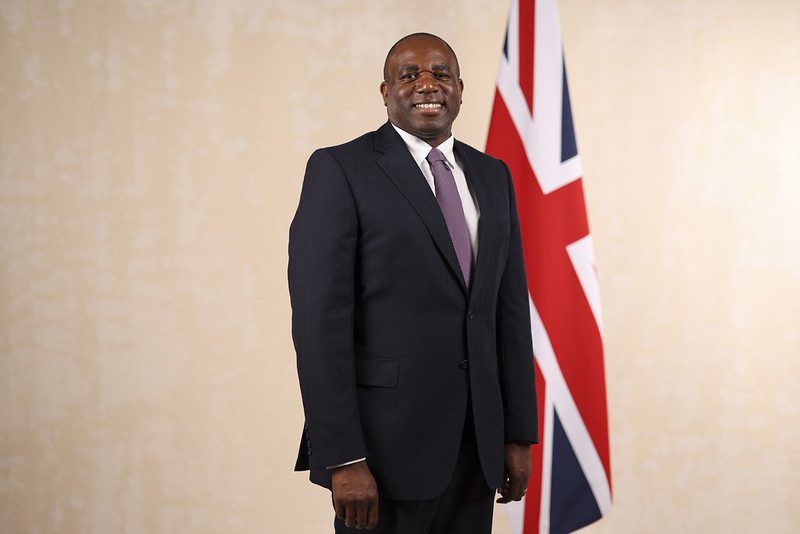
Image: Deputy Prime Minister and Foreign Secretary David Lammy – Number 10 Downing Street / Lauren Hurley
The government’s justification of this measure, however, has been proven to be overstated. Removing trials by jury for ‘either-way offences’ will only result in a mere 2% difference in speeding up trials and thus cannot effectively reach the target of balancing the books of the 80,000 backlog as optimistically determined by Lammy.
That being said, the notion that this is a historically unprecedented manoeuvre by the government is not strictly true and, in turn, previous interventions into judicial weakening have been contextually relevant to war or political instability.
As of January 2026, the fate of jury trials is still undecided; the proposal is neither a bill nor a serious policy agenda moving its way through Parliament. Thus, its ramifications and consequences are yet to truly be borne out and remain a matter of speculation. It is also unknown whether the recent research by the IFG, which suggests that the government’s plans may run obverse to its target, will force the government to rethink its plans as it will struggle to justify its means with a pragmatic end.