


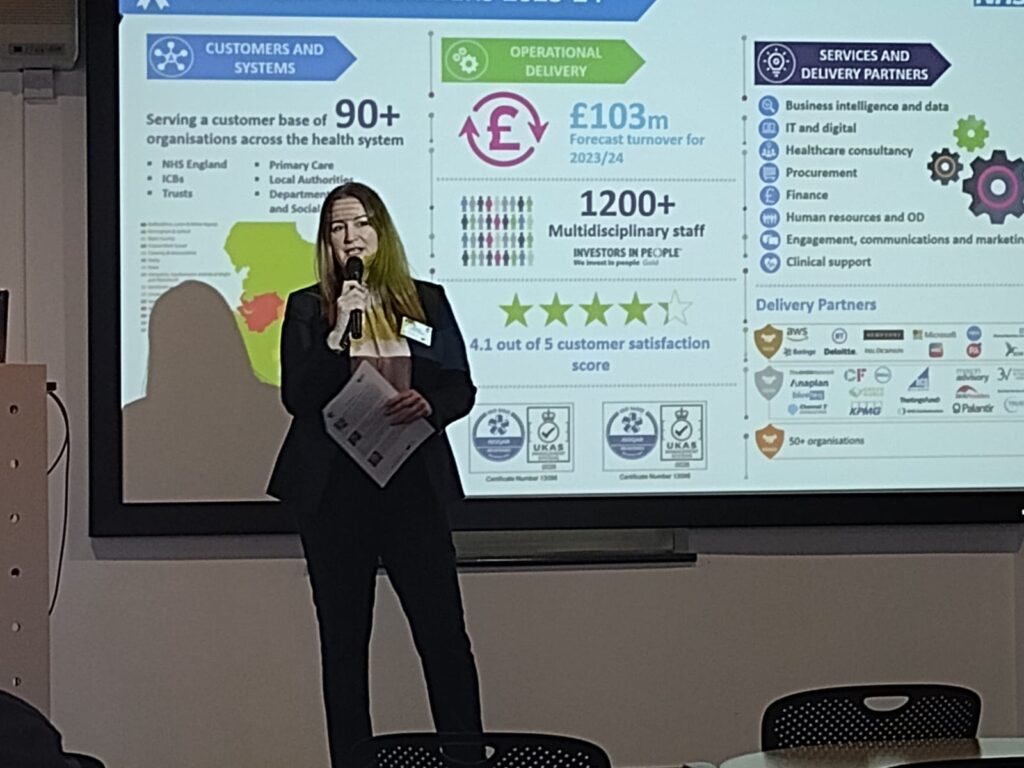

Joanne Bekis
Chief Executive and Co-FounderUK Healthcare and Life Sciences Innovation (UKHLSI)
As UK Healthcare and Life Sciences Innovation (UKHLSI) launches, newly appointed Chief Executive, Joanne Bekis writes the UK leads the world in healthcare and life sciences research – but until we fix how innovation is adopted, scaled and sustained across the NHS, patients and the economy will never experience the full benefit. www.ukhlsi.co.uk
For decades, the UK has been a global leader in healthcare and life sciences innovation. We have world-class universities, a thriving biotech sector, cutting-edge Artificial Intelligence (AI) capability, and an NHS that holds unparalleled longitudinal patient data.
Yet despite this strength, the same frustration is deeply felt across the sector – too many proven innovations fail to reach patients at scale.
The issue is not a lack of ideas. It is not a lack of talent. It is not even a lack of policy intent.
It is a long-standing failure to consistently adopt, embed and scale innovation within complex health and care systems.
Brilliant technologies stall after pilot phase. Promising diagnostics struggle to navigate procurement. Digital tools that improve outcomes remain patchily deployed. SMEs with transformative solutions find themselves navigating fragmented systems, unclear routes to adoption and risk-averse environments.
We have built a discovery ecosystem. We have not yet built a reliable adoption ecosystem.
Why adoption remains so difficult
Innovation adoption in UK healthcare is uniquely complex.
Since its inception, the NHS has operated as a national system with significant local decision-making. Integrated care systems (ICSs) work under sustained financial constraint, while procurement processes are often lengthy and risk-weighted towards maintaining the status quo.
Evidence requirements can differ across regions and leadership turnover can disrupt continuity. Alongside these structural pressures, there is a deeper digital challenge: many UK-wide IT systems are attempting to support twenty-first century innovation on ageing infrastructure. Outdated internal operating systems, legacy architecture and years of incremental “plug and play” bolt-ons have created layers of complexity that stall progress. It is the equivalent of trying to run the latest smartphone software on an analogue handset – functionality may be promised, but the foundations cannot support it.
Too often we mask these weaknesses with further add-ons rather than addressing root causes. If we are serious about future-proofing our innovation potential, we must be smarter about simplifying, standardising and genuinely joining the digital dots across the system.
Incentives do not always align with prevention or long-term value.
Meanwhile, innovators – particularly SMEs – are expected to understand regulatory pathways, reimbursement structures, commissioning models, clinical validation standards, and political priorities, often simultaneously.
The result is fragmentation.
We see outstanding pockets of progress. We see individual trusts and ICSs leading the way. We see national programmes aiming to accelerate change. But we do not yet have a coherent, connected mechanism that consistently bridges innovators, NHS leaders, and policymakers around real-world challenges – from problem identification through to adoption and evaluation.
Even before launch, UKHLSI has met with senior leaders at the Department of Health and Social Care (DHSC) to highlight the issues facing members. Too often, innovation is supply-led rather than demand-shaped. Too often, adoption is treated as an afterthought rather than a core system function.
If the UK is serious about improving patient outcomes, strengthening productivity, and securing its position as a life sciences superpower, adoption must become a national priority in its own right.
From events to implementation: doing things differently
UKHLSI was created in response to this gap.
UKHLSI is a national membership organisation dedicated specifically to advance the uptake of innovation across healthcare and life sciences in the UK.
But the ambition is not simply to convene conversations – it is to build structured pathways to adoption.
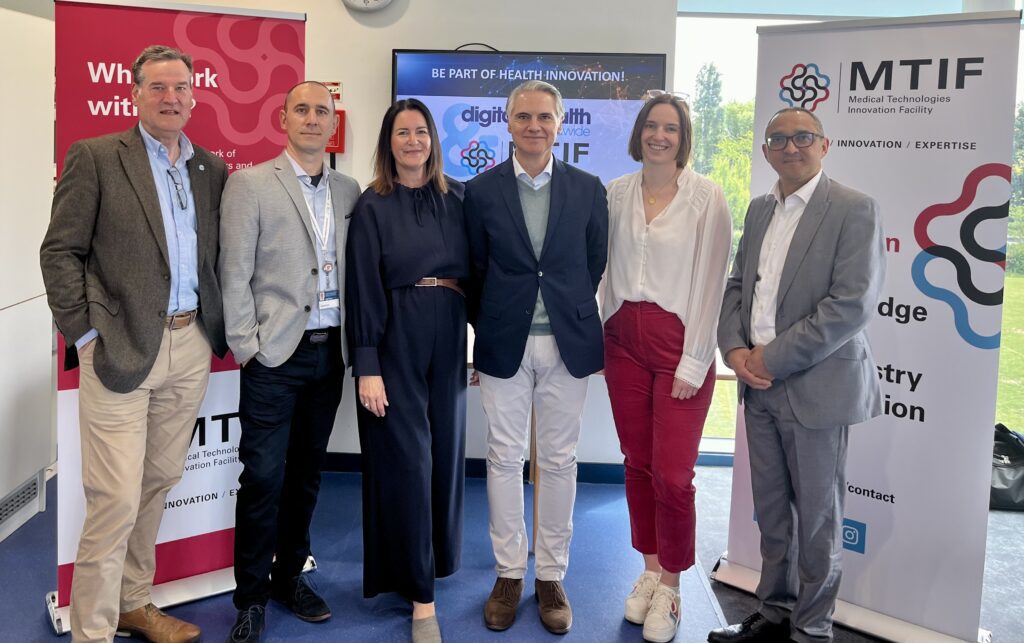
Alongside the proven Curia sprint methodology and through the Strategic Innovation Gateway model – developed and owned by digital4health and evolved from best practice pioneered by the Madrid Government’s and MAD e-Health programme – and delivered in the UK in partnership with digital4health UK, we apply a structured three-phase approach: NHS-led challenges are first clearly defined and showcased; innovators are then matched to genuine system needs; and targeted support is provided to move solutions from demonstration through to sustained adoption.
This matters because adoption must begin with clearly defined system problems. When NHS leaders articulate the challenge first – whether around obesity disparities, digital transformation, or service redesign – innovators can respond in a focused, outcome-driven way.
Our role is to place decision-makers, clinicians, policymakers, and innovators in the same room – not for abstract debate, but for structured collaboration.
And crucially, we remain independent.
UKHLSI and Digital4Health UK retains full editorial control of its outputs and uses proven methodology applied across the digital4health worldwide ecosystem. Neither organisation advocates on behalf of any single organisation. Adoption must serve patients and the system, not narrow interests.
UKHLSI works with policy institutes including Curia – where we have spun out from – to look at ways in which our ideas can be turned into reality through high quality policy.
Connecting the UK to a global innovation network
One of the structural weaknesses in UK adoption has been the limited, systematic exchange with global best practice – at a time when seeking out best-in-class models and embedding knowledge transfer should be a core priority for every healthcare and hospital leader.
Health systems across Europe, North America and Asia are grappling with the same pressures, ageing populations, workforce shortages, rising chronic disease, and fiscal constraint. Many have piloted models of digital integration, AI deployment, community-based prevention, and value-based commissioning that offer transferable lessons.
UKHLSI sits within a global network spanning 30 countries, through its partnership foundations and wider ecosystem connections at digital4health worldwide. This unique global connectivity allows us to do something different: import insight, not just export innovation.
If a model has successfully accelerated adoption in another system, we can examine whether its governance, financing or evaluation structure can be adapted for the UK.
If a UK business is scaling internationally but struggling domestically, we can surface that contradiction to policymakers.
Innovation ecosystems thrive on exchange. Adoption systems thrive on learning.
Bridging Westminster, Whitehall, and the frontline
Adoption is not solely an operational issue. It is a policy issue.
Incentives, regulatory clarity, procurement reform, and funding structures all influence whether innovation spreads. That is why UKHLSI’s position within the wider Chamber Group and Curia ecosystem matters.
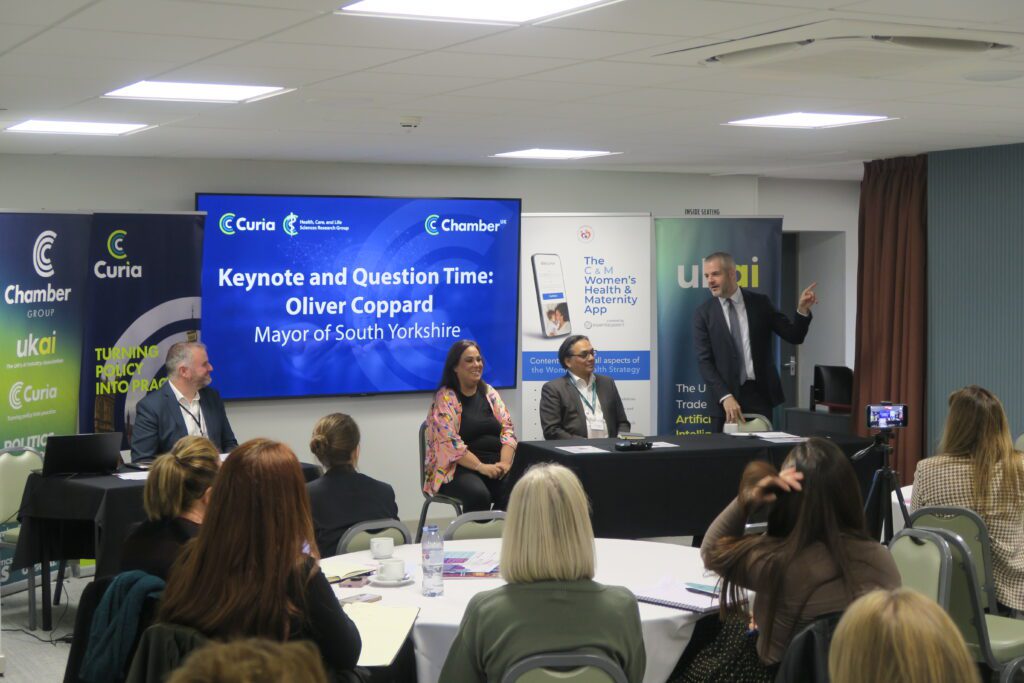
We operate at the intersection of Parliament, policy development, and system leadership. Our parliamentary roundtables and events bring together ministers, shadow teams, NHS executives, industry leaders and patient voices to interrogate barriers and co-design solutions.
From tackling obesity through policy reform to unlocking the UK’s bioeconomy, our approach is deliberately cross-sector.
Because innovation adoption does not sit neatly in one department. It touches Treasury productivity goals, DHSC reform agendas, Department for Science, Innovation and Technology (DSIT) growth strategies, and local government delivery.
We must stop treating innovation as a niche issue. It is central to national resilience, economic growth, and public service reform.
A shift in mindset: adoption as infrastructure
Ultimately, what the UK requires is a cultural shift.
We celebrate breakthrough science. We must now celebrate breakthrough implementation – not as a reporting exercise, but as a measurable improvement in patient-centred outcomes.
Adoption should be viewed as infrastructure – as critical to system performance as estates, workforce planning, or digital architecture. Yet too often, funded innovation programmes become tick-box exercises, designed to satisfy centrally set targets or local reporting requirements rather than to deliver meaningful, lasting change. Activity is counted, pilots are announced, numbers are met – but transformation remains limited.
We cannot continue to do what we have always done and expect a different result. Nor can the economy afford it. Inefficient delivery models, repeated pilots without scale, and fragmented commissioning cycles drain public resources and slow the growth of UK innovators who could otherwise contribute to productivity and export strength.
A genuine shift in mindset means:
- Clearer, demand-led problem definition from NHS systems, grounded in real patient need.
- Transparent pathways from pilot to scale, with accountability for adoption outcomes.
- Shared evaluation frameworks focused on measurable impact, not programme volume.
- Skills development in AI and digital literacy across the workforce to support confident implementation.
- Systematic learning from global best practice embedded into domestic strategy.
- Policy mechanisms that reward prevention, long-term value, and sustained adoption rather than short-term activity.
It also means giving innovators honest feedback, structured routes to engagement and realistic expectations about timelines and evidence – while being equally honest with ourselves about whether existing structures are truly designed to deliver the outcomes patients and communities deserve.
From ambition to action
The UK has repeatedly articulated its ambition to be a life sciences superpower. That ambition is justified.
But leadership is not defined by invention alone. It is defined by implementation.
UKHLSI exists to support that transition – to strengthen capability, connect partners, provide trusted leadership across clinical, digital and AI innovation, and enable meaningful global exchange.
Adoption is not glamorous. It requires persistence, co-ordination, and trust – and while it can be disruptive, without embracing that disruption we will remain on the same path, repeating the same patterns and expecting different results. Yet if we get it right, the prize is substantial: faster access for patients to life-changing solutions, improved system productivity, stronger SME growth, and a globally competitive health innovation economy.
Britain does not need more pilot projects.
It needs pathways to scale, and it is time we built them.
Get Involved
To find out more about becoming a member of UK Healthcare and Life Sciences Innovation (UKHLSI) visit www.ukhlsi.co.uk or contact Joanne.Bekis@ukhlsi.co.uk.