
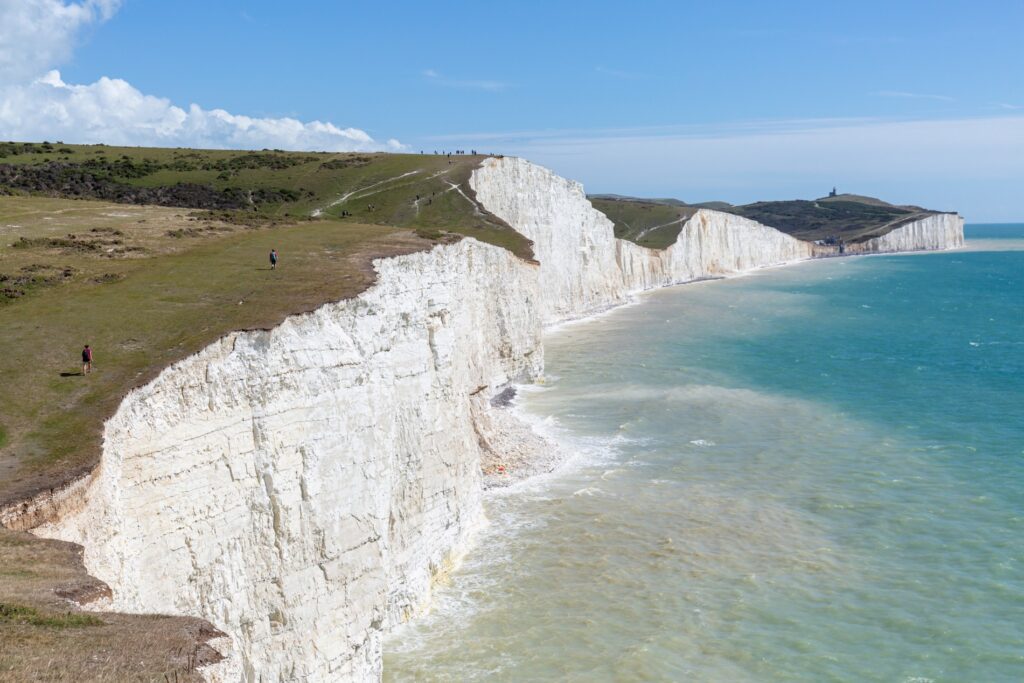
On the same day that Seven Sisters was formally declared England’s newest National Nature Reserve, tourism, transport and regional leaders gathered at the All Party Parliamentary Group (APPG) for the South East to make the case for a stronger, more joined-up growth strategy for the region.
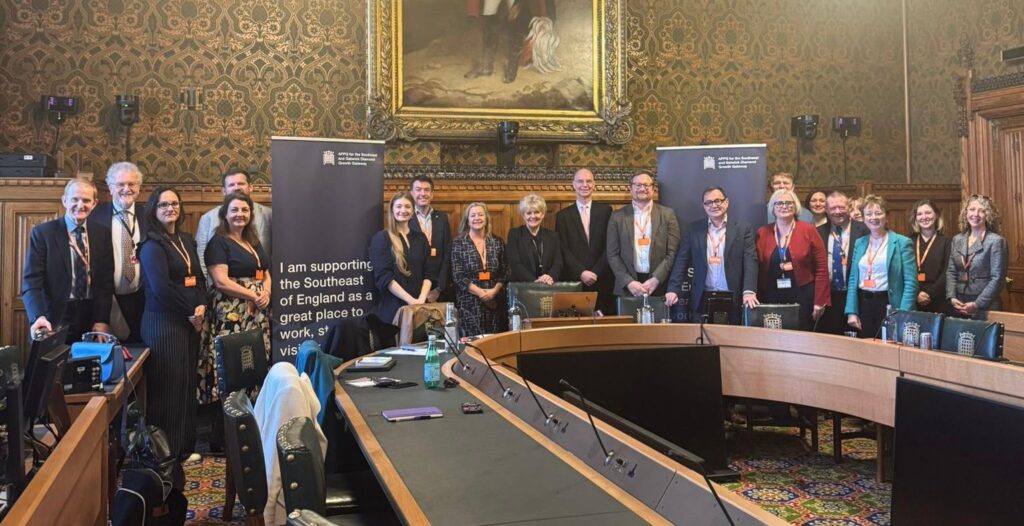
As the meeting gathered to celebrate English Tourism Week, much of the discussion at the Parliamentary meeting centred on how the South East can better promote its landscapes, culture, heritage and international gateways as part of a more coherent visitor economy offer. The formal designation of Seven Sisters gave that argument a timely example.
Seven Sisters gives the South East a powerful new story to tell
Seven Sisters is one of the country’s most recognisable landscapes, and its new status gives the South East a stronger platform from which to talk about tourism, place and long-term stewardship. The new reserve covers 1,500 hectares and includes globally rare habitats such as chalk grasslands, heath and floodplain meadows, alongside species including chalkhill blue butterflies, skylarks, yellowhammers, and bee orchids.
The site sits within the South Downs National Park and has significance far beyond conservation alone. Natural England said the cliffs and surrounding landscape attract up to one million visitors a year, while also forming part of a wider chalk system that contains one of Britain’s largest aquifers, supplying drinking water to nearby towns and clean freshwater for wildlife.
That dual role – as a national environmental asset and as a major visitor draw – closely reflected the themes raised in the APPG discussion. Participants spoke about the idea that the South East’s natural and cultural strengths are not secondary to economic policy, but central to it.
Tourism, nature and growth in the same conversation
Chair of the Devo Agency, Gill Morris opened the discussion by arguing that devolution could create a major opportunity for the South East to take greater control over growth and investment, while also strengthening regional identity. Throughout the meeting, speakers described tourism not as something peripheral or seasonal, but as a core economic sector tied to jobs, skills, transport, place-making, and inward investment.
That framing now looks even more compelling in light of the Seven Sisters announcement. The reserve is not only a conservation milestone. It is also a reminder that the South East possesses globally recognisable landscapes with the ability to attract visitors, support local supply chains and strengthen the wider reputation of the region.
Seven Sisters has a long history in popular culture, noting links to writers including Rudyard Kipling and its use as a filming location for productions including Atonement, Harry Potter and the Goblet of Fire, Robin Hood: Prince of Thieves and Wicked. That matters commercially as well as culturally. During the APPG meeting, speakers stressed how strongly film, television and heritage can shape travel decisions and help destinations stand out internationally.
A major new designation with national significance
The Seven Sisters designation is also significant in national policy terms. Natural England said the reserve marks the halfway point in The King’s Series of National Nature Reserves, under which 25 new or extended reserves are due to be created by 2028. Seven Sisters is the 13th reserve in that series.
The reserve will be managed by a partnership of eight organisations, including Natural England, Forestry England, the National Trust, Sussex Wildlife Trust, the South Downs National Park Authority, South East Water, Eastbourne Borough Council and Seaford Town Council. That collaborative model is notable in itself, because collaboration was one of the most consistent messages from the APPG session. Contributors argued that the South East needs stronger coordination between public bodies, visitor organisations, transport providers and business if it is to convert existing assets into a more effective growth strategy.
Why the South East’s visitor economy deserves greater priority
Speakers at the meeting pointed to the scale of the tourism economy across both the region and the country. VisitEngland described tourism as a major national economic contributor and stressed the importance of the South East as one of the sector’s key pillars. The wider point made in the room was that the visitor economy is often underestimated in policy debates, even though it supports jobs, skills and year-round economic activity.
That concern also came through in comments about Seven Sisters itself. The reserve’s formal recognition strengthens the case that landscapes of this kind should not be seen purely through a conservation lens or purely through a visitor lens. The challenge is to manage both together – protecting what makes such places special while ensuring they continue to contribute to the local economy.
Natural England explicitly made that connection, saying the reserve will be better protected and restored for both nature and people. That balance between access and stewardship was echoed at the APPG, where several speakers stressed the importance of sustainable tourism and avoiding damage to the very assets the region wants to promote.
Connectivity remains the biggest barrier
If there was one issue that dominated the APPG discussion, it was connectivity. While the South East is well placed in some respects – with Gatwick as a major international gateway and strong links into London – speakers said that moving across the region remains too difficult. East-west travel, local integration and access to rural or coastal destinations were all identified as weaknesses.
That point becomes even more important in the context of Seven Sisters. A major new reserve can raise the profile of the region, but profile alone is not enough. The economic benefit depends on whether visitors can move easily beyond a single landmark and into the wider South East offer – staying longer, spending more and connecting with nearby towns, attractions, vineyards, heritage sites and coastal destinations.
Why devolution could be a turning point
The APPG discussion kept circling back to what a future mayoral model could mean for the South East. Several speakers argued that devolution should create a more coherent framework for tourism, infrastructure and economic strategy, particularly if the region can avoid fragmented decision-making and speak with a stronger collective voice.
The most widely shared recommendation in the room was that the local visitor economy partnership should be properly backed and integrated into that future structure. Participants described the need for one credible, coordinated body that can work across local authorities, business and transport partners and present a clear offer to future regional leaders.
That logic fits closely with the Seven Sisters story. A landscape of that scale and prominence is not just an isolated attraction. It is part of a much wider South East proposition around nature, culture, accessibility and identity. To make the most of it, the region will need not just promotion, but organisation.
AI and the future of the visitor economy
One of the more forward-looking interventions in the discussion focused on the growing role of artificial intelligence (AI) in shaping how people discover, plan and experience travel.
It was noted that AI is rapidly becoming a primary interface for trip planning, with more visitors now using tools such as ChatGPT and other AI platforms to build itineraries, compare destinations and make real-time decisions about where to go. This shift is accelerating quickly and is expected to underpin a significant new segment of the visitor economy over the coming decade – AI-tourism-tech is expected to contribute around £1billion to the UK economy by 2030.
For the South East, this presents both an opportunity and a risk.
On the one hand, AI offers a powerful way to surface destinations that may previously have been overlooked. Landscapes such as the Seven Sisters, along with vineyards, coastal towns and heritage sites across Sussex and the wider region, are exactly the kind of experiences AI-led discovery tools can elevate – particularly when users search for “hidden gems”, “nature near London” or “short breaks from Gatwick”.
On the other hand, there was a clear warning that if destinations are not structured, visible and accessible in AI-driven search environments, they risk becoming invisible. Traditional tourism websites and fragmented local information sources may struggle to compete in a world where travellers expect instant, curated and personalised recommendations.
The implication for the South East is that digital infrastructure and data are becoming as important as physical infrastructure.
This means thinking differently about how destinations are presented – from creating bookable, packaged experiences, to ensuring that transport links, itineraries and local attractions are clearly defined and easily surfaced through AI systems. It also raises questions about how local businesses, visitor economy partnerships and public bodies work together to ensure their offer is discoverable in an AI-first landscape.
Encouragingly, there was recognition that national bodies are already beginning to explore this shift, both in terms of consumer behaviour and how better data can support business decision-making. However, the broader point remains that AI is not a future consideration for tourism – it is already reshaping demand.
For a region with the scale, diversity and proximity to London that the South East enjoys, embracing that shift could be a significant competitive advantage.
A timely reminder of what the South East has to offer
There was a clear sense at the APPG meeting that the South East already has many of the ingredients required for stronger growth – natural beauty, heritage, food and drink, transport gateways, cultural assets and international recognition – but has not always presented them with enough confidence or co-ordination.
The formal declaration of Seven Sisters as England’s newest National Nature Reserve is a tangible example of the kind of place the South East can build a stronger story around: internationally recognisable, economically valuable, environmentally important and deeply tied to local identity.
For policymakers, local leaders and future regional mayors, the message from the meeting was increasingly clear. If the South East wants to compete more effectively for visitors, investment and attention, it should start by treating tourism, nature, culture and connectivity as part of the same growth agenda.
Image: Balon Greyjoy