



Peter Lamb MP
Member of Parliament for CrawleyChair, All Party Parliamentary Group for
Wellbeing Economics
Following the Get Britain Growing South East Conference, South East MP, Peter Lamb writes that if we are serious about improving health, reducing pressure on public services and building resilient communities, we must start with the homes people live in. This article was formed from the points raised at the conference.
Housing is one of the defining political and moral challenges of our time. It sits at the intersection of fairness, opportunity, health, and economic security. However, for too long, it has been treated as a narrow policy silo rather than the foundation on which people build their lives. This Sprint session was convened in recognition of a simple truth: if we are serious about improving health outcomes, reducing pressure on public services, and creating resilient communities, we must start with the homes people live in.
I come to this discussion not only as a Member of Parliament, but as someone who has spent many years in local government, grappling with the practical realities of housing delivery. I have seen firsthand how decisions made in Westminster land in council offices, housing departments, and living rooms. I have also seen the consequences when policy ambition is not matched by delivery capability or joined up thinking. Housing is where those gaps are felt most acutely.
Across the South East, the pressures are intense. Demand for housing continues to grow, driven by population change, economic patterns, and displacement from higher-cost areas. At the same time, councils face constrained land supply, stretched infrastructure, and rising costs. The result is a system that too often responds to crisis rather than preventing it. Temporary accommodation, overcrowding, and poor-quality housing are no longer edge cases; they are becoming structural features of the system, with profound consequences for health, education, and wellbeing.
What was striking about this Sprint was the breadth of experience around the table and the consistency of the diagnosis. Councillors described families being moved miles away from their communities, children losing access to schools and GPs, and adults struggling to maintain work.
Health leaders spoke about preventable demand flowing into the NHS, driven by damp homes, cold conditions, stress, and isolation. Infrastructure providers highlighted the difficulty of retrofitting solutions into places that were never designed with integration in mind. Despite coming from different perspectives, participants were describing the same problem.
One of the clearest messages to emerge was that housing cannot be separated from health. The home is where people recover, age, raise families, and manage long-term conditions. When homes are unsafe, cold, overcrowded, or disconnected, the consequences show up elsewhere in the system. We see it in respiratory illness, in mental health pressures, in delayed hospital discharge, and in escalating social care needs. Treating housing as a downstream issue, rather than a preventive intervention, is a false economy.
The Sprint also challenged us to confront the reality of digital exclusion. We live in a society where access to services, employment, and support increasingly assumes a level of digital connectivity. Yet millions of people, particularly in social housing, remain effectively offline. This is not a marginal issue.
It affects the ability of residents to book GP appointments, engage with schools, apply for jobs, or manage their finances. It also constrains the ability of public services to modernise and deliver care more efficiently.
Participants emphasised that this is not only a question of resident access, but a practical constraint on delivery. Without reliable connectivity, councils and housing providers struggle to identify voids and empty homes quickly, monitor property condition, or spot emerging risks before they become crises.
Despite significant national investment in digital infrastructure, too many social homes remain unconnected or reliant on insecure, short-term mobile data. This is not simply a technical failure; it is a policy failure. We would not accept homes without electricity or water, yet we have normalised a situation in which lack of connectivity locks people out of modern life. The Sprint was clear that this must change.
Several contributors argued that the same standard should apply to broadband: treating connectivity as optional has normalised exclusion and left services unable to modernise at pace.
What I found most encouraging was the shift in the conversation from problem description to practical solutions. Rather than debating abstract targets, the group focused on a concrete proposition: the idea of the connected home. This is not about technology for its own sake. It is about recognising that reliable, affordable connectivity enables better housing management, more preventive health and care, and greater independence for residents. It creates the conditions for services to work together rather than in silos.
The Connected Homes model discussed in this report is deliberately pragmatic. It acknowledges the realities of different sectors, the need for partnership and the importance of trust. It also recognises that connectivity alone is not enough. Skills, support, and clear governance are essential if technology is to empower rather than exclude. Above all, it places residents at the centre, focusing on what enables people to live healthier, more secure, and more connected lives.
This Sprint was not about producing another report that sits on a shelf. It was about identifying an intervention that can be tested, refined, and scaled. The proposals set out here are grounded in lived experience and delivery insight. They offer a way of aligning housing, health, and infrastructure policy around shared outcomes, rather than competing priorities.

Housing policy will always involve difficult choices. There are no simple fixes, and no single intervention will solve every challenge. But if we continue to treat housing as separate from health, digital infrastructure, and prevention, we will continue to pay the price elsewhere in the system. This Sprint points to a different approach, one that starts from the home as the foundation of wellbeing and builds outwards.
I would like to thank all those who contributed to this session for their honesty, expertise, and willingness to engage across boundaries. The task now is to turn these ideas into action. That will require leadership at national and local level, sustained commitment, and a willingness to work differently. The opportunity, however, is significant: healthier communities, more sustainable public services, and a housing system that truly supports the people it is meant to serve.
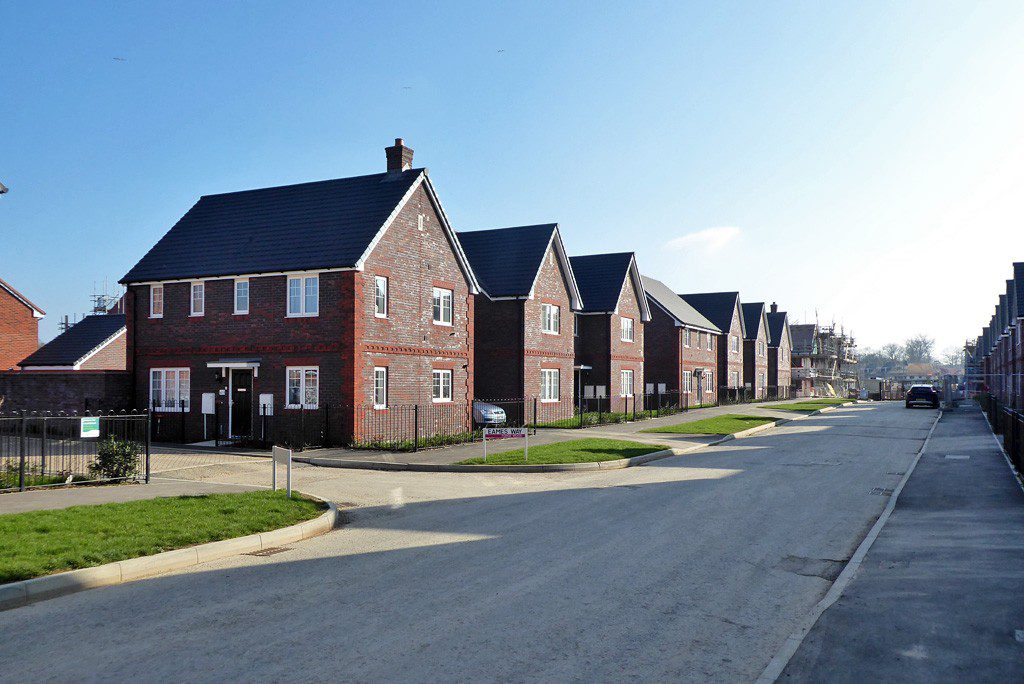
Photo: New homes built in Crawley, Surrey (Robin Webster)
Find out more: Curia Healthy Homes Programme
To find out more about Curia’s work on healthy homes, contact Partnerships Director Ben McDermott at ben.mcdermott@chamberuk.com