
Japan’s Prime Minister is expected to win Sunday’s election comfortably, riding a wave of high public approval. But Sanae Takaichi will have to govern a country grappling with economic stagnation, volatile allies, and the ghosts of its past.
“Salute!” Japanese Prime Minister Sanae Takaichi smiles across the table to her Italian counterpart, Giorgia Meloni. A few minutes later, she leads her aides, who appear much more hesitant than their boss, in singing “Happy Birthday” for the Italian PM (in Italian, of course). Three days earlier, Takaichi surprised South Korean leader Lee Jae-myung by handing him drumsticks after a summit; the two then jammed to viral K-pop hits. When Donald Trump visited in October, she joined him on stage while he addressed US troops, smiling and waving to the soldiers.
Japan’s first female prime minister has charmed her way onto the world stage, and at home, things are going similarly well. The 64-year-old enjoys a 70% approval rating, as “Sana-mania” grips the country. Takaichi has conquered social media with her sense for viral moments and unique fashion choices, which particularly excite younger voters. According to current polls, she is set to win a two-thirds majority in the lower house on Sunday, giving her LDP party full control of Japan’s legislature. But beneath the excitement, Takaichi faces the job of governing a Japan in turmoil, with crises that charisma alone won’t solve.
A Breath of Fresh Air in a Country in Decline
“Takaichi is atypical of a Japanese politician, not just because she’s a woman but also because of her background,” says Hitoshi Suzuki, Senior Research Fellow at the Tokyo-based Institute of Geoeconomics. Japan’s politics remain largely male-dominated and upper-class, with most Prime Ministers stemming from the same few influential families. Takaichi, meanwhile, grew up middle-class, something she often emphasises when talking about affordability issues, a topic she has had to discuss a lot.
Japan is in the middle of an affordability crisis. Real wages have fallen constantly since 2022 amidst high inflation, and a price spike in 2025 made matters even worse. Japan also has the highest debt burden of any developed economy, and the Yen is losing value as well. “We haven’t had any sufficient growth in Japan since the boom in the 1990s,” Hitoshi Suzuki says. “In the 2000s, people were talking about the ‘lost decade’. Now, we have to face the fact that we’ve lost three decades.”
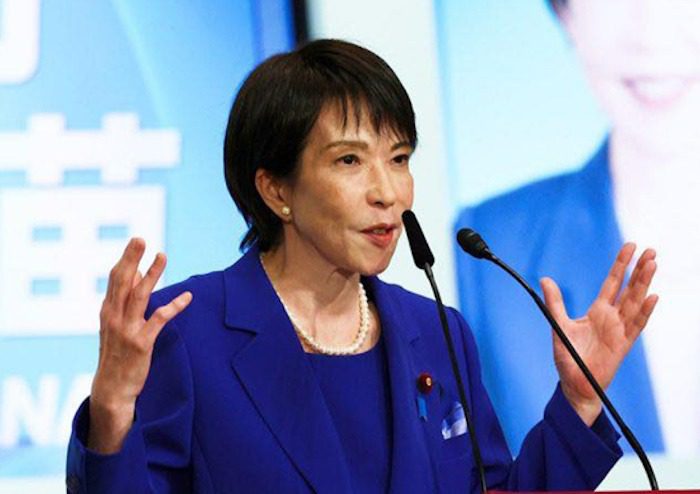
Image: Prime Minister Sanae Takaichi gives a speech – Trong Khiem Nguyen / Flickr
And that is where Takaichi comes in. “She’s offering a vision of hope for a demoralised nation,” says Jeff Kingston, Professor of Asian Studies at Temple University in Tokyo. “Japan is eager to overcome this era of stagnation and decline, and her upbeat, positive, yet down-to-earth messaging appeals to voters.” Takaichi has indeed tried kickstarting the economy in her relatively short tenure, putting in place a budget in December that included slashing petrol prices and issuing stimulus cheques.
“But except for the messaging, realistically, everyone knows that Takaichi can’t just magically bring about an economic boom,” Hitoshi Suzuki says. “All developed economies are struggling to get any economic growth right now, and despite some prestige projects in the semiconductor industry, we in Japan won’t be an exception.”
The Rise of the Far-Right
Along with the economic downturn, a new force has emerged in Japanese politics. Propagating a “Japan-first” ideology that takes inspiration from Donald Trump, the Sanseito party has been gaining traction in recent years. The party has two core messages: they demand a tougher stance on immigration and a tougher stance on China.
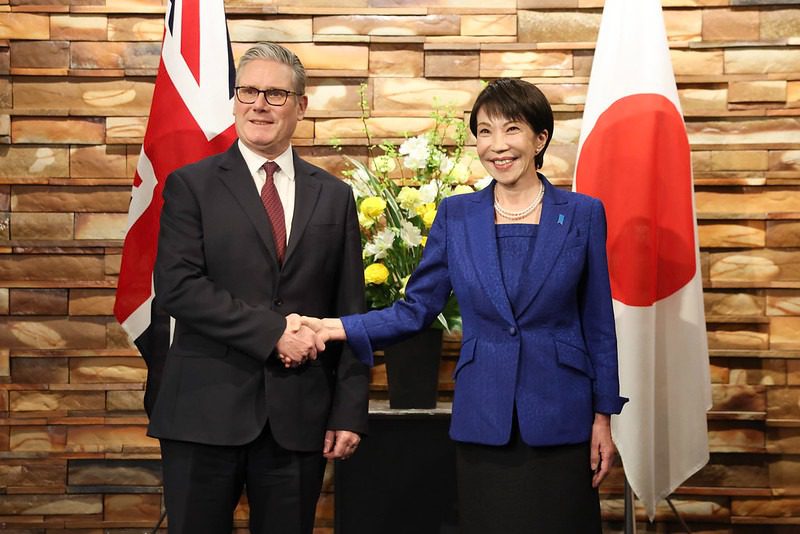
Image: Prime Minister Keir Starmer meets Japanese PM Sanae Takaichi – No 10 Downing Street / Simon Dawson
After having held only one seat in the powerful lower house of parliament for years, Sanseito won a record 26 seats at the last election in July. The success commanded global media attention, in part because Japan had never had a notable far-right force in parliament since the Second World War. “We always thought a resurgence of the far right wouldn’t be possible in Japan,” Hitoshi Suzuki remembers. “It was alarming to a lot of regular Japanese people.”
Most of Sanseito’s support had come from core LDP voters who thought the party had become too liberal under Sanae Takaichi’s predecessor, Shigeru Ishiba. After Ishiba resigned following a string of electoral setbacks, the LDP nominated the more conservative Takaichi in October. Within four months of her government, Sanseito has moved from running an anti-government campaign to actively campaigning for Takaichi to remain Prime Minister. The new PM has largely hijacked their agenda.
Anti-China Rhetoric: Popular but Risky
Nowhere is that clearer than in foreign policy. Takaichi has adopted a hawkish approach to China, angering Beijing by saying that Japan could support Taiwan militarily if China were to invade it. The Chinese responded angrily, cancelling flights, issuing travel warnings, and imposing export restrictions.
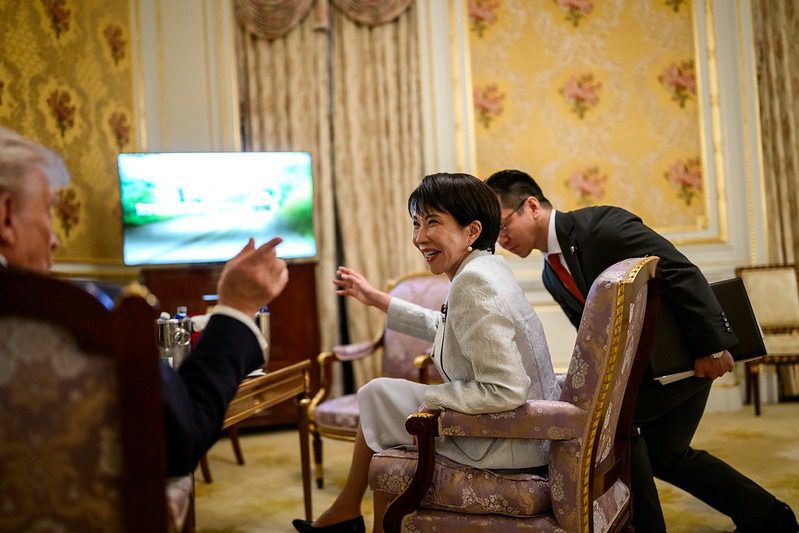
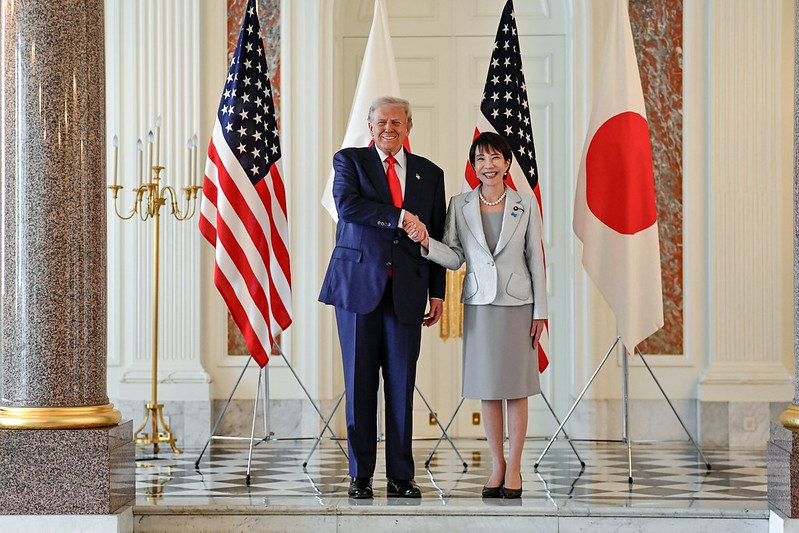
Image: President Trump and Japanese Prime Minister Sanae Takaichi watch the World Series before a bilateral meeting – The White House / Daniel Torok
The move sent Takaichi’s approval ratings in Japan skyrocketing. “People like her standing up to Beijing’s browbeating,” Jeff Kingston says. “She was trying to position herself as a kind of Margaret Thatcher of Asia, and it has worked.” Disliking the Chinese government is deeply rooted in Japanese society, where 86% of respondents said they had “unfriendly feelings” towards Beijing in a 2024 poll. “People are tired of decades of our government being too soft on China under Takaichi’s predecessors; this was integral to the rise of Sanseito,” Hitoshi Suzuki says. “Takaichi put an end to this.”
But angering China is also risky. Beijing is Tokyo’s largest trading partner and holds massive leverage over Japanese companies when it comes to rare earths. “Japanese business leaders do not want to see too much anti-China policy, even though they’re not saying so publicly,” Suzuki says. “If Takaichi goes too hardcore anti-China, the business elite will at some point turn against her. But Sanseito will too if she is too soft.”
The Immigration Dilemma
On immigration, another key Sanseito topic, Takaichi is caught between two stools in a similar way.
Only about 3% of Japan’s population is foreign, yet anxiety about uncontrolled migration is widespread. Takaichi has repeatedly tapped into those fears and promised to review the immigration system, something 70% of Japanese support, according to a poll in January. “By acknowledging the issues and appearing like she is on top of it, Takaichi has effectively sidelined this topic, which is remarkable as Sanseito gained so much ground with it just half a year ago,” Jeff Kingston says. “But on the other hand, there is consensus that Japan needs immigration.”
Having seen declining birth rates for decades, Japan’s population is projected to fall by about 30% to 87 million by 2070, when four out of every 10 people will be 65 or older. “If Takaichi fails to start tough immigration policies, she will lose the right wing. But at the same time, Japanese businesses want and need foreign workers,” Hitoshi Suzuki says. “It’s a balancing act again.”
Japan’s Only Partner
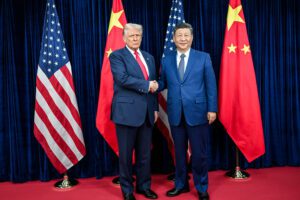
Another major uncertainty for Takaichi is Donald Trump, with whom she shares a complicated relationship. Trump was Takaichi’s first guest as Prime Minister, with the President saying afterwards that the meeting had left him “deeply impressed”. But the following weeks were marred by tension as Trump announced, and then repealed, his infamous tariffs against Japan. After Takaichi’s comments on Taiwan angered Beijing, Trump also refused to come to her aid. But on Saturday, he officially endorsed her bid for Prime Minister.

Image: President Trump addresses American soldiers stationed in Japan – The Trump White House Archive / Flickr
“We are really reliant on the United States: Japan has no regional support system like NATO; they are kind of our only ally,” Hitoshi Suzuki says. The two countries closely collaborate when it comes to security, with the US having stationed around 55,000 soldiers in Japan, the country’s only foreign military presence.
But economically, the tariffs have left scars. “Most Japanese businesses see Trump as a geostrategic risk now,” Suzuki says, “but they are very reliant on the US. The strategy is teaming up with the US as long as we can, but also minimising the risk, which is very difficult.”
According to Jeff Kingston, however, Takaichi has her way of pleasing Trump and will put this on display at their next meeting in March. “She will tell him that Japan is ramping up defence spending, which will be music to his ears,” Kingston believes. “He’ll welcome her win in the election, he likes winners anyway, and she will be one.”
If Takaichi does secure the landslide victory expected on Sunday, she will be able to look back at a remarkable first few months in office. She has galvanised voters, turned the far-right from foes into allies, and charmed her way onto the world stage. But what lies ahead will be the real challenge for “Asia’s Margaret Thatcher”. For now, she symbolises hope, but disillusionment is never far away.
Featured Image via The White House / Daniel Torok