

Thousands more dentists could soon be available to treat patients across the UK following government plans to expand professional registration exams and increase training places in dentistry.
The announcement from the Department of Health and Social Care aims to address the longstanding shortage of NHS dentists by allowing more overseas trained professionals to join the workforce while also expanding the number of dentists trained domestically in the field of dentistry.
Currently, thousands of qualified dentists who trained overseas are unable to practice in the UK because of limited exam capacity required for professional registration in dentistry. The new measures aim to clear this backlog and accelerate the number of dentists entering the workforce.
From 2028–29, as many as 2,400 additional overseas trained dentists each year could join the UK register, significantly expanding the pool of professionals available to provide dental care, including NHS treatments in dentistry.
Major expansion of overseas registration exams
A central part of the plan involves expanding the professional exams required for overseas trained dentists to practice in the UK.
Final exam places run by the Royal College of Surgeons of England will increase almost tenfold. The Licence in Dental Surgery (LDS) examination will expand from 180 places to 1,800 places by 2028, supported by a one off government grant of £420,000.
This expansion alone is expected to allow up to 1,350 overseas trained dentists each year to join the General Dental Council register.
At the same time, the General Dental Council will significantly increase capacity for its Overseas Registration Exam (ORE), with the clinical component expanding to 1,500 places, expected to result in more than 1,000 additional dentists joining the register annually by 2028–29.
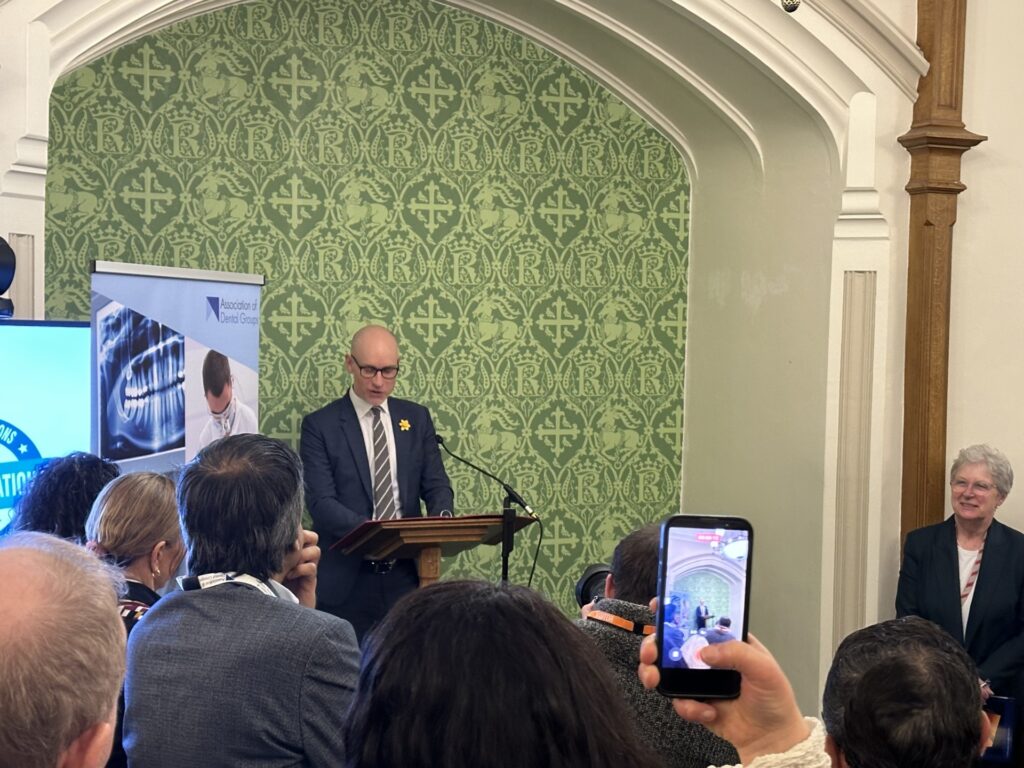
Care Minister, Stephen Kinnock MP said the changes were essential to addressing gaps in dental access.
“No one in the 21st century should be left in a situation where they cannot access a dentist.
“That is why today’s announcement is crucial, as training more dentists and allowing greater numbers of those qualified overseas to practice, will put more patients in dental chairs, receiving care when they need it most.
“These investments show this government is serious about rebuilding NHS dentistry and laying the foundations to make it fit for the future.”
Dental schools to expand for first time in two decades
Alongside the international recruitment measures, the government will expand domestic training places for dentists for the first time in nearly twenty years.
From 2027, 50 additional dental students will be trained annually in England, with the Office for Students asked to prioritise new places in areas often described as “dental deserts” – locations that currently lack dental schools and struggle to recruit dentists.
These areas are often rural or coastal communities where access to dental appointments has been particularly difficult.
“No one in the 21st century should be left in a situation where they cannot access a dentist.” Stephen Kinnock MP, Care Minister, Department of Health and Social Care
Dr Katie Petty-Saphon, Chief Executive of the Dental Schools Council, welcomed the move.
“We are pleased that the government has recognised the urgent need to grow the dental workforce at a time when access to NHS oral healthcare remains a significant challenge for many patients.
“Each year, dental schools are forced to turn away talented applicants who show great potential and this increase will allow more future NHS dentists to be admitted.
“Dental schools look forward to working with the government to support this expansion, ensuring recruitment follows best practice in widening participation while training NHS ready dentists and addressing geographical gaps in access to care.”
Professional bodies welcome expansion
Professional organisations across the dental sector have also welcomed the changes, particularly the expansion of exam capacity which has long been viewed as a bottleneck preventing qualified dentists from entering the workforce.
Dr Charlotte Eckhardt, Dean of the Faculty of Dental Surgery at the Royal College of Surgeons of England, said:
“RCS England is pleased to work with the Department of Health and Social Care to increase the number of places for candidates sitting the Licence in Dental Surgery examination. This expansion will support more candidates, strengthen the dental workforce, and help improve public access to dentistry.”
Tom Whiting, Chief Executive and Registrar at the General Dental Council, added: “Our top priority has been to increase the capacity of the ORE, and I’m pleased that we can offer greater certainty and scale through this new contract. This is good news for candidates.
“More ORE places, along with more students at dental schools and the increase in capacity for the LDS, is great news for the dental workforce and, in turn, patients and the public.
“Sustainable change requires a long term plan, and working with others, we are committed to playing our part, to support any workforce strategy, including building a comprehensive framework to support international recruitment.”
Neil Carmichael, Executive Chair of the Association of Dental Groups, said the reforms would help address both workforce shortages and long waiting lists for care. “This is excellent news that ultimately will benefit patients, as well as put energy into the dentistry profession. We should soon see an increase of overseas trained dentists, who are now able to take the robust examinations, joining the GDC’s register – and providing NHS treatments.
“The ADG has been pushing for some time for the bottleneck in the registration examination for international dentists to be addressed, having highlighted the craziness of having over 5,000 trained dentists from overseas waiting in the queue to qualify – whilst we have 2,700 dentist vacancies and not enough home grown dentists to fill the gap.
“This is a creative approach to get things moving and we applaud the department of health’s efforts and agility.
“Increasing UK dental school places is also fantastic news. A career in dentistry is an exciting and rewarding one that UK students should be encouraged to pursue. As always, the ADG stands by to advise policymakers and stakeholders to keep the momentum going and ensure that we target the most urgent patient needs in dental deserts.”
Overseas dentists still waiting for opportunities
For many overseas qualified dentists already living in the UK, the announcement could represent an opportunity to finally practice their profession.
Eni Muco, an overseas qualified dentist from Albania who has been waiting to sit the ORE, described the difficulties candidates currently face. “I qualified as a dentist in Albania in 2013 and ran my own practice before moving to the UK in 2021 to build a life with my husband.
“I joined the ORE candidate list in 2023 but, after seven failed attempts to book Part 1, I still can’t sit the exam. The uncertainty has caused financial strain, anxiety and difficult family decisions.
“Expanding exam capacity, fairer allocation and provisional registration would let dentists like me contribute and support the NHS.”
Part of wider NHS dentistry reforms
The government says the workforce expansion is only the first step in wider plans to reform NHS dentistry.
Ministers have committed to fundamental reform of the dental contract before the end of this Parliament, aiming to ensure funding is directed to areas with the greatest need while properly rewarding dental professionals.
The changes also form part of the government’s broader strategy to shift the health system from treating illness to preventing it, a central pillar of the forthcoming 10 Year Health Plan for England.
For many patients struggling to access appointments, the success of these measures will ultimately be judged by whether they translate into more available NHS dental care in communities across the country.