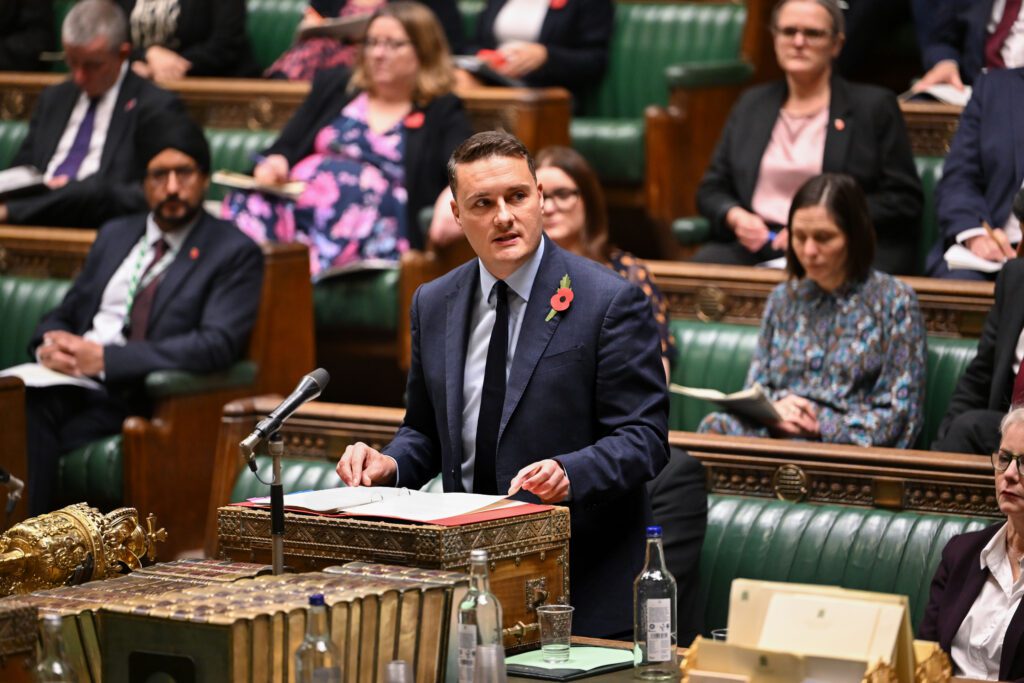

This week, Wes Streeting announced Labour’s new Women’s Health strategy, a plan that aims to clamp down on the misogyny faced by thousands of women across the country. The NHS, he said, has a “problem with basic, everyday sexism.” Women have “for so long been let down by a healthcare system that too often gaslights women, treating their pain as an inconvenience and their symptoms as an overreaction.”
For a sitting Health Secretary to use the word “gaslighting” about his own department’s flagship public institution is, by any measure, a significant moment. But does the strategy that’s been laid out actually deliver?
The Problem It’s Trying to Fix
The backdrop to this strategy is bleak. The Women and Equalities Committee, chaired by Labour MP Sarah Owen, delivered a damning parliamentary report in December 2024 that used the phrase “medical misogyny” without apology. It found that women experiencing painful reproductive conditions: endometriosis, adenomyosis, heavy menstrual bleeding, PMDD – routinely have their symptoms dismissed, normalised, and minimised. Women, for years, were told to “suck it up.” Their pain, the committee concluded, was treated as a personality failing rather than a medical complaint.
The statistics sit behind that language like a wall. As of December 2024, there were over 586,000 women on incomplete gynaecology pathways in the NHS, with nearly 45% of those patients waiting more than 18 weeks, far beyond the NHS standard. Almost 19,000 had been waiting longer than a year. Endometriosis, affecting roughly one in ten women, currently takes close to a decade to diagnose on average. The gynaecology waiting list has more than doubled in eight years. Female life expectancy has declined. Only the wealthiest third of women, the strategy’s own authors note, can expect to remain in good health until retirement.
This is not a niche policy issue. It is a crisis affecting millions of people’s daily lives: their careers, relationships, fertility, and mental health.
What the Strategy Actually Does
The renewed strategy is built around four pillars: centring women’s voices and choices; transforming NHS performance in the services that matter most to women; supporting all women to live healthy, prosperous lives; and creating a structural approach to reform under the wider 10-Year Health Plan.
Several concrete commitments stand out.
- For the first time, the strategy introduces a guaranteed standard requiring that women are offered appropriate and effective pain relief for invasive gynaecological procedures, including contraceptive coil fittings and hysteroscopies. This is long overdue. Campaigners and clinicians have been pushing for this for years following high-profile accounts, including from BBC presenter Naga Munchetty, of traumatic coil fittings conducted without anaesthesia. A Mail on Sunday investigation found that up to a third of women received no pain relief at all during coil insertion, even after guidance recommending it was issued in 2021. The strategy now moves that guidance to a mandatory standard of care; a meaningful shift, if enforced.
- Women will be directed to the right specialist at the first attempt through a new single referral system, rather than being “passed from one appointment to another,” in Streeting’s words. Action will be taken to cut the near-decade-long diagnostic wait for conditions like endometriosis.
- Perhaps the most structurally significant element is the proposal to link women’s feedback directly to provider funding through a new trial. Streeting was explicit about the logic: “We need to hit medical misogyny where it hurts – the wallet.” Services that fail to listen to women would, in theory, face financial consequences.
- The strategy reaffirms the government’s earlier commitment to set an explicit target to close the Black and South Asian maternal mortality gap, an issue of profound inequality. Black women are currently approximately 2.3 times more likely to die during or shortly after pregnancy than white women; South Asian women are around 1.4 times more likely. The government says it will invest £50 million through the National Institute for Health and Care Research to tackle maternity disparities.
- A £1 million investment in a menstrual education programme aims to help girls distinguish between normal and abnormal periods earlier. This matters: the parliamentary report found that sex education has consistently failed to teach girls what constitutes “normal” menstruation, which contributes to diagnostic delays that stretch into adulthood.
The strategy is embedded in the government’s wider 10-Year Health Plan and its ambition to shift care from hospitals into communities. New Neighbourhood Health Centres are envisaged as single, accessible points for women’s health — if they can replicate the success already shown by the existing Women’s Health Hubs model, where GP practices pool specialist services in areas like menopause care and coil fitting, this could be transformative.
What the Strategy Doesn’t Do — Yet
Progress has been “too slow” before.
The 2022 Women’s Health Strategy, published under the Conservatives, contained similar commitments and similar rhetoric. The parliamentary inquiry found its progress had been insufficient. The risk with this iteration is the same: a well-intentioned document that struggles to translate into consistent practice across a fragmented NHS. Structural reforms, like shifting commissioning to bring gynaecology and contraception under single funding streams, remain complicated and have historically been resistant to top-down policy fixes.
The waiting list problem is immense.
While the strategy pledges to cut the gynaecology waiting list, the scale of the backlog is daunting. Even the commitment to move patients from the independent sector — where spare private capacity exists — into state-funded treatment represents a significant logistical undertaking. The elective reform plan announced earlier this year aims to reduce the longest waits from 18 months to 18 weeks, but the timeline remains unclear.
“Medical misogyny” requires cultural change, not just clinical protocols.
The Women and Equalities Committee was unambiguous: the problem is not simply a lack of resources. It is a culture of bias, normalisation, and dismissal, embedded across primary and secondary care. Sarah Owen, chair of the committee, described it as “not a criticism of male doctors” specifically, but a “systemic misogyny” that runs through the whole structure. A new standard of care mandating pain relief is a policy. Changing the underlying attitudes of clinicians requires sustained training, accountability, and cultural leadership over years.
Intersectional inequalities need more than targets.
The commitment to close the black and Asian maternal mortality gap is welcome and long overdue, but setting a target is not the same as achieving it. Significant variation in access to perinatal mental health services by ethnicity persists. ICB budget cuts risk undermining the specialist programmes that disproportionately serve the women who need them most.
Does It Tackle Misogyny?
That depends on what you think tackling misogyny in healthcare looks like.
If it means naming the problem honestly and committing the government’s authority to confronting it: yes, this strategy does that more forthrightly than anything that has come before it. The language is not a bureaucratic euphemism. Calling out a “system that gaslights women” from the despatch box, and then legislating pain standards and accountability mechanisms to match, represents a qualitative shift.
Weighing in here myself (as a woman), I am split into two minds: we are finally moving in a positive direction for women’s rights in healthcare, but the fact that it has taken this long for us to acknowledge the sexism occurring frustrates me.
The menopause, for example, has only been given recognition in recent years, and that was mostly through relentless campaigning from the Menopause Mandate, an incredibly powerful movement from dedicated women for the menopause to be recognised properly in healthcare. It was through an aunt of mine that I discovered the sheer amount of symptoms that occur during the menopause, and upon further research I realised just how little women are taught about their health in schools.
Testosterone is not included in NHS prescriptions, costing from £60 monthly, something that most women need to feel like “themselves” again. Out of curiosity, I recently read a book on how to deal with the perimenopause (called the Feel Good Fix), and despite it not being in my imminent future, it made me truly admire all the women who have fought so hard to raise awareness of menopausal symptoms, and that women should not “disappear” once they reach a certain point in their lives.
Women’s contraception currently has one of the longest lists of side effects possible from a medication, and Plan B was only recently made free in pharmacies. After watching a Loose Women debate about medieval contraceptive methods, the pain described from inserting an IUD without anaesthetic to me feels, quite frankly, torturous. The lack of education surrounding the pill and its effectiveness is also alarming – it is not common knowledge that antibiotics stop it from working, or that Plan B is less effective if you are over 155-165 pounds.
So while this new Women’s Health Strategy is a step in the right direction, it is important to note that it is just that – a step. There is much more awareness and education needed surrounding women’s health, but for now, a government that names the problem honestly has at least cleared the first hurdle. The women who’ve been waiting a decade for a diagnosis will be watching closely to see if it clears the rest.
Featured Image Credit: House of Commons on Flickr