
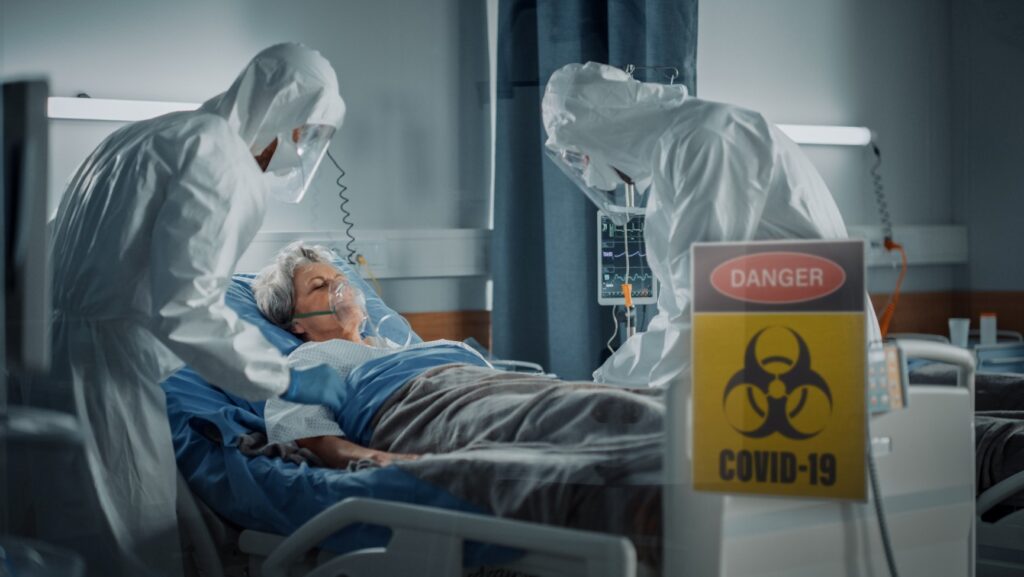
The latest findings from the UK Covid-19 Inquiry deliver one of the starkest assessments yet of how the NHS coped during the pandemic. Far from a system under pressure but in control, the inquiry concludes the service “came close to collapse”, surviving only through extraordinary efforts from frontline staff.
For years, political messaging emphasised resilience – that the NHS was stretched but ultimately held firm. The inquiry instead presents a more uncomfortable truth that the system did not so much withstand the crisis as narrowly avoid failure.
Crucially, this was not simply the result of Covid itself. The report makes clear that the NHS entered the pandemic in a “precarious position”, characterised by staff shortages, limited bed capacity, and high occupancy rates.
In other words, the pandemic did not create the crisis – it exposed and accelerated it.
“Patients were failed”
At the heart of the inquiry’s findings is a deeply troubling conclusion – both Covid and non-Covid patients did not receive the level of care they should have expected.
“Patients did not get the level of care they would usually receive.”
This failure took multiple forms. For Covid patients, overwhelmed intensive care units meant limited access to critical treatment. For others, routine services were paused or delayed – sometimes with fatal consequences.
The suspension of screenings, cancelled operations, and reduced access to emergency care created a second, less visible health crisis. Evidence shows that even people experiencing heart attacks avoided hospital, in part due to messaging that prioritised protecting the NHS.
The result was not just immediate harm but long-term impact: delayed diagnoses, worsened conditions, and increased mortality in areas such as cancer and cardiovascular disease.
The hidden cost of “Protect the NHS”
One of the most politically sensitive findings concerns the Government’s central public message: “Stay Home, Protect the NHS, Save Lives.”
While effective in reducing Covid transmission, the inquiry concludes it may have had unintended consequences – discouraging people from seeking urgent medical help.
“It may have sent the message that healthcare was closed.”
This highlights a critical tension in crisis communication. Messaging designed to protect system capacity can inadvertently suppress demand for essential care. In this case, the NHS was shielded in one sense, but at the cost of unmet need elsewhere.
The broader lesson is that public health messaging cannot be one-dimensional. Protecting system capacity must be balanced against maintaining access to routine and emergency services.

Reliance on “superhuman” effort
Perhaps the most striking aspect of the inquiry is its emphasis on the role of NHS staff.
“Only coped thanks to the almost superhuman efforts of healthcare workers.”
This is both a tribute and a warning. The system functioned not because it was robust, but because individuals absorbed the pressure – often at immense personal cost.
Staff described working under “intolerable pressure”, facing moral dilemmas about who could receive care, and operating in conditions likened to a “war zone”.
This reliance on extraordinary human effort is inherently unsustainable. As the inquiry notes, there is no guarantee that such conditions could be endured again in a future crisis.
Structural weaknesses laid bare
The findings reinforce a long-standing critique of the NHS: that it operates with minimal spare capacity.
Entering the pandemic, the UK had relatively low numbers of hospital beds compared to other developed countries, alongside persistent workforce shortages.
In normal times, this “lean” model can appear efficient. But in a crisis, it leaves little room to absorb shocks. The pandemic demonstrated how quickly such a system can become overwhelmed.
Failures in preparedness compounded these issues. The inquiry identifies:
- Insufficient personal protective equipment (PPE) in early stages
- Flawed assumptions about how the virus spread
- Limited surge capacity in hospitals
- Inadequate data systems to identify and protect vulnerable groups
These were not unforeseeable problems. Pandemic preparedness exercises had previously warned of similar risks. The issue was not a lack of knowledge, but a failure to act on it.
Political narratives under scruiny
The inquiry also challenges the political framing of the pandemic response.
Senior figures, including then Health Secretary, Matt Hancock, resisted describing the NHS as “overwhelmed”. But the inquiry draws a clear distinction between political language and operational reality.
Hospitals did reach a point where patients could not be admitted or treated in the usual way. Care standards were compromised. Decisions had to be made under extreme constraint.
This matters because language shapes accountability. If a system is never acknowledged as overwhelmed, it becomes harder to examine why and how failures occurred.
A warning for the future
The implications of the report extend beyond retrospective analysis, they also point directly to future risk.
The inquiry warns that without significant reform, the NHS may not withstand another comparable crisis.
Key recommendations focus on:
- Increasing hospital and emergency care capacity
- Strengthening workforce resilience
- Improving data and early warning systems
- Ensuring continuity of non-Covid care during crises
Underlying all of these is a central theme that resilience requires redundancy. Systems must have the capacity to absorb shocks without collapsing into crisis mode.
From heroism to system design
The Covid Inquiry’s findings ultimately shift the focus from individual effort to system design.
The NHS did not fail because its staff were inadequate – quite the opposite. It came close to collapse because it depended too heavily on their ability to compensate for structural weaknesses.
This distinction is critical. Applauding frontline workers is necessary, but it cannot substitute for addressing the underlying issues.
The real question now is whether policymakers are willing to act on what the inquiry has made clear: that a health system built to operate at near-full capacity in normal times is inherently vulnerable in extraordinary ones.
If that lesson is not taken seriously, the next crisis may not end with the system “only just” coping.