

Andy Burrows
CEO of the Molly Rose FoundationSocial media is harming children, and politicians are turning to an under-16 ban. Yet, Andy Burrows, CEO of the Molly Rose Foundation set up after Molly Russell’s death, explains why this instinctive solution could backfire and how we can approach creating better protections for children.
Every parent worries desperately about the Internet. They are entirely right to do so. More than eight years after the death of Molly Russell, the risks of social media remain pervasive and entirely unacceptable.
For children’s online safety and well-being, it increasingly appears that this year will mark an inflection point.
Driven by increasing calls for a social media ban, there is now irresistible political pressure for the Government to address the acute harms that continue to take young lives and the chronic harms that affect the mental health and well-being of teens.
When Molly died, she was days away from her 15th birthday. She had everything to live for. However, as the inquest into her death determined, Molly’s well-being was being steadily eroded by social media algorithms that bombarded her with a continuous stream of dangerous and deeply inappropriate suicide and self-harm content.
Regrettably, Molly’s death was not an isolated incident. Here in the UK, we lose a young person to suicide where technology plays a role every single week.
The Harms are Real and Ongoing
Research conducted by the Molly Rose Foundation found that half of the girls surveyed encounter content about suicide, self-harm, depression, or eating disorders each week. This isn’t an aberration, but the inevitable result of Silicon Valley business models that ruthlessly exploit and monetise our children’s attention.
In the face of such disturbing and pervasive widespread harm, it is no surprise that the patience of parents and caregivers has finally snapped. After years of delays and wholly insufficient action, parents understandably feel let down by successive governments and regulators, but most of all by tech firms that consistently prioritise corporate profit over children’s safety.
In the void created by legislation that was repeatedly delayed and then watered down, many parents have wholly understandably decided that the political will to decisively protect our children just isn’t there.
In opposition, Labour’s now Deputy Leader, Lucy Powell, announced that the Party would introduce stronger online safety legislation as a “top priority”. She promised parents, “I have met many of the families who have lost teenagers from online activity, and I promised them we would act.”
When the Government came into power, those promises came to nought. Lobbying from tech companies and the geopolitical headwinds from Washington DC meant that children’s online safety was yet again traded off.
In the face of such inaction and inertia, it is no wonder that calls to follow Australia’s lead and ban under-16s from social media have grown. Other countries, including Spain, have announced they will follow suit.

Why an Under-16 Ban is the Wrong Answer
As Chief Executive of the online safety charity founded in Molly’s name, you might expect me to be enthusiastically supportive of calls for a ban. The reality is the opposite. Along with over 40 other children’s safety experts and groups, I passionately believe that social media bans are the wrong approach.
Though well-intentioned, bans could end up doing more harm than good. In Australia, the early indications are that bans are proving to be wholly ineffective. For example, Instagram has only removed one account for every eight young people aged 8 to 15. Snapchat has performed only marginally better.
Parents are right to demand bold and comprehensive further action. However, families deserve better than a blunt and simplistic approach that affords them a false sense of safety, and that may make the safety and well-being of their children worse rather than better.
If properly enforced, a ban would introduce a deeply damaging cliff edge for older teens – and particularly girls – who would be suddenly exposed to poorly regulated online platforms on their 16th birthday.
With few, or no, protective guardrails in place, I’d worry deeply about the risks of suddenly exposing teenage girls to the worst excesses of social media platforms, especially while they are wholly ill-equipped and inexperienced to deal with the misogyny, toxicity, and sexual abuse they will regrettably continue to face.
We should be deeply worried about the risk that a ban will erect a new set of barriers that will make it harder and much less likely for children to disclose abuse and get the help and support they need.
Crucially, we must recognise that every child is different, that every childhood has different needs. Many young people rely on social media for connection, identity exploration, and support. For LGBTQ+ and neurodiverse children, being online can offer real benefits around identity, self-esteem, and peer support.
In Australia, we are already seeing children being referred to youth mental health services after being cut off from their online support networks. The country’s CAMHS equivalent reports that 10 per cent of new referrals stem from the country’s social media ban.
A Better Way Forward
However, there is another, better way. I utterly reject the idea that we must either support a counterproductive ban or continue to tolerate the appalling status quo.
For a start, the Prime Minister must press ahead with a bold expansion of the Online Safety Act, ensuring it finally tackles addictive design and attention-based business models.
We should see the introduction of risk-based minimum age ratings, which would see platforms adopt higher minimum joining ages if they offer higher risk design features, for example, livestreaming or AI chatbots.
We should introduce a new duty on tech firms to promote and protect children’s well-being, making well-being-by-design the price of admission to the UK market.
This means their algorithms must not only be free of harmful content, but must recommend high-quality, age-appropriate content from a diverse range of trusted sources, including trusted mental health support, education providers, and public service broadcasters.
As the Government’s consultation gets underway, I am hopeful we will finally see the urgent and decisive action that parents and children are rightly demanding.
Support for a new Online Safety Act is considerable – three-quarters of adults want strengthened legislation, with more support being expressed for tougher regulation than for an Australian-style ban.
It’s time for this Government to act. It’s time for a bold and comprehensive plan that, if backed by political will, will attract the support of experts, civil society, young people, and a clear majority of parents.
Parents want us to focus on the ends, not the means.
And they desperately need us to get this right.
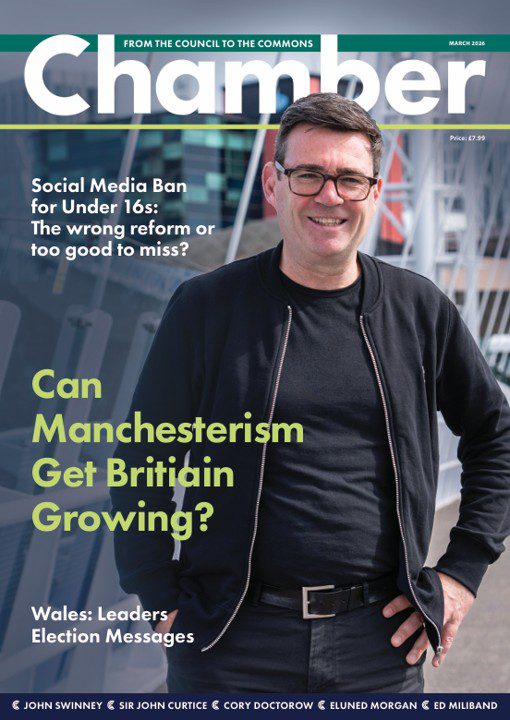
This article features in the new edition of ChamberUK. Our parliamentary journal.
Image credit: Shutterstock