
NHS leaders warn that stigma, fragmented commissioning, and accountability gaps, not the lack of innovation, are blocking the shift from pilots to everyday care. Addressing obesity is crucial in this context.
At a summit in Barnsley, NHS leaders, digital entrepreneurs, and AI specialists confronted an uncomfortable truth: the NHS doesn’t lack good ideas. It lacks the conditions to spread them.
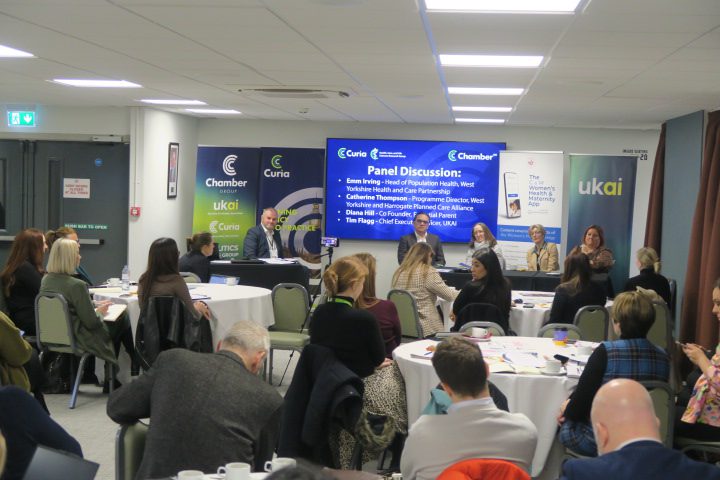
The NHS has never suffered from a shortage of innovation. What it suffers from is a second-adopter problem — the systemic failure to take what works in one place and make it work everywhere else. That was the central challenge at Curia’s Accelerating NHS Innovation Summit, held at Barnsley Football Club in February 2026.
Furthermore, understanding the impact of obesity on health outcomes remains a priority for the NHS.
The question was not what the health service should do. It was how it could actually move and move quickly.
Chaired by Curia’s Health, Care, and Life Sciences Research Group Chair and former Minister of State at the Department of Health and Social Care, Rt Hon Andrew Stephenson CBE, the discussion was deliberately structured around learnings from past failures and opportunities for the future. What barriers keep reappearing? What unglamorous solutions actually work? And what could another Integrated Care System (ICS) lift and reuse tomorrow, without waiting for new legislation or fresh national funding?
When Stigma Became the System Barrier
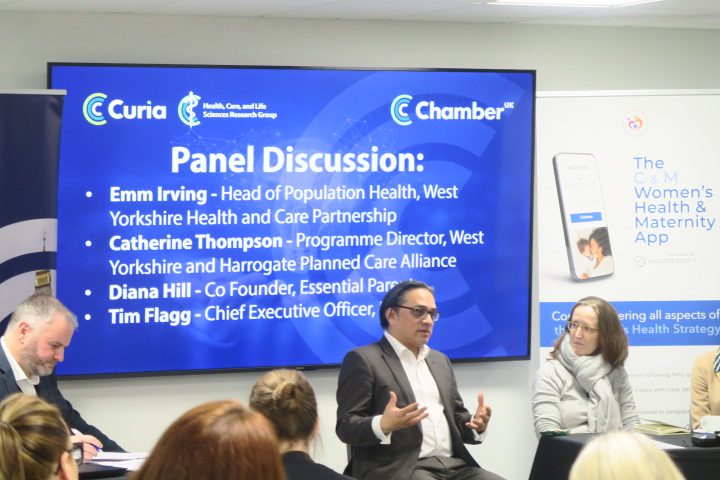
Head of Population Health at West Yorkshire Health and Care Partnership, Emm Irving opened with a reframe that set the tone. The hardest barrier the ICS had faced in redesigning obesity pathways was not commissioning structures or data gaps. It was stigma.
“The biggest barrier is stigma,” Irving said. “Trying to understand that this is about people living with a long-term relapsing condition, that’s often looked at as your own fault.”
West Yorkshire spent eighteen months bringing clinicians, finance leads, public health teams, and policy colleagues to a shared understanding: obesity is a chronic relapsing condition shaped by systemic failure and lived trauma, not individual laziness. That reframing, she argued, is foundational. Without it, clinical innovation lands in a system still organised around blame.
The arrival of GLP-1 drugs then destabilised that consensus — pushing decision-making back into a purely budget-driven frame. Irving was direct: “So what are we going to do then? Just leave people to die?”
The West Yorkshire model now rests on five elements: biology, psychology, socioeconomics, treatment, and care — a framework she argued cannot be bypassed even by pharmaceutical breakthroughs.
Most of its foundations, she noted, cost very little to build.
When Commissioning Designs Out the Patient
Programme Director for the West Yorkshire and Harrogate Planned Care Alliance, Catherine Thompson argued that services fail when systems lose sight of why people work in healthcare in the first place. Planned care pathways for women’s health frequently lose out because demand is diffuse and cuts across multiple services, with commissioning structures inadvertently creating gaps that leave patients bouncing between providers.
Digital infrastructure is too fragmented for information to follow a person across their care journey. And professional resistance — consultants reluctant to cede clinical leadership even when evidence supports it — adds another layer of friction.
Her prescription was simple: start with what people actually need. “The point in why I go to work every day isn’t to manage NHS finances,” she said. “It was because I wanted to help people live better lives.”
Thompson also raised what she called the future Horizon scandal for the NHS. If a diagnostic algorithm fails, who is responsible — the clinician who applied it, the developer who built it, or the organisation that deployed it? That question, she argued, needs answering before AI adoption scales, not after harm occurs.
Digital Inclusion and The Three-Client Problem
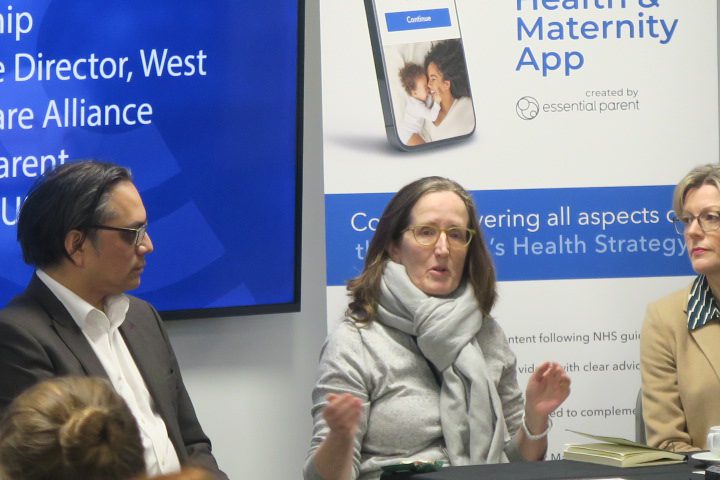
Co-Founder of Essential Parent, Diana Hill brought a digital provider’s perspective on embedding digital tools sustainably across health systems. Her organisation’s localised apps — covering midwifery, infant feeding, health visiting,and the full women’s health pathway — now operate across Greater Manchester, Cheshire, Merseyside, Birmingham and inner-city London.
It took eight years, she said, to realise the product serves three distinct clients simultaneously: the women and parents using it, the health teams whose workflows it must support, and the commissioners whose targets it must meet. Getting that balance wrong means adoption stalls regardless of clinical value.
A recent National Institute for Health and Care Research (NIHR) grant will deliver services across more than a hundred languages — an impetus that came from focus groups with Somali women in Liverpool. “There’s no word for menopause in quite a few languages,” Hill noted — a reminder that digital inclusion requires cultural literacy, not just technical translation.
From AI Pilots to System Capability
Chief Executive of trade association for the AI economy in the UK, UKAI, Tim Flagg turned to the question haunting NHS innovation: why do successful pilots not spread?
His answer centred on three gaps. First, the people gap — AI tools that ignore patient centrality or embed bias fail to earn clinical trust. Second, the platform gap — without an interoperable data infrastructure, tools cannot connect across the pathway. Third, the productivity gap — until the first two are resolved, AI remains a collection of isolated tools rather than a shared system capability.
Flagg was candid: “We are really just at the beginning.” Failure is inevitable — the question is whether it happens in safe environments, through sandboxes and synthetic data, or in live clinical settings.
The most successful implementations he had observed gave clinicians time back from administration and paperwork, rather than replacing them.
On Thompson’s accountability question, he acknowledged the industry has no settled answer — but asking it, he argued, is itself responsible practice.
Precisely what the companies behind some recent AI controversies failed to do.
What Monday Morning Actually Looks Like
The panel’s closing consensus was practical. Workforce transformation must accompany service redesign, not by training more people into old roles, but by rethinking skill mix and professional boundaries. Digital tools need to be framed as supporting staff, not replacing them, or resistance will derail adoption before it begins.
Above all, trust between clinicians and patients, and between the public and AI, must be treated as a precondition for innovation, not an afterthought.
Stephenson closed by returning to the thread that ran through every contribution: people. How services are designed around them, how relationships are built and sustained, and how trust, once lost, takes far longer to rebuild than any technology takes to deploy.