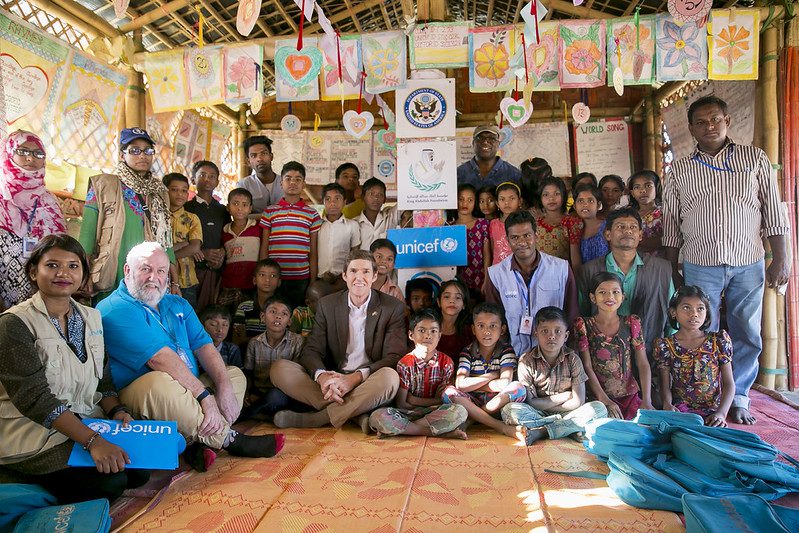

On January 12, 2026, the Great Hall of Justice in The Hague was the centre of a historic legal showdown. For the first time in over a decade, the International Court of Justice (ICJ), the United Nation’s highest judicial body, began hearing the full merits of a genocide case.
The case, The Gambia v Myanmar, is not just a trial about past atrocities; it is a stress test for the international legal order. Here is an in-depth explainer on the “crime of crimes,” the people at the centre of it, and why the world is watching so closely.
Who are the Rohingya
The Rohingya are a predominantly Muslim ethnic minority who have lived for generations in Rakhine State, Myanmar. Despite their deep roots, the Myanmar government has systematically attempted to erase their identity for decades.
Under Myanmar’s 1982 Citizenship Law, the Rohingya were stripped of their citizenship, effectively making them the largest stateless population on earth. They cannot vote, travel freely, or access basic healthcare without state permission.
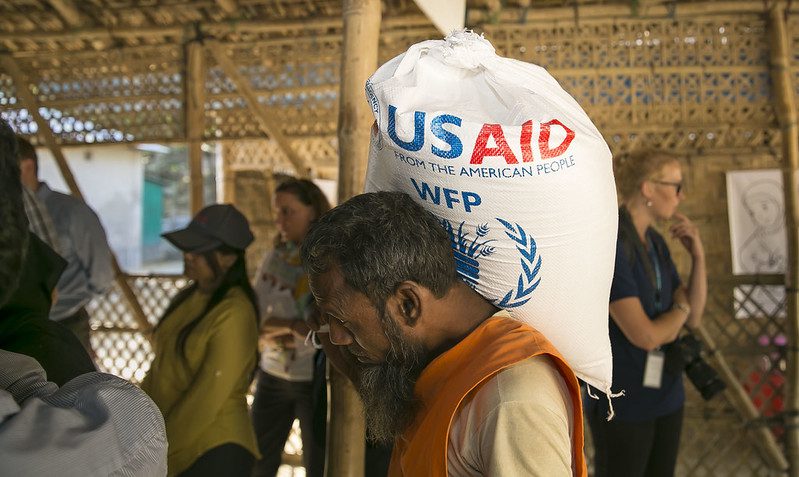
Image: US Ambassador to Bangladesh Miller visited Rohingya Refugee Camps in Cox’s Bazar – US Embassy Dhaka
The current case focuses on a brutal military campaign launched in August 2017. While the military claimed to be targeting militants, UN investigators found evidence of “genocidal intent.” Over 730,000 people fled to Bangladesh in a matter of weeks, carrying stories of mass rape, extrajudicial killings, and “slash-and-burn” tactics that leveled hundred of villages.
Today, more than 1.1 million Rohingya live in overcrowded bamboo-and-tarp shelters in Cox’s Bazar, Bangladesh, while roughly 600,000 remain in Myanmar under what rights groups call “apartheid conditions.”
Why is The Gambia Leading the Charge?
One of the most remarkable aspects of this case is that the plaintiff is The Gambia, a small West African nation nearly 7,000 miles away from Southeast Asia.
The Gambia acted on behalf of the Organisation of Islamic Cooperation (OIC), invoking a legal principle known as “erga omnes partes” (obligations toward all). This principle argues that because genocide is a crime against humanity itself, any country that signed the 1948 Genocide Convention has the “standing” to sue another member to stop it. This “David vs Goliath” dynamic has set a precedent, proving that geographic distance is no barrier to seeking international justice.
Why Is This Hearing Monumental?
This is the first time the ICJ has held a full “merits hearing”, the stage where actual evidence is debated, for a genocide case since the 2007 ruling on the Bosnian Genocide. It marks a shift from procedural delays to the heart of the atrocities.
Typically, the ICJ relies on written reports and state declarations. However, in a rare move, these 2026 hearings include closed-session testimony from Rohingya survivors. For the first time, those who survived the 2017 massacres are speaking directly to the world’s highest judges.
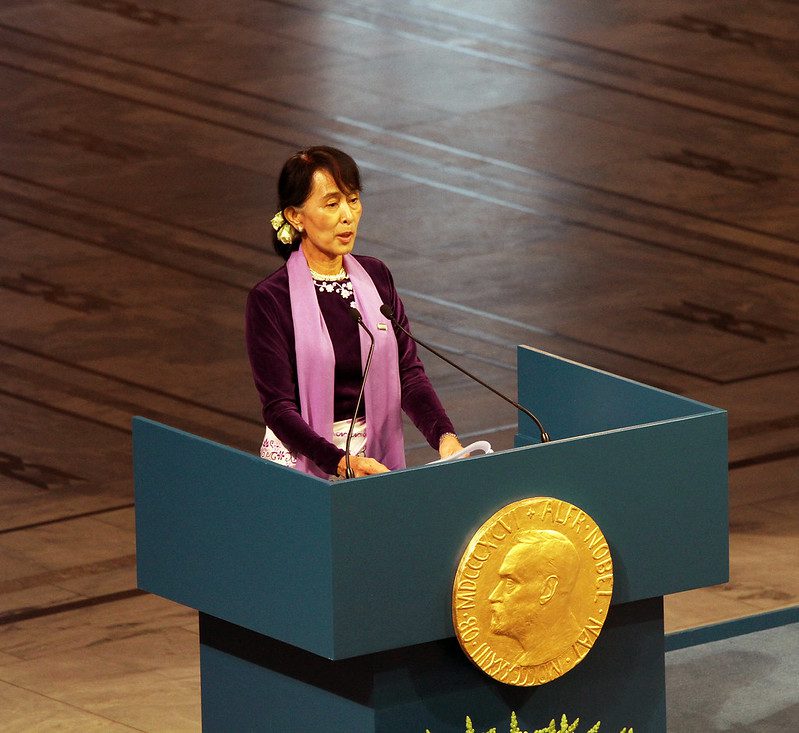
Image: Former Prime Minister of Myanmar and 1991 Nobel Peace Prize Winner Aung San Suu Kyi – Norwegian Ministry of Foreign Affairs
When the case began in 2019, Nobel Peace Prize winner Aung San Suu Kyi famously travelled to The Hague to defend the military. Since the 2021 military coup, she has been imprisoned by the same generals she once defended. The military junta now represents Myanmar at the court, creating a surreal legal environment where the alleged perpetrators of the genocide are the ones tasked with defending the state’s actions.
The Global Ripple Effect: Israel and Gaza
The timing of this case is critical. The legal interpretations established by ICJ judges in the Myanmar case will likely influence South Africa’s genocide case against Israel regarding the war in Gaza.
International lawyers are watching to see how the court handles “genocidal intent.” Because states rarely admit to genocide, intent must often be inferred from patterns of conduct, such as the systematic destruction of homes of the use of dehumanising rhetoric. If the ICJ accepts these patterns as proof of intent for Myanmar, it lowers the “evidentiary bar” for other genocide cases worldwide.
What Could Happen? (The Outcomes)
The ICJ does not have a police force to arrest generals, but its rulings carry immense weight.
A final ruling of “genocide” would legally brand Myanmar a pariah state. This would trigger mandatory international sections and could force the UN Security Council to take more drastic actions.
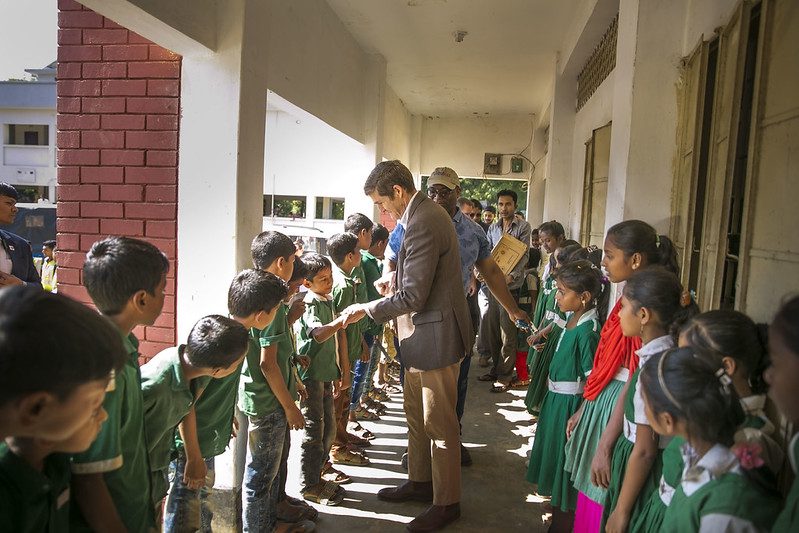
Image: US Ambassador to Bangladesh Miller greets children on a visit to Rohingya refugee camps in Cox’s Bazar – US Embassy Dhaka
The court could order Myanmar to pay billions in reparations to survivors and most importantly to restore the citizenship of the Rohingya. While the ICJ deals with states, the International Criminal Court (ICC) deals with individuals. A “guilty” verdict would provide massive momentum for the ICC’s pursuit of arrest warrants for Myanmar’s top generals, including Min Aung Hlaing.
The hearings are expected to conclude by late January 2026, with a final judgment likely appearing 6 to 12 months later. For the Rohingya, it is a race against time and a test of whether “Never Again” is a binding legal promise or merely a hollow slogan.
Featured Image via The US Embassy Dhaka