

In the wake of the deadliest mass shooting on Australian soil in nearly three decades, the nation’s political landscape is shifting at breakneck speed. Prime Minister Anthony Albanese and NSW Premier Chris Minns have moved to overhaul hate speech and firearm laws, framing the tragedy as a catalyst for much-needed change.
The Catalyst: Terror at Archer Park
The legislative push follows the horrific events of Sunday, December 14, 2025. During a “Chanukah by the Sea” celebration at Bondi’s Archer Park, two gunmen, identified as 50-year-old Sajid Akram and his 24-year-old son Naveed, opened fire on a crowd of approximately 1,000 people.
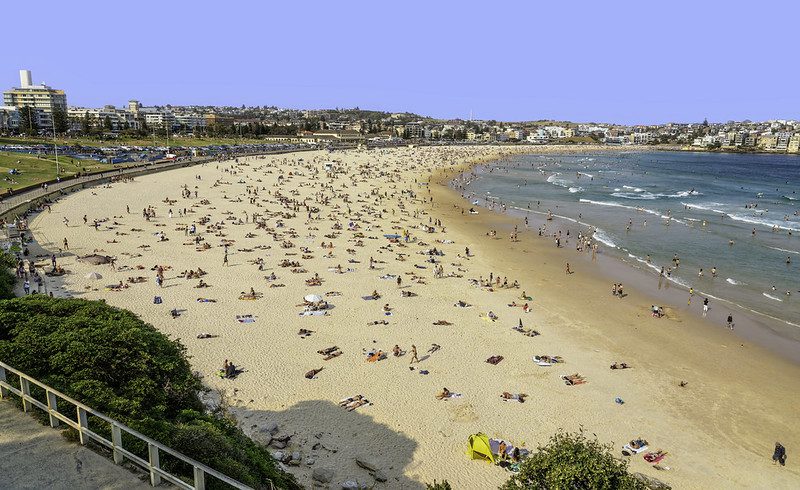
Image: Australia’s Bondi Beach where the attack took place – Loraine Blyth via Flickr
The attack, which claimed 15 lives and left dozens injured, has been officially designated an Islamic-State inspired terrorist incident. Public fury has been fuelled by revelations that the elder Akram had a valid firearms licence and legally owned six weapons, despite his son having previously been investigated by security agencies for extremist associations.
IS in the Philippines ?
The investigation has cast a spotlight on the southern Philippine island of Mindanao, a region that has functioned as a volatile epicenter for Islamist extremism in Southeast Asia for decades. While the Philippine government reports that the Islamic State (IS) presence is significantly diminished today compared to its peak during the 2017 Siege of Marawi, the area remains home to a fractured network of militants, including remnants of the Abu Sayyaf Group and the Maute Group (also known as Daulah Islamiyah). These groups operate in the dense jungles and remote maritime borders of the Sulu Archipelago, often exploiting local grievances and porous boundaries to attract foreign sympathisers.
Although major coordinated attacks have decreased, recent incidents, such as the December 2023 Mindanao State University bombing, prove that “lone wolf” or “leaderless” cells inspired by IS ideology continue to pose a lethal threat, providing a plausible, if unconfirmed, backdrop for the Bondi shooters’ recent 26-day stay in the region.
Australia’s Crackdown: Targeting “Hate Preachers”
On Thursday, Prime Minister Albanese announced a five-point plan designed to lower the legal threshold for prosecuting hate speech. The Prime Minister admitted that “more could have been done” to address a rising tide of antisemitism prior to the massacre. It comes after a rise of antisemitism globally since the October 7th attacks, Prime Minister Netanyahu criticised the UK and Australia for allowing these attitudes to develop and the role their recognition of Palestine has played in fuelling these ideas.
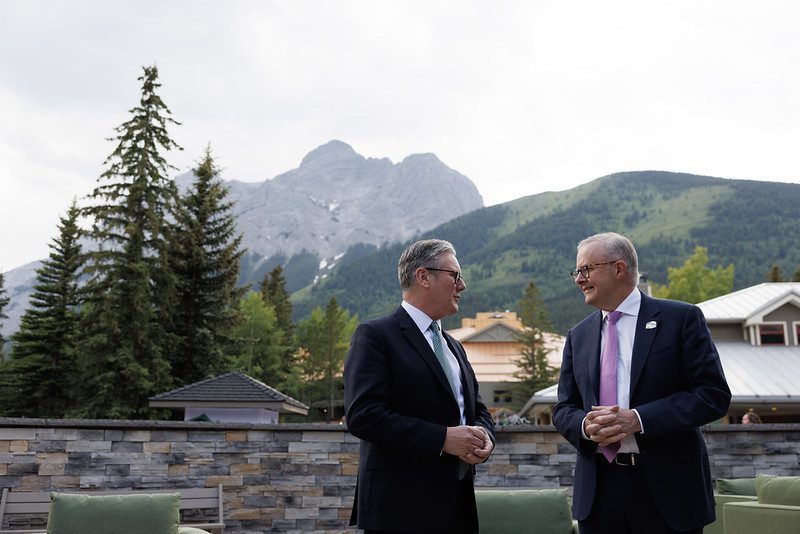
Image: Prime Minister Keir Starmer meets Australian Prime Minister Anthony Albanese for a bilateral as he attends the G7 Summit in Canada – No 10 Downing Street / Simon Dawson
Key proposals include:
- Aggravated Hate Speech Offences: A new federal offence specifically targeting religious and community leaders or “preachers” who promote violence or racial supremacy.
- Visa Cancellation Powers: Expanded authority for the Home Affairs Minister to refuse or cancel visas for any individual deemed to be spreading “hate and division”
- Listing Hateful Organisations: A new regime to “list” and restrict organisations whose leadership engages in serious vilification or promotes radicalisation.
- Online Aggravation: Amending sentencing laws to make “hate” or an aggravating factor in crimes involving online harassment and threats.
Australia’s Home Affairs Minister Tony Burke said “There have been individuals who have exploited our principles of freedom of speech to go right to the limits of dehumanising language.”
“We just don’t need them,” he added.
State-Level Response: Emergency Gun Reform
While the federal government is targeting the ideological motivations behind the attack, the New South Wales government is targeting the access to arms used to carry it out. Premier Chris Minns has announced that he will recall state parliament next week to pass “urgent and controversial” firearms legislation.
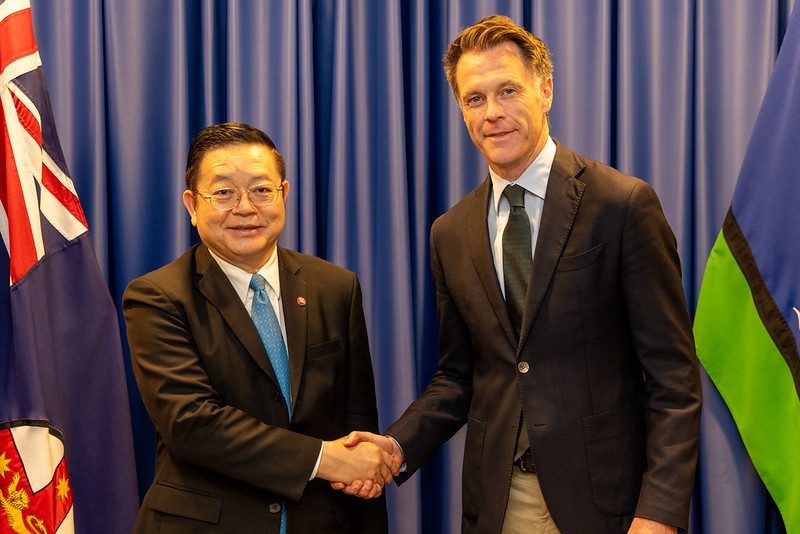
Image: NSW Premier Chris Minns meeting Secretary-General of ASEAN, Dr. Kao Kim Hourn – The ASEAN Secretariat / Organising Committee
At the moment there is no strict statewide cap per license on arms, proposed reforms could see limits ranging from 3-5 firearms per individual. Restrictions may also be imposed on who can own firearms, currently non-citizens are able to hold licenses and the application is largely based on criminal records, reforms hope to require police to use security intelligence to deny licenses and restrict licenses to Australian citizens. Shotgun reclassification may also change with stricter categories and ban on belt-fed magazines.
The suitability test is a major change, with people facing restrictions on licenses if intelligence agencies link them to extremist circles, despite not committing any crimes.
The Political Friction
The government’s refusal to hold a Royal Commission has drawn criticism from the Opposition. While Treasurer Jim Chalmers argued that a high-level inquiry would “distract security agencies” during an active investigation, the Coalition has demanded even harsher measures, including stripping citizenship from dual-national terrorists and pausing visas from “terrorist enclaves.”
As the first of the 15 funerals conclude, including that of 10-year old Matilda and 87-year old Holocaust survivor Alex Kleytman, the Australian government faces the challenging task of balancing legal maneuverers, investigating the attack and managing a shocked and divided general public.
Featured Image via International Institute for Strategic Studies