


Ben Howlett
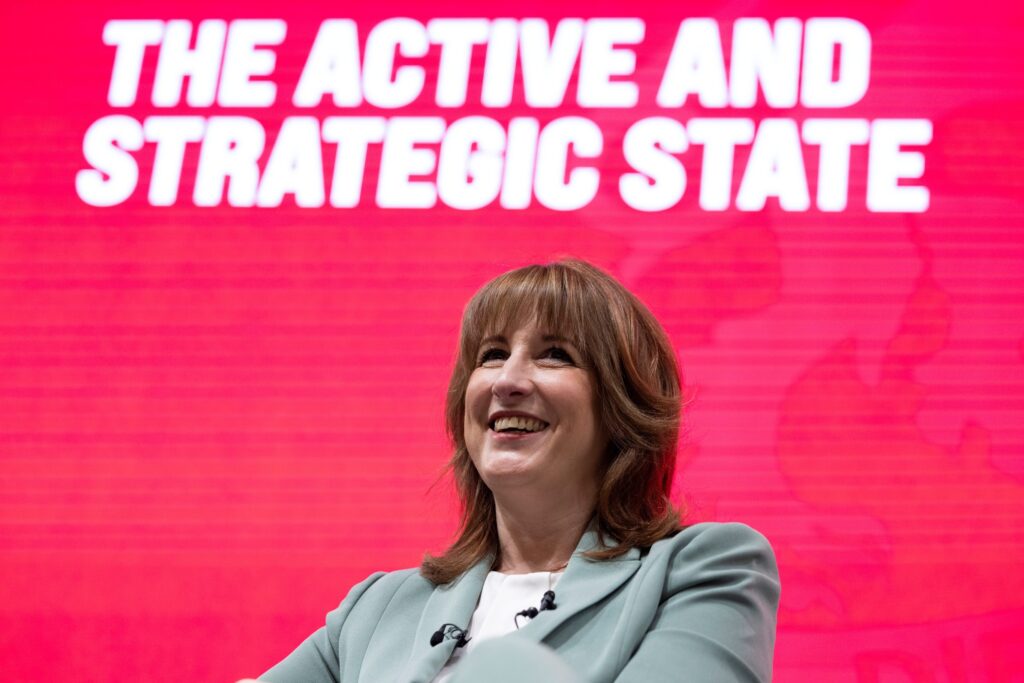
Chief Executive, CuriaThe Chancellor’s Mais Lecture and accompanying AI announcement mark an exciting moment for UK economic strategy – but success will depend on whether industry can match government ambition with real-world adoption, writes Chief Executive of policy institute, Curia. (Photo: Chancellor Rachel Reeves delivers her Mais lecture at the Bayes Business School in London. Picture: Kirsty O’Connor/Treasury)
The Chancellor’s Mais Lecture was carefully paired with a major government announcement setting out £2.5 billion of investment across artificial intelligence (AI) and quantum technologies. Together, they deliver a clear message to global investors that Britain does not intend to follow in the global technology race – it intends to lead.
Rachel Reeves framed that ambition directly, arguing that “in this changing world, Britain is not powerless…we can shape our own future.” It is a line that captures the tone of the wider strategy. AI and quantum are becoming the foundation of the UK’s economic model.
What distinguishes this moment, however, is not just the clarity of government intent, but the extent to which it has been immediately endorsed by industry.
Leaders across the UK’s quantum and AI ecosystem have responded with strong, and notably aligned, support.
CEO and Founder of Riverlane, Steve Brierley OBE points to the significance of the Government’s focus on foundational technologies, arguing that “quantum error correction is the pivotal technology that will unlock the most powerful applications of quantum computing.” He adds that the Government’s “foresight in supporting this and other leading quantum technologies…will help ensure the UK captures the enormous economic and societal benefits these systems will deliver for decades to come.”
This is more than a technical observation. It reinforces a central claim of the Chancellor’s strategy: that long-term economic growth will depend on investing early in the most critical enabling technologies.
That same theme is echoed by James Palles-Dimmock, CEO of Quantum Motion, who frames the announcement as a turning point from leadership in research to leadership in deployment. “The UK has led the world in the creation of companies built on quantum technologies,” he notes. “With this procurement programme, the Government can now turn that scientific and entrepreneurial leadership into real capability.”
That distinction – between leadership in creation and leadership in capability – sits at the heart of the Chancellor’s argument.
For years, the UK has been able to point to its strengths: world-class universities, a strong venture ecosystem, and a growing base of AI and quantum companies. The Government itself highlights that Britain leads Europe in AI company formation per capita.
But Reeves is clear that this is no longer enough. The ambition is to achieve the fastest AI adoption in the G7 – a shift that requires not just innovation, but implementation at scale.
Industry voices appear to recognise this shift.
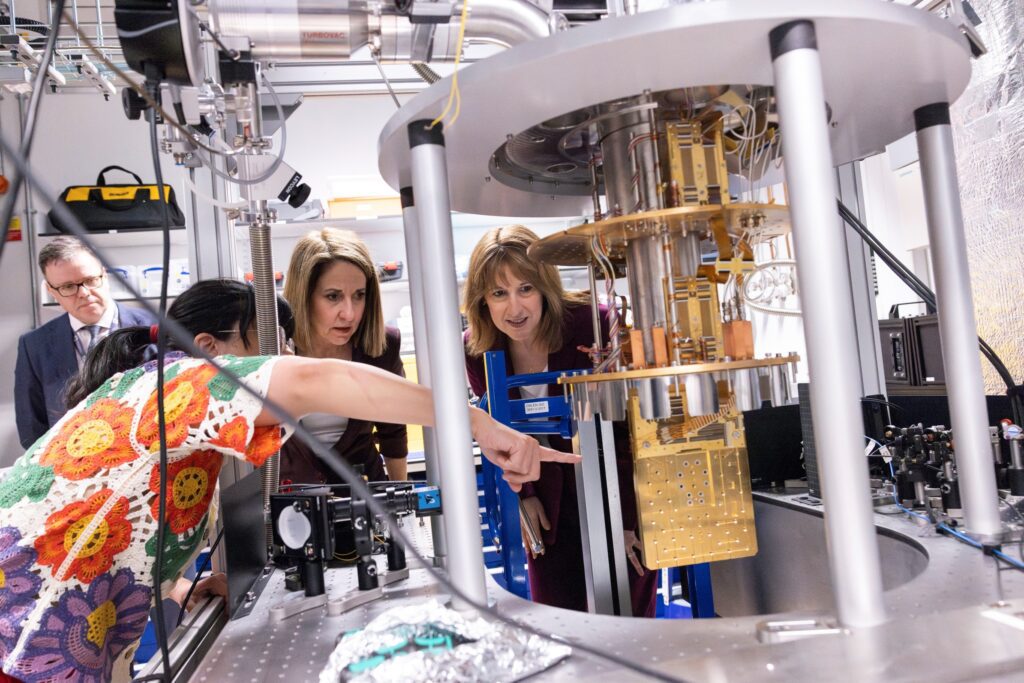
Co-founder of Callosum, Danyal Akarca emphasises that the UK is “not only cementing itself as a central force in AI but the computing infrastructure underpinning it.” He points to the opportunity “to tackle the very hardest problems in science and accelerate real economic growth”, describing the programme as “a sign that the UK understands what is at stake and is building the conditions for the most ambitious companies to thrive.”
This language mirrors the Government’s own framing. It positions AI and quantum not as isolated sectors, but as general-purpose capabilities with economy-wide impact.
CEO of Oxford Quantum Circuits, Gerald Mullally goes further, describing the announcement as “a powerful statement of the UK’s ambition to lead the world in the technologies that will help shape the next era of economic growth.” Crucially, he highlights the importance of moving beyond research, welcoming the programme’s “focus on deploying quantum technologies at scale.”
That emphasis on deployment is consistent across both government and industry.
It reflects a growing recognition that the UK’s challenge is no longer invention, but adoption.
Dr Carmen Palacios-Berraquero, Founder and CEO of Nu Quantum, reinforces this point from a capability perspective, describing the programme as “a testament not only to the capabilities of the world-leading quantum companies…but also a tangible step for the country to retain and further grow its critical skills and know-how.”
Trade association for AI in the UK, UKAI welcomed the Chancellor’s announcement. CEO, Tim Flagg said “this is exactly the kind of ambition the UK should be showing on AI and quantum. But the key now is implementation, and implementation at speed. This requires joined-up thinking across government, stronger co-ordination across the UK’s regions, and much closer links between university research and business. It also means serious investment and grant support to help scaleups grow here, a clear focus on retaining top talent, and a determination to keep more UK success stories in the UK rather than losing them too early to foreign acquisition”.
Together, these voices present a strong opportunity for industry to deliver on the Government’s ambitions.
From ambition to execution
And yet, this alignment raises a more difficult question.
If both government and industry agree on the direction, what stands in the way of delivery?
The Chancellor’s warning is clear: “Britain cannot afford to stand still”, but the risk facing the UK is not inertia alone. It is fragmentation of delivery, policy, investment, and process.
The UK has historically struggled to translate innovation into system-wide adoption. Public sector procurement remains complex despite various changes to procurement law over the last five years. Scaling pathways are inconsistent across sectors and many organisations continue to operate at pilot stage, with limited mechanisms for deployment.
None of this is fully addressed in the announcement.
Instead, the strategy sets out what government will do: invest, co-ordinate, and create the conditions for growth, through what Reeves describes as “an active and strategic state.”
The expectation is that industry will respond.
And, to an extent, it already has. The strength of the quotes included in the government press release suggests a sector that is both confident and ready to engage.

But endorsement is not the same as execution – and this where industry needs help.
The real test for Reeves
The combination of the Mais Lecture and the Government announcement represents one of the clearest statements yet of the UK’s economic direction. AI and quantum are no longer sci-fi fantasy, they are central to the UK’s economic future.
The funding is significant. The messaging is aligned. The industry response is supportive.
But the outcome will depend on something far more difficult: delivery at scale.
As James Palles-Dimmock puts it, programmes like this “give British companies the confidence to scale, attract investment and compete globally.” The question now is whether that confidence translates into action by industry.
Because in the end, winning the AI race will not be determined by ambition, or even by investment.
It will be determined by whether the UK can turn its leadership in science and start-ups into real capability – deployed across the economy, at speed, and at scale.
That is the challenge the Chancellor has set.
And it is now one the sector must meet.