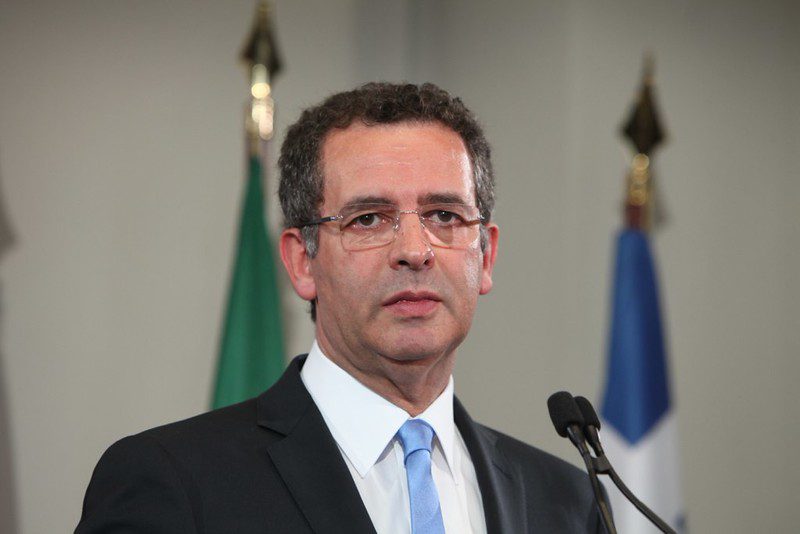

Portugal stands at a historic crossroads as the 2026 presidential election enters its decisive final phase, with the country preparing for a second-round runoff on February 8. This marks the first time since 1986 that a presidential contest has not been settled in the first round, reflecting a notable shift in the nation’s political landscape. The runoff features António José Seguro, a former leader of the Socialist Party (PS), and André Ventura, the founder and leader of the right-wing populist party Chega.
In the first round of voting on January 18, Seguro secured 31.1% of the vote, positioning himself as the frontrunner. Ventura followed with 23.5%, a result that confirmed the continued growth of his party, which was established only seven years ago. The election follows a period of heightened political activity in Portugal, including three legislative elections since 2021, and serves as a significant indicator of the current ideological divisions within the electorate.
The Role and Powers of the President
While the Portuguese President does not hold executive authority, a responsibility that lies with the Prime Minister and the Council of Ministers, the office is far from purely ceremonial. Under the country’s semi-presidential system, the President acts as a “guarantor of the institutions” and possesses several significant “reserve powers.”
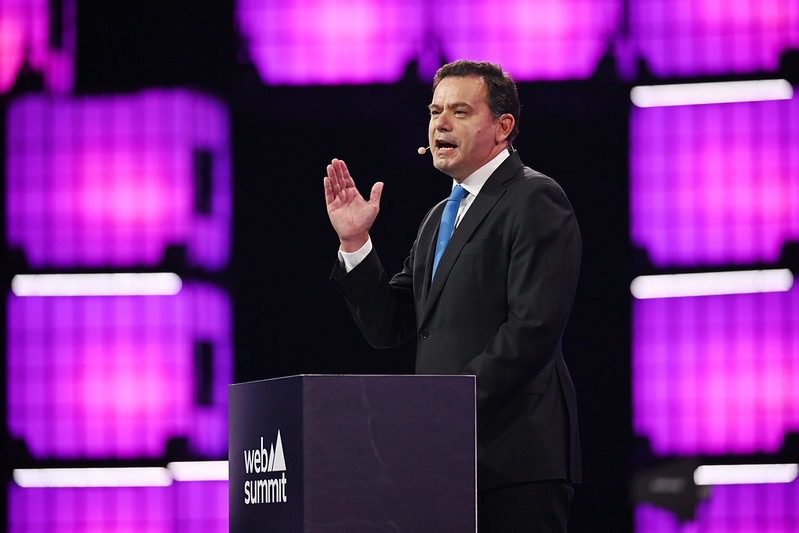
Image: Prime Minister Luis Montenegro at the Web Summit 2024 – David Fitzgerald/Web Summit via Sportsfile
The most substantial of these is the authority to dissolve the Assembly of the Republic and call for early legislative elections. This power is particularly relevant in the current context, as Portugal is governed by a center-right minority administration led by Prime Minister Luís Montenegro. Additionally, the President has the power to veto legislation. While a parliamentary majority can eventually override a presidential veto on standard laws, the President can also refer legislation to the Constitutional Court for review, providing a significant check on the legislative branch.
Profiles of the Candidates
António José Seguro returned to the political forefront for this campaign after more than a decade away from active leadership. His platform emphasises institutional stability, the protection of social welfare systems, specifically the National Health Service, and a commitment to the democratic values established after the 1974 revolution. He has characterised his candidacy as a moderate alternative intended to unite voters across the democratic spectrum, from the center-left to the center-right, who are concerned by the rise of anti-establishment movements.
André Ventura has built his campaign on a platform of significant institutional change. As the leader of Chega, which became the main opposition party in parliament following the May 2025 legislative elections, his message centres on a critique of the traditional political class. His campaign has focused on issues such as stricter immigration controls, judicial reform, and a hardline stance on corruption. Ventura’s presence in the runoff represents a milestone for the Portuguese right, signalling that the “cordon sanitaire” that historically marginalised far-right movements in Portugal has become less effective.
Key Issues and Electoral Dynamics
The election is taking place against a backdrop of persistent social and economic challenges. Voters have consistently cited the housing crisis, characterised by high rents and property prices in urban centres, as a primary concern. Other dominant issues include low average wages and the rising cost of living, which have contributed to a sense of disenchantment with the traditional parties that have alternated in power for fifty years.
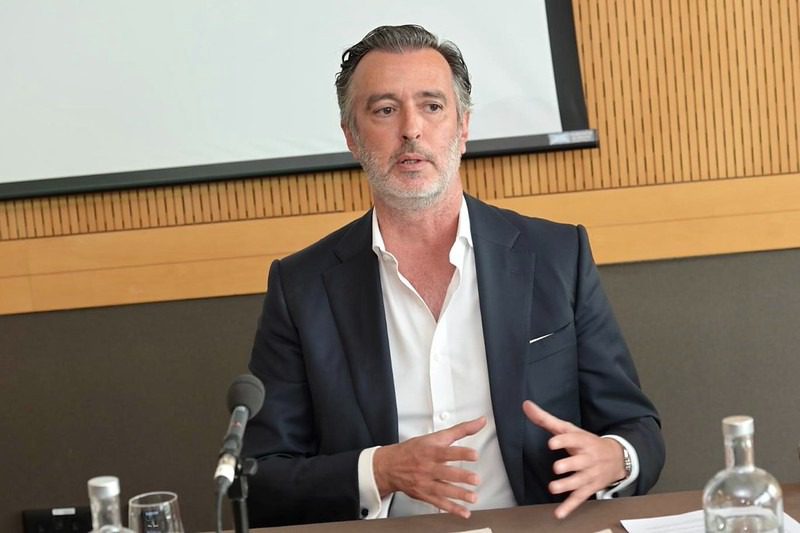
Image: Liberal initiative candidate João Cotrim de Figueiredo at the ALDE Party Congress in Dublin – ALDE Party
The runoff will largely be decided by the voters whose candidates were eliminated in the first round. This includes supporters of João Cotrim de Figueiredo of the Liberal Initiative (16%), independent candidate Admiral Henrique Gouveia e Melo (12.3%), and Luís Marques Mendes of the Social Democratic Party (11.4%). The decision by the ruling Social Democrats (PSD) not to formally endorse either candidate has added a layer of complexity to the race, as center-right voters must now decide whether to back a traditional rival from the Socialist Party or a populist challenger.
Domestic and European Implications
Domestically, the outcome will determine the nature of the relationship between Belém Palace (the presidential residence) and São Bento (the Prime Minister’s residence). A victory for Seguro would likely result in a more traditional, mediating presidency that seeks to maintain the current balance of power. A victory for Ventura could lead to a more interventionist approach, potentially challenging the stability of the Montenegro government and pushing for a realignment of the right-wing political bloc.
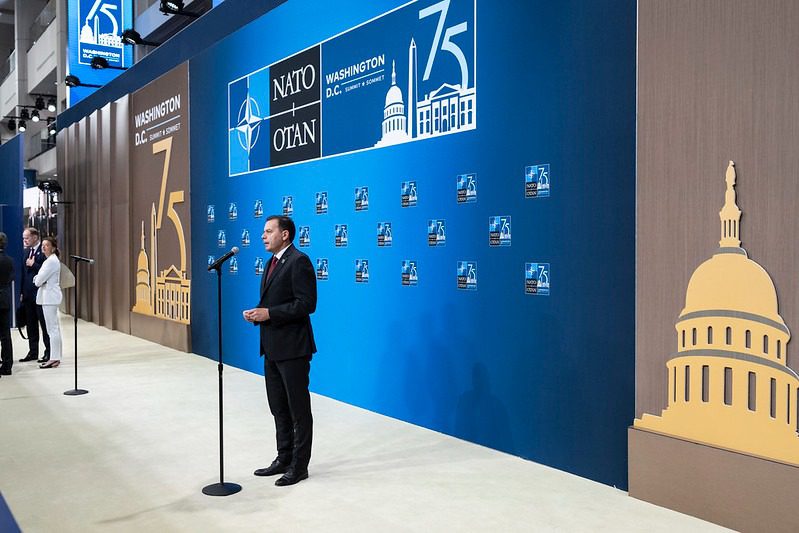
Image: Prime Minister Luis Montenegro speaks to the media as he arrives at the Washington NATO Summit – Joshua Roberts / US Department of State
On a broader scale, the election is being monitored as a significant test of European political trends. Portugal was long viewed as an exception to the populist wave seen in other EU member states. After the Netherlands weathered a similar challenge from Geert Wilders, international attention now turns to Portugal to see if it will follow a similar path. The 2026 runoff serves as a case study in how established democracies respond to the mainstreaming of populist movements. Regardless of the final result, the fragmentation seen in the first round suggests that the era of two-party dominance is transitioning toward a more complex, multi-polar political environment.
Featured Image via Parti Socialisti / Philippe Grangeaud