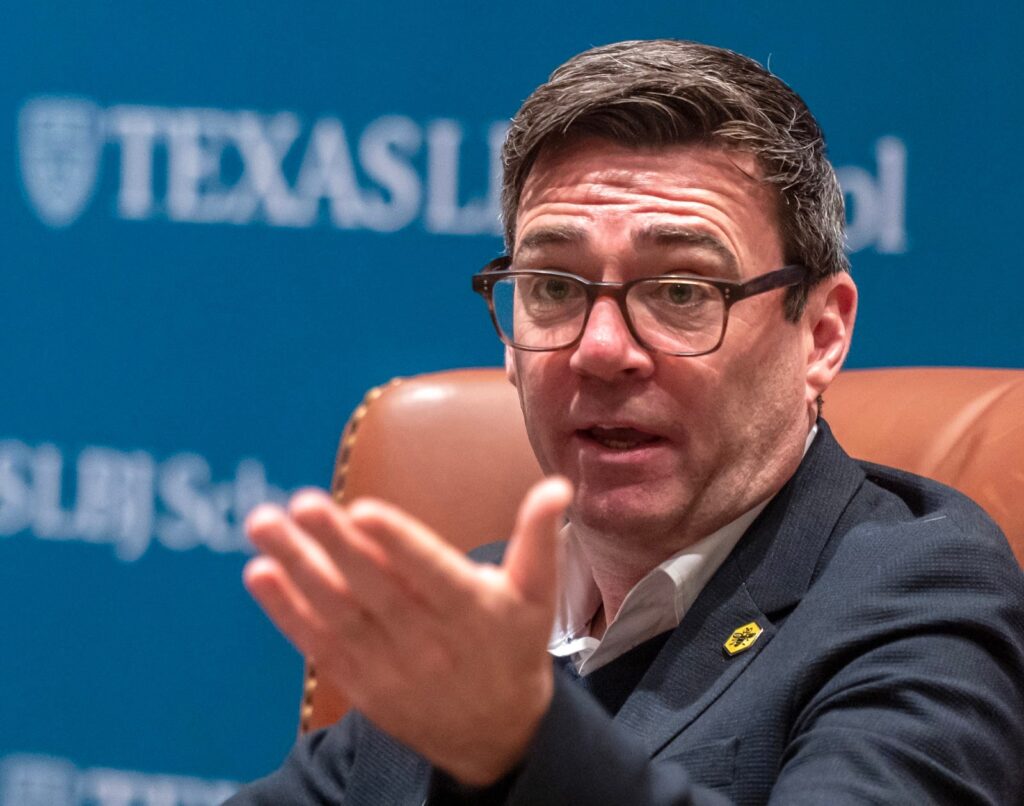

Andy Burnham has been the Mayor of Greater Manchester since 2017 following a long stint in Westminster. However, he may now be returning to London.
Identifying as a socialist, and placing himself on the soft left of the Labour party, Burnham supports devolving power, having frequently criticised politics’ London-centric approach.
Now, following ex-Labour minister Andrew Gwynne’s resignation, there’s a vacant seat in the Commons up for grabs.
So, who is Andy Burnham, and how has he got to where he is today?
An early Labour supporter
Burnham first joined the Labour party aged 15, saying he was “radicalised” by the 1984-5 Miners’ Strike. He then went on to work as a researcher for Labour MP Tessa Jowell between 1994 and 1997.
Throughout the rest of the 1990s, he kept a foot in the Westminster door, becoming a parliamentary officer for the NHS Confederation in the second half of 1997 following Tony Blair’s landslide ‘new Labour’ victory.
From 1998 to 2001, he was appointed to be a special adviser to Chris Smith, the Secretary of State for Culture, Media and and Sport – a position he held until he himself became a Labour MP.
Rising through the Westminster ranks
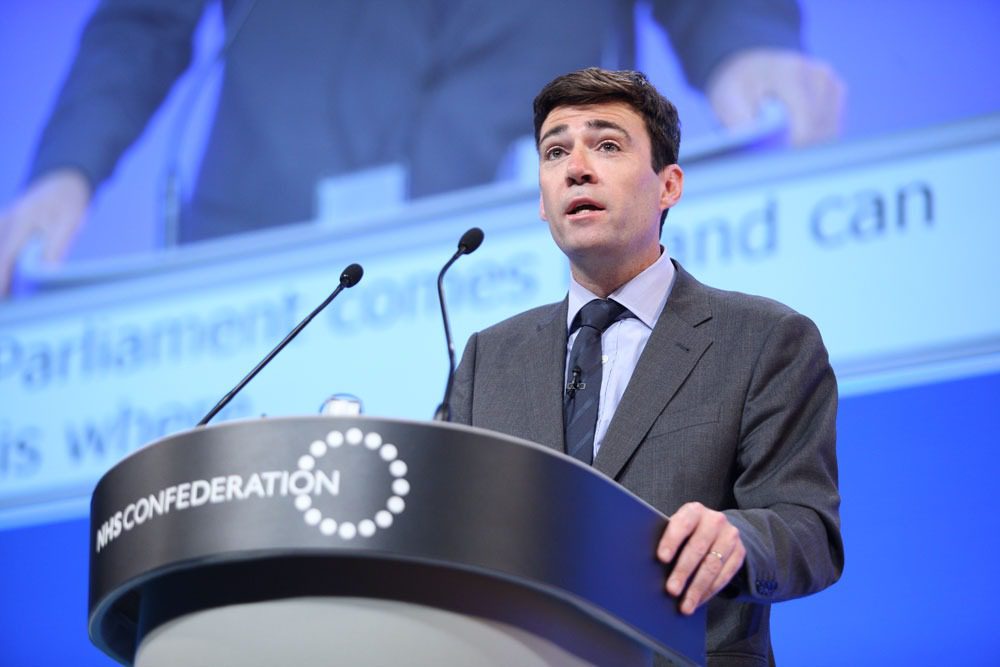
(NHS Confederation, CC BY 2.0 <https://creativecommons.org/licenses/by/2.0>, via Wikimedia Commons)
Burnham began his Westminster career in 2001 when he was elected to be the MP for Leigh.
Much of his time in London was spent working in health, first as a member of the Health Select Committee between 2001-2003, then as Minister of State for Delivery and Reform at the Department for Health under Gordon Brown before being promoted to Secretary of State for Health in 2009.
Prior to this promotion, he held other roles including being Chief Secretary to the Treasury and serving as the Secretary of State for Culture, Media & Sport in 2008.
In parliament, Burnham raised the issue of the 1989 Hillsborough disaster, in which 97 football fans were killed in a crush, triggering the second Hillsborough inquiry. He later made a speech in 2016 after the inquiry found the deaths had occurred as a result of unlawful killing in which he condemned the South Yorkshire Police.
His other policies included the creation of a National Care Service to introduce a publicly funded system of social care which would be free at the point of use. However, this was scrapped by the Conservative and Liberal Democrat coalition in 2010.
Leadership contests
Burnham has twice run for Labour leadership – once in 2010, and then again in 2015.
Following the 2010 election loss and Gordon Brown’s resignation, he ran in the leadership race, ultimately finishing fourth with Ed Miliband being appointed as leader. His policies including reintroducing the National Care Service and replacing inheritance tax with a land value tax – all part of his philosophy of ‘aspirational socialism’.
Following his loss, he was appointed Shadow Secretary of State for Education, before going back to the Department for Health until 2015.
This then marked his next bid for leadership, standing against Ed Miliband on a ballot which stressed unity. Again, his bid fell short, this time coming second to Jeremy Corbyn, under whom he served as shadow Home Secretary.
Following Angela Rayner’s resignation as Labour Deputy Leader in September last year, speculation that Burnham would challenge for the leadership began to circle. He backed a new network called Mainstream within the Labour Party which sells itself as a home for “radical realists” and supports democratic socialism.
However, at the Party Conference, he pointed out that, as he was no longer an MP, he couldn’t run to be leader, and that all he had done was to launch “a debate” about the party’s direction.
Mayor of Greater Manchester
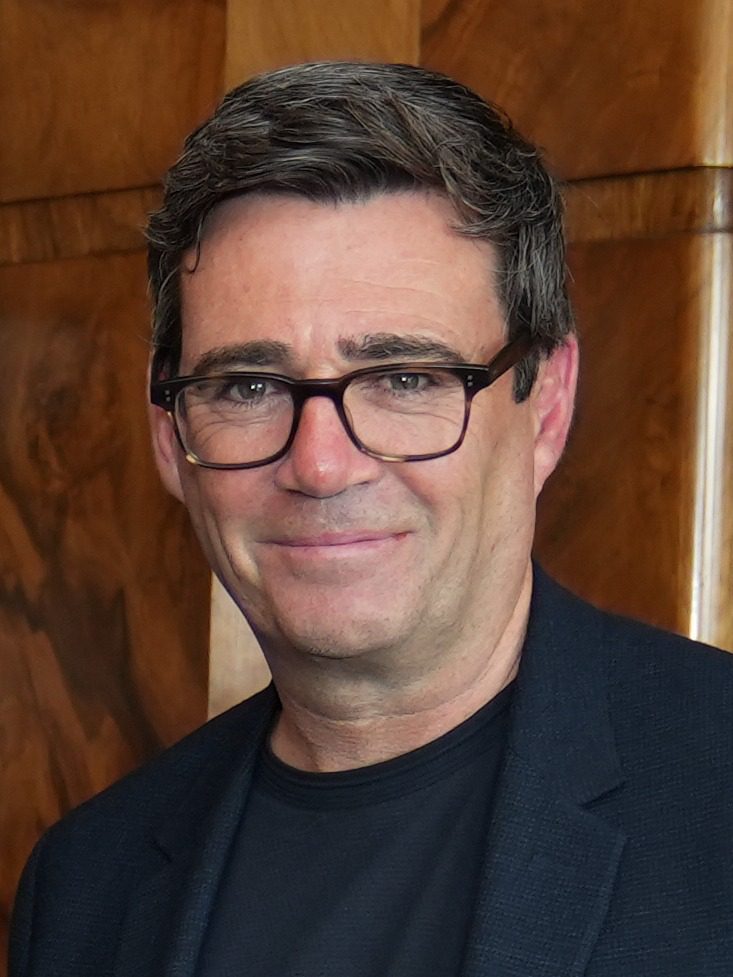
(Scottish Government, CC BY 2.0 <https://creativecommons.org/licenses/by/2.0>, via Wikimedia Commons)
Andy Burnham has served as the Mayor of Greater Manchester since 2017. He resigned from his post in Jeremy Corbyn’s Shadow Cabinet in 2016 to focus on his mayoral bid, winning with 63% of the vote.
He has since won two mayoral elections in 2021 and 2024, using his terms to focus on homelessness, public transport and investigations into child sexual exploitation.
Upon his latest re-election, he announced his plans to introduce a Greater Manchester baccalaureate as an alternative to university. The scheme, which would collaborate with local businesses, aims to be in place by 2030.
During the Covid-19 pandemic, he was dubbed “King of the North” by the media due to his role in securing an extra £65 million in funding for local Northern communities.
Is the ‘King of the North’ returning down south?
He now has a chance to return to the Commons, should he decide to run for the recently vacated seat of Gorton and Denton.
If he chooses to run in the by-election, he could then mount a leadership contest against Sir Keir Starmer, whom he supported in the 2020 leadership election. While he has previously called speculation that he would make a leadership bid “annoying”, he hasn’t actually ruled out putting himself in the running.
It won’t be a straight forward path, as other Labour figures may also be hoping to run, and, as a mayor, he would have to get approval from the National Executive Committee, as per the Labour Party’s rules.
He is yet to comment on whether he will apply, but said on Thursday that he is “very focused on [his] role as mayor” and that “people shouldn’t rush to conclusions”.
Featured image: (LBJLibraryNow, Public domain, via Wikimedia Commons)