
The transfer of sovereignty over the Chagos Archipelago to Mauritius is not a sudden policy shift by the current government but the conclusion of a multi-year diplomatic process initiated by the Conservative Party. Despite current criticisms from figures like Kemi Badenoch as well as Nigel Farage, the historical and legal record shows that the policy was pursued by both the Conservative and Labour Parties as a matter of national security and international compliance.
The Origin of the Deal: Tory Negotiations
The claim that this deal is an “immoral surrender” by the Starmer government ignores the fact that negotiations were formally launched in November 2022 by the then-Foreign Secretary, James Cleverly. Under the Conservative government, officials conducted eleven rounds of high-level negotiations between London and Port Louis. These talks were continued and refined under Lord Cameron’s tenure as Foreign Secretary. The final round of Tory-led negotiations took place just weeks before the 2024 general election. By the time the government changed hands, the framework for ceding sovereignty in exchange for a long-term lease of the military base was already the established “Plan A” for the British state.
The Legal Reality: Why the UK Had to Act
The UK did not “choose” to give away the islands for no reason. For over a decade, the British position had become legally and diplomatically unsustainable on the world stage. In 2015, the Permanent Court of Arbitration ruled that the UK’s “Marine Protected Area” around Chagos was illegal. This was followed by a 2019 advisory opinion from the International Court of Justice (ICJ), which stated that the UK’s detachment of the islands from Mauritius in 1965 was unlawful and that decolonisation was incomplete.
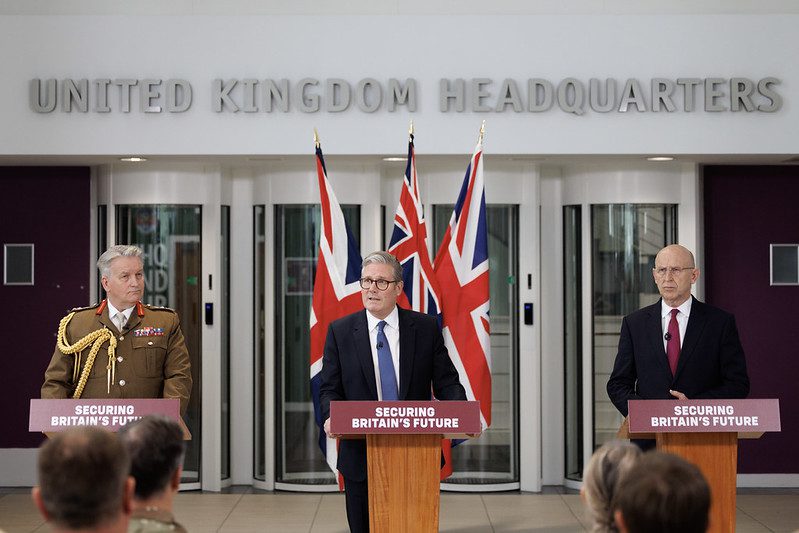
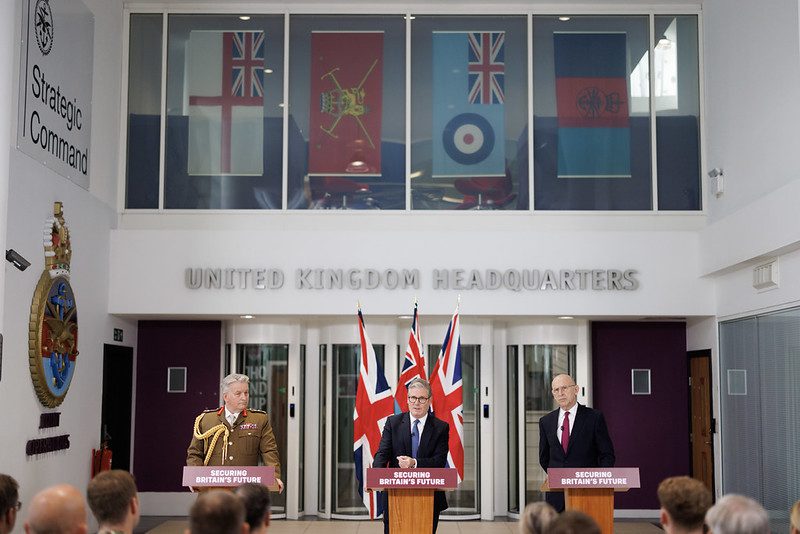
Image: Prime Minister Keir Starmer gives a press conference after signing a deal to secure the military base on Diego Garcia at Permanent Joint Headquarters in Northwood – No 10 Downing Street / Simon Dawson
These rulings were reinforced by the UN General Assembly and the International Tribunal for the Law of the Sea (ITLOS). Had the UK continued to ignore these international verdicts, it would have faced immediate court injunctions that could have rendered the operation of the Diego Garcia base illegal, effectively locking the US and UK out of their own facility.
The UN resolution gave effect to the advisory opinion of the International Court of Justice (ICJ), which demanded that the UK “withdraw its colonial administration … unconditionally within a period of no more than six months”.
116 states voted in favour of the resolution, 55 abstained and only Australia, Hungary, Israel and Maldives supported the UK and US throughout the debate.
International courts increasingly viewed the Chagos case through the lens of self-determination and decolonisation law. The ICJ concluded that the UK’s 1965 detachment of Chagos violated the UN Charter principle that colonial territories must be decolonised as a whole, noting that Mauritius had been pressured into “consenting” to the separation as a condition of independence. The Permanent Court of Arbitration and ITLOS similarly found that the UK could not lawfully exercise sovereignty over the islands while its title was disputed, meaning it lacked authority to impose a Marine Protected Area or regulate the surrounding waters under UNCLOS.
Security Guarantees and the 99-Year Lease
The treaty finalised in 2024 and currently moving through Parliament in 2026 also provides security guarantees that can prevent other countries from extending their influence in the region. Mauritius has granted the UK a 99-year lease for the island of Diego Garcia, with an option to extend for a further 40 years.
The deal includes a 24-mile “security buffer” around the base where no construction or activity can occur without UK consent. Furthermore, the agreement explicitly bans foreign military or civilian forces from the other islands in the archipelago, giving the UK a permanent veto over any presence that could threaten the base. Far from “surrendering” the base, the deal provides a legal foundation for its operation that did not exist under the previous contested ownership.
The US Endorsement: Secretary Rubio’s 2025 Support
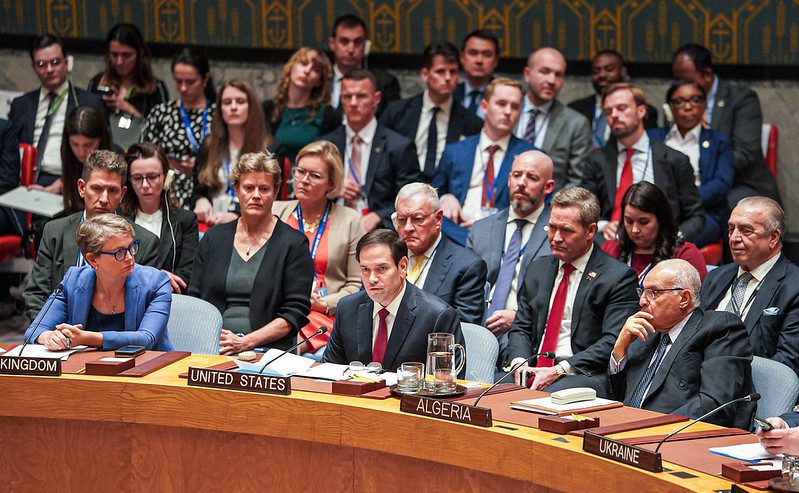
Image: Secretary Rubio Participates in UN Security Council Ministerial Meeting alongside Foreign Secretary Yvette Cooper – US State Department / Freddie Everett
While some domestic critics suggest the deal undermines the “Special Relationship,” the Trump administration’s own State Department previously provided its full endorsement. In May 2025, US Secretary of State Marco Rubio formally welcomed the agreement, stating that a “comprehensive interagency review” by the Trump administration determined the deal “secures the long-term, stable, and effective operation” of Diego Garcia. Rubio described the treaty as a “monumental achievement” for global security. This support confirms that the US security establishment viewed the legal normalisation of the base as a vital priority, contradicting the current narrative of “weakness.”
Trump’s 2026 U-Turn and the Greenland Precedent
President Trump’s recent attacks on January 20, 2026, labelling the deal “great stupidity,” represent a significant departure from his administration’s 2025 stance. Analysts note that this rhetoric is not based on a new assessment of Indian Ocean security but is a reaction to his own territorial ambitions in the Arctic. Trump has explicitly linked his frustration over the Chagos deal to his desire to acquire Greenland from Denmark.
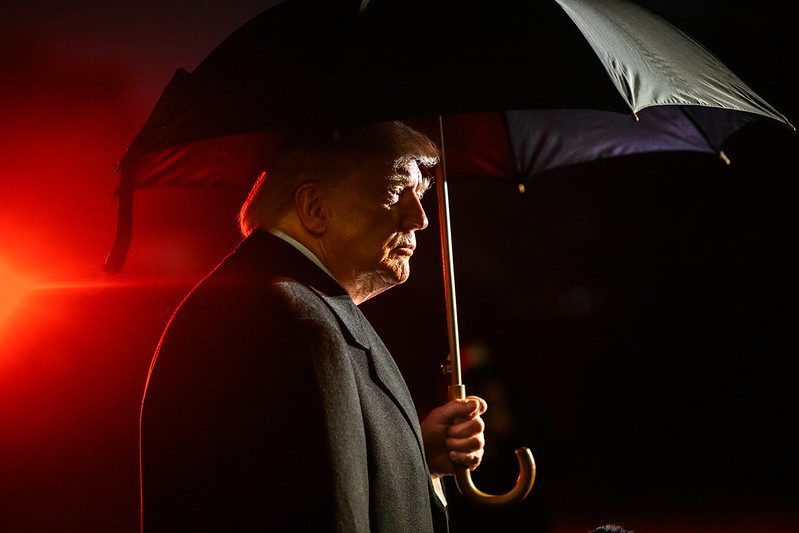
Image: President Donald Trump speaks with members of the media before boarding Marine One on the South Lawn of the White House en route to Joint Base Andrews – The White House / Molly Riley
He views the “decolonisation” logic of returning Chagos to Mauritius as a threat to his argument that the US can acquire or purchase new land. His current comments are widely interpreted as a rhetorical tool to pressure European allies rather than a legitimate reversal of the security findings released by his own Secretary of State last year.
Geopolitical Risks of Non-Compliance
The consequences of the UK breaking international law to keep the islands would have been severe. Persistently ignoring the ICJ and UN would have decimated the UK’s ability to lead on the world stage, making it impossible to hold countries like Russia or China accountable for their own territorial violations. It would have signalled to the Global South that the “rules-based order” applies only when it benefits the West, potentially pushing Mauritius and other Indian Ocean nations closer to Chinese influence. By settling the dispute, the UK has removed a primary diplomatic weapon used by its adversaries to paint Britain as a colonial relic, thereby strengthening its alliances across the Indo-Pacific.
Featured Image via No 10 Downing Street / Simon Dawson