
From the shockwaves of the US presidential inauguration and the election of the first-ever American Pope to the roar of missile strikes in the Middle East, 2025 has been a year of unprecedented upheaval. What began as a series of high-stakes elections quickly spiralled into a global reshuffling of power, defined by political assassinations, military coups, and a dramatic “Great Realignment.” As long-standing alliances fractured and new, transactional orders took their place, the events of these past twelve months have physically and ideologically redrawn the world map.
January: The Restoration and the Old Guard
The year began with the passing of a pillar of the old guard. From January 4–9, the United States held a state funeral for Jimmy Carter, a week-long commemoration of the 39th president that served as a final reflection on the era of liberal internationalism. The ceremonies in Plains, Georgia, and Washington D.C. gathered world leaders in a rare moment of unity before a radical shift in American leadership.
On January 20, Donald Trump was sworn in as the 47th President inside the U.S. Capitol Rotunda due to freezing temperatures and high winds. His “Great Restoration” address promised a return to “transactional sovereignty,” signalling immediate withdrawals from the Paris Agreement and a freeze on foreign aid. Simultaneously, Poland assumed the EU Presidency, pivoting the bloc toward a “security-first” posture focused on military resilience and border protection.
February: European Shifts and Deadlocks
On February 9, Kosovo’s parliamentary elections resulted in a total hung parliament. The winning Vetëvendosje (LVV) party failed to secure the 61 votes needed for a Speaker, plunging the young nation into a legislative freeze. This deadlock fuelled civil unrest as citizens protested against political paralysis that threatened to restart ethnic tensions in the North.
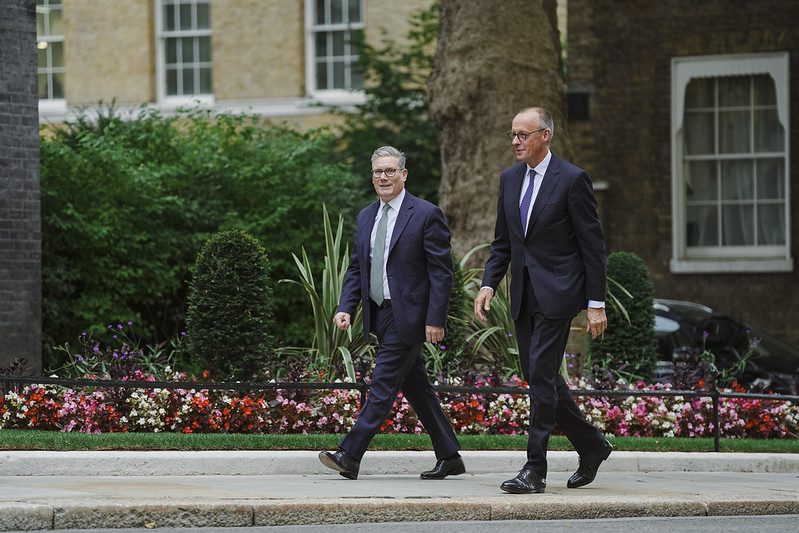
Image: Prime Minister Keir Starmer meets Chancellor Friedrich Merz – Ben Dance / FCDO
On February 23, the German Federal Election delivered a seismic victory for Friedrich Merz and the CDU/CSU, which secured 28.5% of the vote. The far-right AfD, led by Alice Weidel, achieved a historic 20.8%, becoming the second-largest party in the Bundestag. This result effectively crushed the SPD to a historic low of 16%, signalling a definitive rightward shift in Europe’s largest economy.
March: Natural Disaster and the Carney Pivot
In Canada, the political landscape was redrawn on March 9 when the Liberal Party selected former central banker Mark Carney to replace Justin Trudeau. Carney won with a landslide 85.9% of the party vote, immediately pivoting the party toward a platform of “technocratic nationalism.” He positioned himself as a vanguard of Canadian sovereignty in anticipation of an aggressive trade war with the new administration in Washington.
Tragedy struck Southeast Asia on March 28 when a massive 7.7 magnitude earthquake struck the Sagaing region of Myanmar. The disaster killed over 3,700 people and injured thousands more. The military junta was widely condemned for weaponising the disaster by restricting aid to resistance-held territories, utilising the “natural” catastrophe to perform a brutal display of institutional dominance.
April: Impeachment, Terror, and a New Mandate
On April 4, the South Korean Constitutional Court delivered a unanimous 8–0 ruling to impeach and remove President Yoon Suk-yeol from office. The verdict concluded a crisis triggered by Yoon’s failed martial law declaration in late 2024. The court ruled that mobilising troops to block the National Assembly and ordering the arrest of judges constituted a “grave betrayal of public trust,” triggering a snap presidential election.
In South Asia, the relative peace of the Kashmir Valley was shattered on April 22 by the “Pahalgam Massacre.” Islamist militants from The Resistance Front (TRF) killed 26 civilians, mostly Hindu tourists, in a brutal mass shooting. Prime Minister Narendra Modi responded by granting the armed forces a “free hand,” approving “Operation Sindoor.” By the end of the month, India had moved to a war footing, preparing surgical strikes against terror infrastructure deep within Pakistan.
Amidst these crises, the Catholic Church entered a period of mourning following the death of Pope Francis on April 21 (Easter Monday). The 88-year-old Pontiff passed away at the Vatican following a stroke and complications from a respiratory infection. His funeral on April 26 drew over 400 pilgrims to St. Peter’s Square.
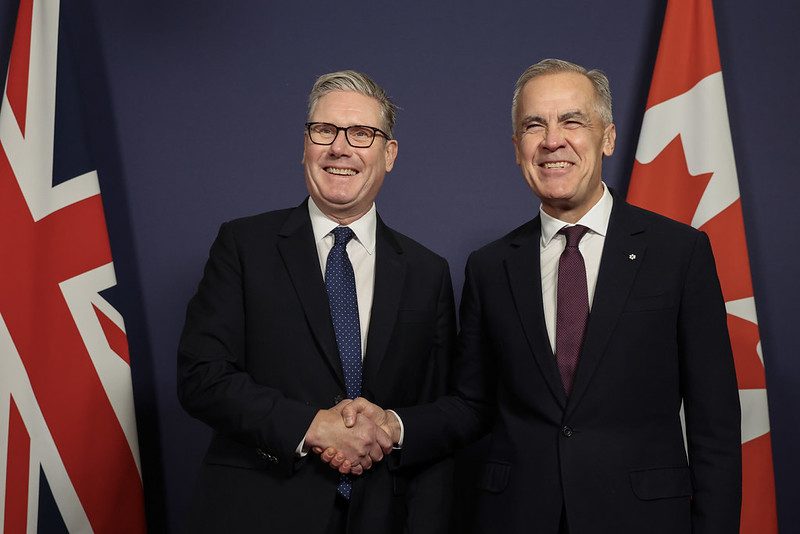
Image: Prime Minister Keir Starmer and Prime Minister Mark Carney – Simon Dawson / No 10 Downing Street
The month concluded with a major shift in North American politics. On April 28, Mark Carney led the Canadian Liberals to a surprise minority victory in a snap federal election. Defying polls that had favored the Conservatives for over a year, Carney successfully campaigned on a platform of defence against American trade threats. His victory secured a fourth consecutive term for the Liberals and set the stage for deep diplomatic tension with the Trump administration.
May: Landslides, Missiles, and Border Friction
On May 3, Anthony Albanese’s Labor Party won a historic 94-seat landslide in the Australian Federal Election. This crushing victory left the Liberal Party decimated, with opposition leader Peter Dutton losing his own seat. Seventeen days later, on May 20, the National Party officially ended its 38-year coalition agreement with the Liberals, effectively ending the conservative alliance as it had existed for decades.
On May 8, following a brief conclave, white smoke emerged from the Sistine Chapel. The College of Cardinals elected Chicago native Cardinal Robert Francis Prevost, who took the name Pope Leo XIV. As the first American Pope, his election signaled a shift toward institutional stability and “bridge-building” during the Church’s Jubilee Year.
In South Asia, India and Pakistan engaged in their largest air battle since 1971. Between May 6–10, India launched precision missile strikes under Operation Sindoor, targeting nine major terror camps inside Pakistan. A ceasefire was eventually reached on May 10 after a panicked Pakistan requested a halt via the DGMO hotline. In Southeast Asia, fatal gunfire on the Thailand-Cambodia border led to the constitutional suspension of the Thai Prime Minister.
June: The Twelve-Day War and the Tokyo Fallout
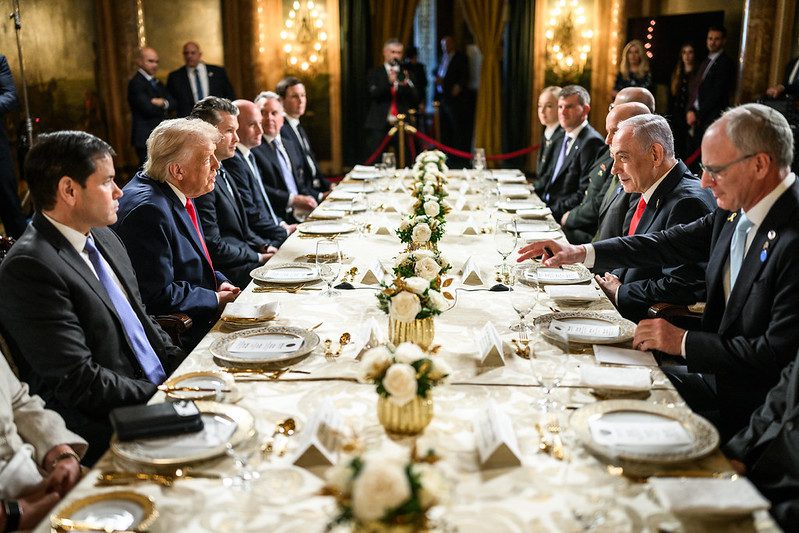
The Middle East reached a tipping point on June 13 as the Israel-Iran “Twelve-Day War” began. Israel’s “Operation Midnight Hammer” neutralized several Iranian nuclear sites, while Iran’s retaliatory “True Promise III” strikes hit the Haifa oil refinery. A June 25 ceasefire was brokered by the U.S., but the conflict left the region fractured and led to a formal international declaration of famine and genocide in Gaza later on in the year.
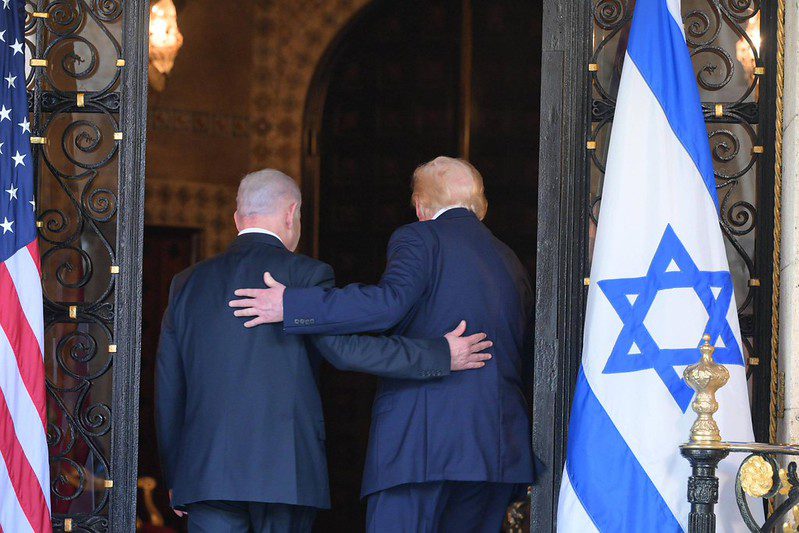
Image: US President Donald Trump welcoming Prime Minister Benjamin Netanyahu at Mar-a-Lago – Ben Amos Gershom / GPO
In East Asia, Lee Jae-myung won the South Korean snap presidential election on June 2, securing 49.42% of the vote. His victory signaled a shift toward a more pragmatic, “equidistant” foreign policy. On June 27, the Washington Accords were signed between the DRC and Rwanda, mediated by Donald Trump to swap regional peace for U.S. access to cobalt, aimed at countering Chinese influence in the critical minerals market.
July: Territorial Struggles and Japanese Upheaval
On July 20, Japan’s LDP lost its majority in the House of Councillors for the first time since 1955. This historic defeat, driven by a “slush fund” scandal and the “Rice Crisis,” left Prime Minister Shigeru Ishiba governing as a minority leader. The vacuum in Tokyo allowed the nationalist wing of the LDP to begin campaigning for a more aggressive, independent military posture.
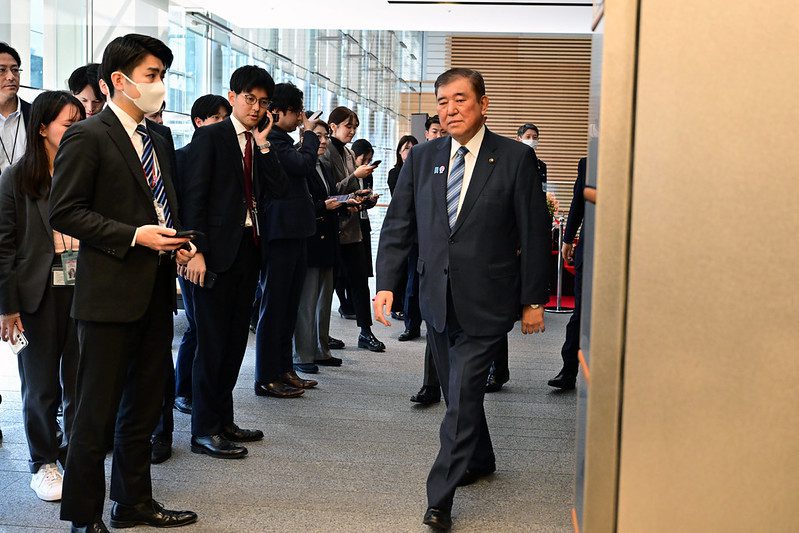
Image: Former Japanese Prime Minister Shigeru Ishiba – Dean Calma / IAEA
In Southeast Asia, a full-scale Border War erupted between Thailand and Cambodia on July 24. Triggered by rocket strikes on Thai residential areas, the conflict displaced over 300,000 people and saw Royal Thai Air Force F-16s bomb Cambodian command posts. Domestically, the Trump administration shuttered USAID on July 1 under the “DOGE” mandate, ending sixty-four years of American humanitarian promotion.
August: Breakthroughs and Famine
The Kosovo deadlock finally ended on August 26 with the appointment of Dimal Basha as Speaker, allowing for a fragile coalition government. This breakthrough followed months of civil protests that had paralysed the nation’s legislature. In the Middle East, secret talks in Hargeisa between Israeli officials and Somaliland leaders sought to secure Red Sea access in exchange for official recognition.
Simultaneously, the humanitarian crisis in Gaza reached its most harrowing nadir. On August 22, the IPC officially confirmed that 641,000 people were living in a state of catastrophic famine. The report cited the total collapse of aid corridors during the summer conflict as the primary driver, leading to international calls for humanitarian war crimes investigations against regional leaders.
September: The Triple Shock
September saw the “TikTok Revolution” in Nepal, where violent “Gen Z” protests forced PM Oli to resign on September 9 after nineteen youth protesters were killed. The next day, on September 10, the U.S. was rocked by the assassination of Charlie Kirk at Utah Valley University. The suspect, Tyler Robinson, was captured shortly after, triggering a massive national security response across American universities.

Image: Political Activist Charlie Kirk speaking at the 2022 AmericaFest – Gage Skidmore via Flickr
On September 11, Brazil’s Supreme Court delivered a final blow to the far-right, sentencing Jair Bolsonaro to 27 years in prison for his central role in the coup plot intended to overturn the 2022 election. The ruling was supported by testimony from senior military officials, preventing a broader uprising but deepening the diplomatic freeze between Washington and Brasília.
October: Coups, Mandates, and Peace Prizes
Peru’s Dina Boluarte was impeached on October 10 for “permanent moral incapacity.” Two days later, a military coup in Madagascar by the CAPSAT unit overthrew President Rajoelina following protests over utility failures. Amidst the chaos, Venezuelan opposition leader Maria Corina Machado was awarded the Nobel Peace Prize on October 11 for her tireless struggle for democratic rights.
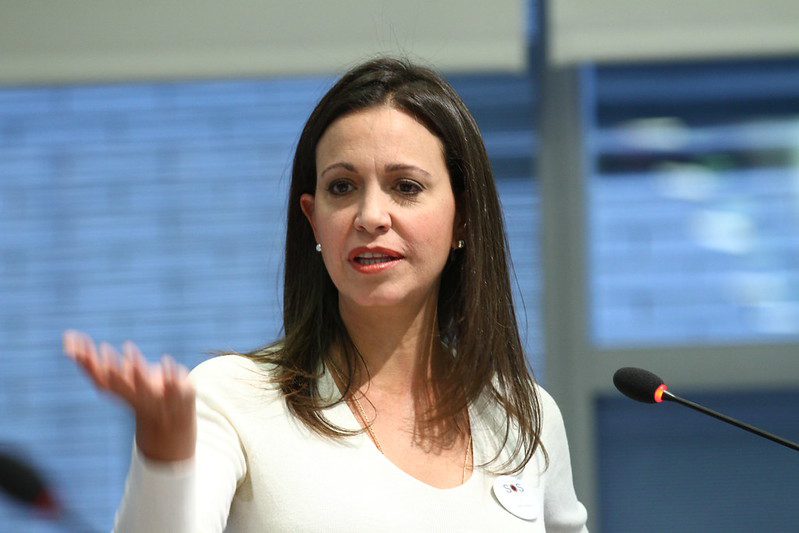
Image: 2025 Nobel Peace Prize Winner Maria Corina Machado, Venezuelan Congresswoman and Opposition Leader – CSIS
Electoral shifts further reshaped the West. Catherine Connolly won the Irish Presidency with 63% of the vote, and Javier Milei solidified his “chainsaw” mandate in the Argentine midterms on October 26. On October 29, the Dutch D66 defeated Geert Wilders’ PVV, breaking the European far-right domino effect. Timor-Leste also officially joined ASEAN as its 11th member at the month’s end.
November: Climate Friction and the G20 Boycott
The COP30 summit in Brazil (Nov 10–21) saw a total freeze in U.S.-Brazil relations over Amazonian sovereignty and the “Tropical Forests Forever” facility. Tensions peaked when President Trump refused to meet with President Lula, announcing a rival “Coal and Nuclear Energy Alliance.”
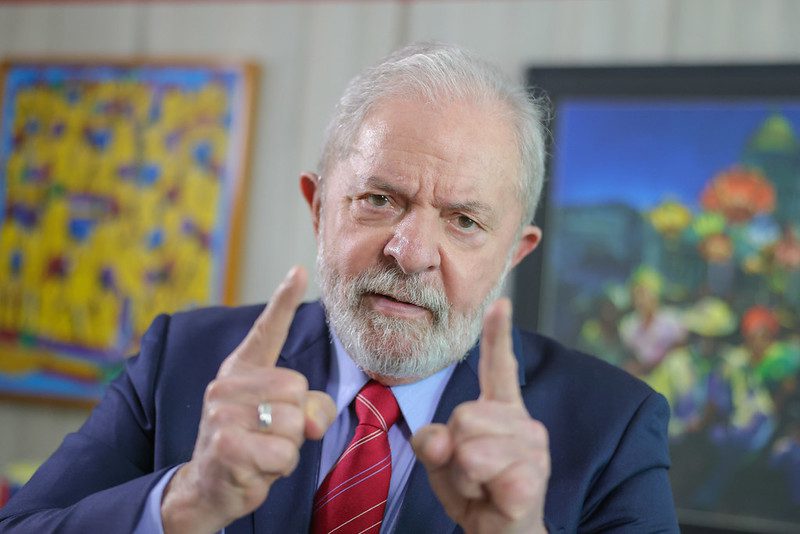
Image: Brazilian President Luiz Inácio Lula da Silva – Ricardo Stuckert
This was followed by the G20 Summit in South Africa (Nov 22–23), which was overshadowed by an unprecedented U.S. presidential boycott. President Trump skipped the summit to focus on domestic trade negotiations, leaving South Africa to push the “Africa debt trap” agenda alone. In the Pacific, terror suspects Sajid and Naveed Akram returned to Australia undetected from the Philippines.
December: Recognition and Year-End Terror
The year closed with a diplomatic bombshell: Israel officially recognised Somaliland as a sovereign nation on December 26 to secure naval access to the port of Berbera. This move made Israel the first UN member state to grant such recognition, establishing full diplomatic ties and a new strategic hub in the Horn of Africa.
This recognition followed one of the year’s most shocking terror attacks on December 14, where a mass shooting at Bondi Beach by the Akrams left 15 dead, including a ten-year-old child. The attack during a Hanukkah celebration horrified Australia and led to a massive overhaul of counter-terrorism laws. 2025 concluded with the final ratification of the “Washington Accords” on December 4, a deal between the DRC and Rwanda swapping regional security for U.S. critical mineral access.
Featured Image via The White House / Daniel Torok