


Ben Howlett
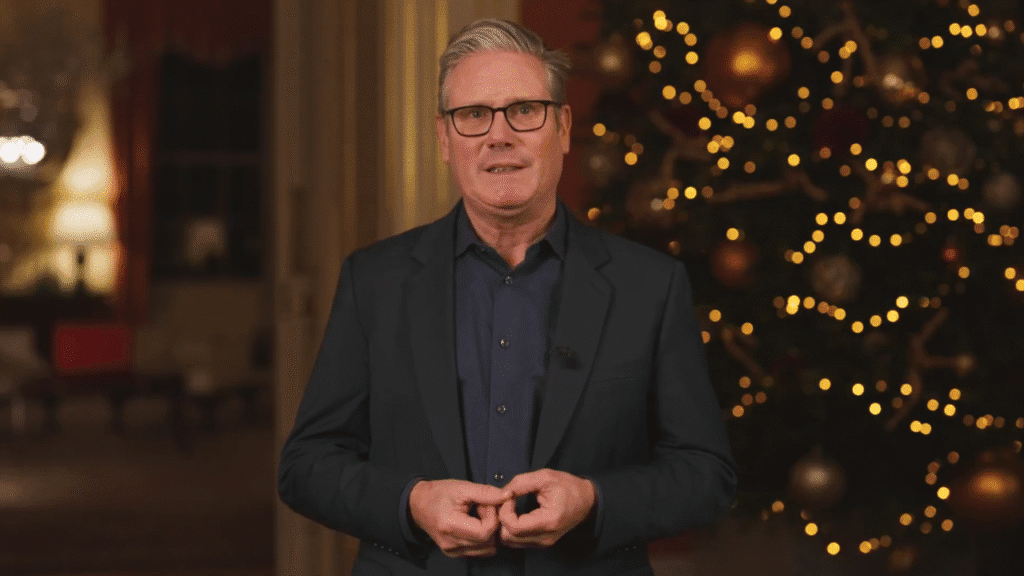
CEO, Chamber GroupFrom unity and service to reflection and resolve, this year’s Christmas messages offer a revealing snapshot of how the main parties see the country – and themselves – as Britain looks ahead to the year to come. (Image: ‘X’ @keir_starmer/@PolitlcsUK)
Christmas messages are meant to sit above day-to-day politics, but they rarely sit outside it. In tone, emphasis and what is left unsaid, they offer a useful indicator of how party leaders want to be seen at the close of the year and what mood they believe the country is in.
This year’s messages from the main party leaders, the Prime Minister, the Leader of the Opposition and the Liberal Democrat leader point to three distinct political positions as the UK heads into the New Year.
Sir Keir Starmer – reassurance, service, and national responsibility
The Prime Minister’s Christmas message is consciously traditional in tone. Sir Keir Starmer leans heavily on the language of family, community, and service, placing particular emphasis on NHS staff, emergency workers, volunteers, and the Armed Forces.
His focus on Christian values, goodwill and social responsibility reflects a desire to speak to the country as a whole rather than to any particular constituency. There is no policy detail, but there is a clear moral framing – that government’s role is to support those struggling with the cost of living, while individuals also look out for one another.
Politically, the message reinforces a leadership style built around public service. Starmer positions himself as a custodian of national life rather than a campaigner, signalling continuity and calm as the defining traits of his premiership. A tough position to communicate with significant difficulties in the polls.
Kemi Badenoch – reflection, faith, and personal resilience
Kemi Badenoch’s message is more personal in tone, rooted in family life, faith and reflection on the year gone by. She speaks candidly about parenthood, the speed of change, and the importance of remembering the Christian meaning of Christmas alongside its celebrations.
She also explicitly reflects on her first year as Leader of the Opposition, describing it as both challenging and rewarding. This combination of personal narrative and political reflection underlines where the Conservatives currently sit – rebuilding, regrouping, and seeking to re-establish a sense of purpose.
Rather than attacking the government, Badenoch focuses on gratitude, resilience and looking ahead. It is a message aimed as much at her own party as the country, signalling renewal and determination. As the Party regroups from their worst defeat, there is definite optimism in this Christmas message.

Sir Ed Davey – symbolism, solidarity, and shared values
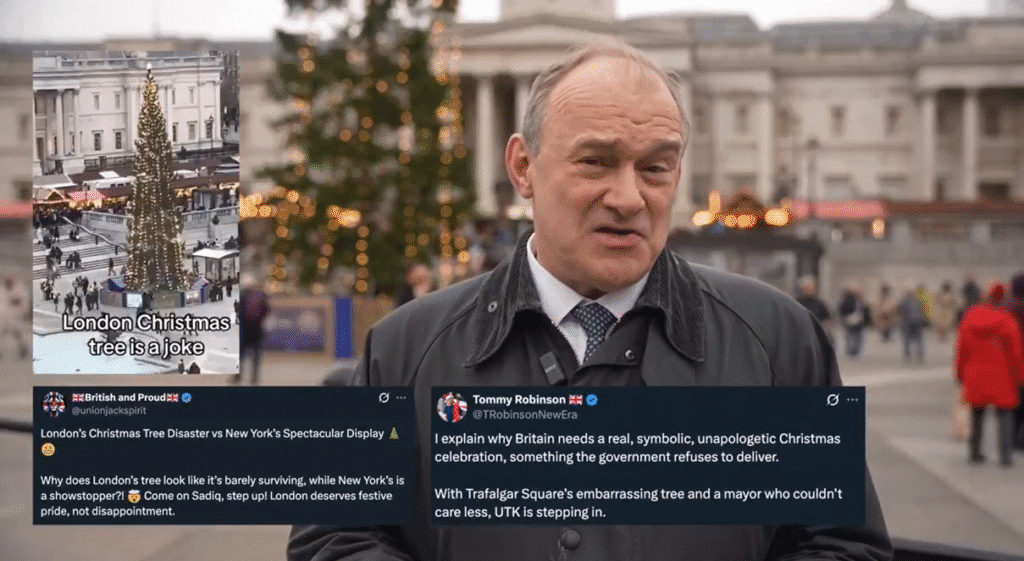
Sir Ed Davey’s Christmas message takes a more distinctive approach, built around the symbolism of the Trafalgar Square Christmas tree and the criticism on social media. By recounting its origins as a gift from Norway after the Second World War, Davey connects Christmas to themes of international solidarity, freedom and standing together in difficult times.
The message aligns closely with Liberal Democrat positioning – outward looking, values driven and quietly internationalist. Davey explicitly links past sacrifice to present challenges, including support for Ukraine, while framing Christmas as a moment of generosity and hope.
It is a softer, reflective intervention, reinforcing the party’s role as a moral and civic voice – potentially one that may hold the keys to power in future years to come.
/@PolitlcsUK)
Notable absences – Greens and Reform
Two figures are notably absent so far. The Green Party leader’s Christmas message has not yet been released and is expected to be timed alongside The King’s Christmas Message, a choice that may be designed to maximise visibility but risks comparison…
Equally, Nigel Farage has not yet released a Christmas message for Reform. How does the party intend to frame itself during a season traditionally associated with unity and goodwill…
Final thought – three parties, three states of mind
Taken together, these messages offer a revealing snapshot of British politics as the year closes.
Labour speaks from government, prioritising reassurance, stability, and national service. The Conservatives speak from opposition, focused on rebuilding confidence, identity, and momentum. The Liberal Democrats continue to position themselves as the conscience of the political landscape, emphasising values and internationalism.
In their ‘subtle’ way, each leader uses Christmas to reinforce how they want to be perceived in the year ahead – as a steady hand, a renewed challenger, or a principled voice.
As Britain enters the New Year, and elections on the horizon across the four nations, all parties will take this time to rest, reflect, and recuperate – expect some interesting ‘debate’ over Christmas dinners across the country…
Merry Christmas and see you in the New Year!