
Great British Energy’s inaugural Strategic Plan commits to delivering 15 GW of clean power and storage, mobilising £15 billion of private investment and backing over 1,000 local and community energy projects by 2030, while building a UK-based supply chain and reinvesting returns into new jobs and capacity.
Great British Energy (GBE) has marked a significant moment in the UK’s energy transition with the publication of its first Strategic Plan, setting out how the new publicly owned company intends to turn political ambition into bricks, steel and megawatts over the rest of the decade.
Launched in 2024 and backed by over £8.3 billion in capital alongside its sister company GBE Nuclear, GBE was created to act as a national champion for clean, home-grown energy. Its remit is deliberately broad: accelerate deployment of renewables and storage, strengthen industrial supply chains, and ensure that the economic and social dividends of the transition flow back to UK workers, communities and taxpayers.
From remit to measurable outcomes
The new Plan translates that remit into a clear set of outcomes. By 2030, GBE expects its investments to help deliver at least 15 gigawatts of clean generation and storage – enough to power the equivalent of almost ten million homes – and to mobilise around £15 billion of private capital over time through long term partnerships and co investment. It also promises support for more than 1,000 local and community energy projects and at least 10,000 jobs, with a particular focus on places historically dependent on oil and gas. Returns from the assets GBE owns on the public’s behalf will be ploughed back into new capacity and further opportunities.
Public ownership with purpose
Chief Executive Dan McGrail describes this as “public ownership with purpose” rather than a return to an old style, centralised utility model. GBE will act as a developer and equity investor, not simply a funding agency. By taking carefully judged risks in areas where private capital is hesitant – for example emerging technologies, earlier stage projects or new commercial models – it aims to de risk projects and crowd in private partners, rather than crowd them out.
British resources, British engineering, British ownership
Chair Juergen Maier situates this approach in a wider story about industrial renewal. After decades in which key energy assets have been sold overseas and domestic manufacturing hollowed out, GBE is intended as part of a new settlement: British resources, British engineering and British ownership working together to deliver clean power, secure supply and high-quality employment. That ambition is given concrete expression in the Plan through a dedicated £1 billion “Energy – Engineered in the UK” programme, which will target supply chain bottlenecks, support factories and skills, and align with the government’s Industrial Strategy and Clean Energy Industries Sector Plan.
The scale of the challenge
Underpinning all of this is a stark assessment of the challenge. National Energy System Operator analysis shows that electricity demand will rise sharply as transport, heating, industry and data centres electrify. By 2035 Britain may need tens of gigawatts more capacity than is currently in the pipeline, and key technologies such as offshore wind will have to scale many times over to keep the UK on track for net zero and to avoid continued exposure to fossil fuel price shocks.
Three investment priorities for Great British Energy
GBE’s response is organised around three investment priorities.
- GBE Local: making community energy mainstream: The first is GBE Local, a business line dedicated to making local and community energy mainstream. Here GBE will work alongside the Department for Energy Security and Net Zero on a joint Local Power Plan, due in 2026, which will articulate a shared vision for community and municipal renewables, clarify institutional roles, and tackle the policy and finance barriers that have held the sector back. The aim is not only to add clean generation, but to hard wire public participation and benefit into the transition through grants, concessional loans, shared ownership models and blended finance. Evidence cited in the Plan suggests that community ownership improves public acceptance, unlocks additional capital through community share offers and enhances system resilience by spreading generation. GBE Local is already visible on the ground. A £255 million solar scheme is cutting bills in around 250 schools, more than 270 NHS sites and a number of military estates, with lifetime savings expected to run into hundreds of millions of pounds and be reinvested in frontline services. The GBE Community Fund is backing early-stage community energy projects, helping local groups turn ideas into investable proposals. Over time, an open access GBE Local platform will offer an end-to-end route for councils, housing providers, community organisations and others to develop onsite generation, aggregating demand and creating a trusted delivery partner network.
- Onshore Energy: unlocking public land: The second priority is Onshore Energy, where GBE will focus on unlocking the potential of public land and investing strategically in generation and storage that can provide flexibility and support grid stability. In practice this is likely to mean onshore wind and solar, batteries and other forms of flexible capacity, developed in partnership with public landowners and private developers. The Plan signals an intention to evolve this into a fully-fledged independent power producer business over time, building in house development capability and expertise across a range of technologies.
- Offshore Energy: scaling the next wave of wind: The third pillar is Offshore Energy, particularly floating and deep-water wind in Scottish and Celtic Sea waters. These projects are central to future scenarios that see offshore wind capacity rising several fold by the mid-2030s, yet only a small fraction of the required floating capacity has been deployed to date. GBE will work to de risk this frontier, supporting pre commercial projects and investing in shared infrastructure and supply chains that can anchor long term growth.
Working with markets, not replacing them
Throughout, GBE stresses that it is not a substitute for the wider market. The Plan repeatedly emphasises collaboration: more than 100 organisations contributed to its development through workshops and roundtables in Edinburgh, London, Belfast and Cardiff. The company expects to partner with private developers, institutional investors, local authorities and community groups, offering not just capital but technical expertise, templates and guidance to help structure projects and embed community benefit.
From slogan to strategy
Politically, the Plan allows ministers to demonstrate that GBE is more than a slogan. Energy Secretary Ed Miliband presents the company as a national champion that will help the UK “reap the benefits of Britain’s natural resources” and deliver “an abundance of clean, homegrown energy for British people and thousands of good jobs across the country”. The document anchors that rhetoric in specific metrics, timelines and programmes, while also making clear that GBE operates at arm’s length from government, with independence framed as essential to making credible, evidence-based investment decisions.
Uncertainties, learning and adaptation
There are, of course, open questions. The Plan is candid that GBE is at the start of its journey and that the next few years will focus on building core capabilities, recruiting and developing its workforce, and delivering early commercial successes that prove the model. It also acknowledges that electricity demand growth, technology costs and policy frameworks remain uncertain, requiring the organisation to update its strategy every two years and adapt as markets evolve.
A fairer, faster energy future
Nonetheless, today’s publication is a clear statement of intent. It sketches a future in which the UK’s shift to clean energy is not only faster, but fairer: with communities owning assets in their area, public services cutting bills through onsite generation, and British factories and engineers supplying more of the kit that keeps the lights on. If GBE can deliver on its promise to combine public purpose with commercial discipline, it will become a central institution in that story – and a visible symbol of the UK choosing to lead, rather than follow, in the next energy era.
Report Summary
GBE has today published its first Strategic Plan, setting out how the UK’s new publicly owned energy company will accelerate clean power deployment, crowd in private investment, and expand public and community ownership of energy assets over the rest of this decade. The Plan is GBE’s formal response to the Energy Secretary’s Statement of Strategic Priorities and covers its initial five-year planning horizon, while looking ahead to 2035, 2050 and beyond.
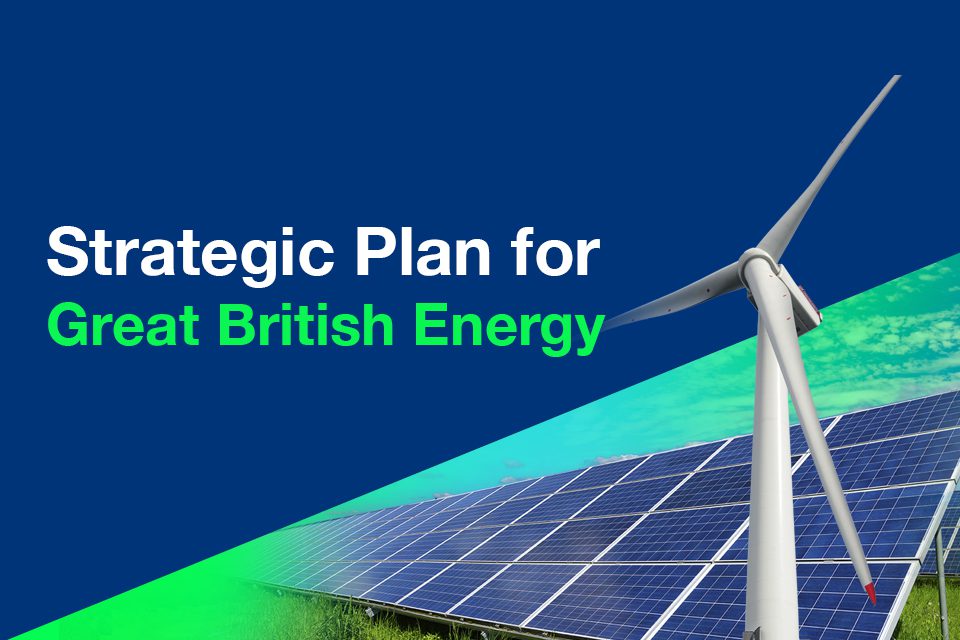
GBE’s mission is framed as “public ownership of energy with purpose”: using public capital and an active developer role to accelerate clean generation and the industries that support it, while ensuring that workers and communities share in the benefits of home grown, secure energy. The company will develop, own and operate clean energy assets, taking equity stakes and recycling returns into further projects rather than distributing profits to shareholders.
From GBE spend between now and 2030, the Plan commits to a portfolio that will deliver at least 15 gigawatts of clean generation and storage capacity, mobilise around £15 billion of private finance over time, support more than 1,000 local and community energy projects, and directly back over 10,000 jobs, including in areas historically reliant on oil and gas. By 2030 GBE expects to have an income generating portfolio and to be on a pathway to whole company profitability in the longer term.
Delivery will be organised around three priority business areas. GBE Local will scale local and community energy, including through a joint Local Power Plan with the Department for Energy Security and Net Zero that will clarify roles, address policy and regulatory barriers, and provide grants, concessional loans and blended finance to unlock projects. Onshore Energy will focus on unlocking the energy potential of public land and investing in flexible generation and storage that support grid stability. Offshore Energy will concentrate on deep water floating wind in Scotland and the Celtic Sea, where GBE aims to help close the gap between current deployment and the levels required under future energy scenarios.
Across these priorities, a £1 billion “Energy – Engineered in the UK” programme will support domestic supply chains, manufacturing and skills so that more of the value from the energy transition is retained in the UK. Early activity includes a £255 million solar programme for schools, hospitals and military sites and the GBE Community Fund, which provides grants to community energy schemes.
GBE is headquartered in Aberdeen and operates independently of government within the framework of the Great British Energy Act and the Statement of Strategic Priorities. The Plan positions the organisation as a long-term national institution, working in partnership with industry, investors, local government and communities to deliver an energy system that is “clean, secure, yours”.
To find out more about Curia’s Clean Energy and Environment Research Group, contact Partnerships Director, Ben McDermott ben.mcdermott@curiauk.com