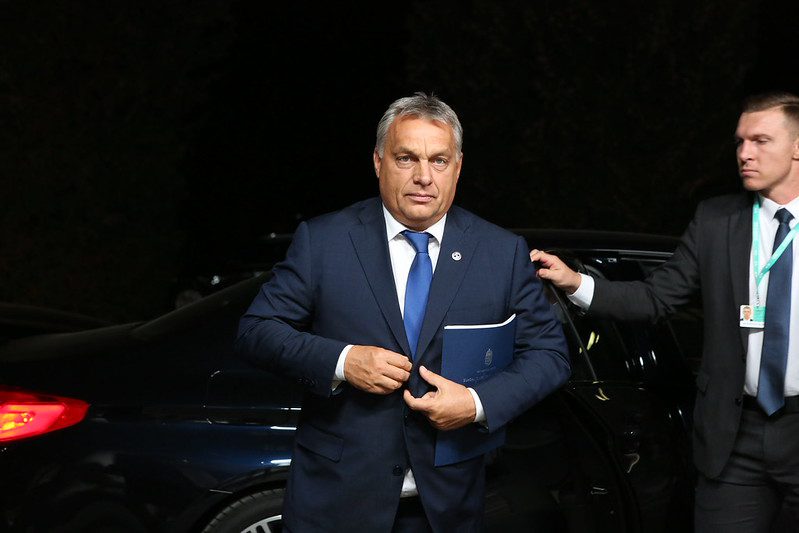

2026 will see a series of key elections across multiple continents, with the potential to shift global allegiances, reshape regional security, and realign national ideologies. As geopolitical tensions deepen, the outcomes of these votes may determine whether nations gravitate closer to Washington or distance themselves from Western institutions in favour of alternative power centres.
In the United States, Donald Trump faces pivotal midterm elections in November. With the control of Congress at stake, the results could significantly weaken or reinforce the administration’s foreign policy agenda. A hostile legislature would complicate efforts to project American power abroad, constraining budgets, authorisations and diplomatic leverage. Unified control, however, could embolden Washington’s increasingly assertive approach to global leadership, raising questions about sustainability and restraint.

Image: President of Colombia Gustavo Petro at his 2022 inauguration – USAID
In South America, a general election in Brazil and a presidential election in Colombia – two influential regional powers – will be closely watched. Both nations play central roles in regional diplomacy and economic stability, making their electoral outcomes critical to the future of US influence across the continent. With ideological divides widening and candidates from across the political spectrum competing for power, these elections could either reinforce cooperation or expose Latin America to renewed instability.
Beyond the Americas, elections in Israel and Nepal underline how domestic politics are increasingly shaped by security pressures and geopolitical competition. In Israel, a vote expected by late 2026 will unfold under the strain of prolonged conflict, institutional division and coalition fragility, with implications for regional stability. In Nepal, following a year of political violence and leadership upheaval, voters face competing visions of reform, tradition and national identity that will resonate far beyond Kathmandu.
Europe, meanwhile, faces its own political tests. Sweden’s September election is expected to cement or challenge the country’s evolving stance on immigration and its firm opposition to Russia following NATO accession. Further east, Hungary’s parliamentary election will act as a referendum on the durability of illiberal governance within the European Union, with consequences for democratic norms and European cohesion in 2026.
The United States: Global Legitimacy and Domestic Constraint
Throughout 2025, the White House has faced sustained pressure from Congress, where Democratic influence has shaped both legislative outcomes and public debate. Coordinated resistance has demonstrated how effectively legislative institutions can constrain executive ambition, particularly on spending and foreign engagement.
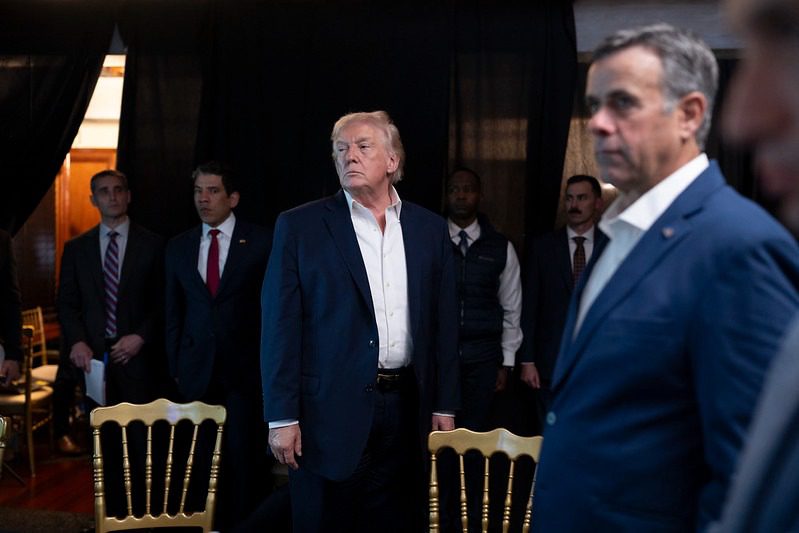
Image: President Trump at his Mar-a-Lago Residence – The White House / Molly Riley
Control of Congress after November will determine the scope of American power projection. Congressional authority over budgets and oversight gives lawmakers decisive influence over Washington’s ability to sustain overseas commitments. Should Republicans fail to retain dominance, Trump’s vision of reasserting American primacy risks being curtailed by funding blocks and investigations, forcing a more reactive foreign policy posture.
On the other hand, a Congress aligned with the White House would remove many institutional barriers. Such unity could enable a more unilateral approach to international affairs, restoring decisiveness but increasing the risk of overreach. Markets, allies and adversaries all respond to signals of political cohesion or dysfunction in Washington. At stake is not simply legislative control, but whether the United States can operate as a coherent global actor in an increasingly competitive environment.
Brazil and Colombia: Regional Anchors Under Pressure
Brazil’s 2026 general election will test whether Latin America’s largest economy continues to act as a stabilising force or becomes a source of renewed volatility. As both a diplomatic heavyweight and environmental power broker, Brazil’s domestic political direction carries disproportionate global consequences. Commitment to multilateralism and environmental enforcement strengthens Brazil’s international leverage, particularly with Europe, but carries domestic political costs. A nationalist pivot may attract short-term investment while undermining diplomatic credibility and regional cohesion.
Colombia’s election presents a parallel dilemma. The country must balance social reform with persistent insecurity, organised crime and uneven peace implementation. As a key US ally and frontline state in managing migration and narcotics flows, instability in Bogotá would reverberate across northern South America. The outcome will signal whether Colombia consolidates its post-conflict trajectory or reverts to a more security-driven political model with wider regional consequences.
Israel: Netanyahu, Institutional Power and the Orbán Parallel
Israel’s next legislative election, due by late 2026 unless triggered early, is set to revolve around the leadership of Benjamin Netanyahu and the long-term direction of the Israeli state. After years in power, Netanyahu has come to embody a governing model that prioritises executive authority, security maximalism and coalition survival over institutional restraint. The election will therefore function as a referendum not only on war leadership, but on the structure of Israeli democracy itself.

Image: Israeli Prime Minister Benjamin Netanyahu at the Mossad Excellence Ceremony – Amos Ben Gershom / GPO
Central to this contest is the effort to curtail judicial oversight, a move that has drawn sustained domestic protest and international concern. Critics argue these reforms mirror the illiberal strategies pursued by leaders such as Hungary’s Viktor Orbán, consolidating power through weakened checks and loyal coalition partners. Reliance on ultra-Orthodox and nationalist parties has further entrenched this dynamic, particularly over conscription and civil obligation.
A Netanyahu-led continuation would likely cement a strong executive, diminished judicial constraint and a security-first posture. A centrist alternative would not necessarily soften Israel’s military stance, but could recalibrate institutional norms and stabilise relations with Western allies increasingly uneasy with democratic erosion. In a volatile Middle East, Israel’s 2026 election will shape both regional stability and its international legitimacy.
Nepal: Internal Identity but External Consequence
Nepal’s election highlights how domestic instability in smaller states increasingly carries geopolitical weight. Competing visions of reform, entrenched party politics and renewed appeals to traditional authority reflect deeper tensions over national identity.
Nepal’s strategic location ensures internal political debates are never purely domestic. Political fragmentation invites external leverage, while stability strengthens autonomy. The 2026 election will therefore influence not only governance in Kathmandu but the balance of power in a region where major actors increasingly intersect.
With political violence toppling the right-winged government under Prime Minister, K.P Sharma Oli, in September 2025, many across the mountainous nation are calling for a liberal government and the restoration of the Monarchy, abolished in 2008. This possibility of a sudden change to a liberal, west-leaning nation may put Beijing and Moscow on high-alert.
Sweden and Hungary: Europe’s Security Fault Line
Sweden’s September election will function as a bellwether for Europe’s broader political trajectory. Immigration and social cohesion dominate domestic debate, while security policy has been reshaped by confrontation with Russia following NATO accession. Sustaining public support for deterrence and defence spending remains politically costly, and any recalibration would resonate across Europe’s northern flank.
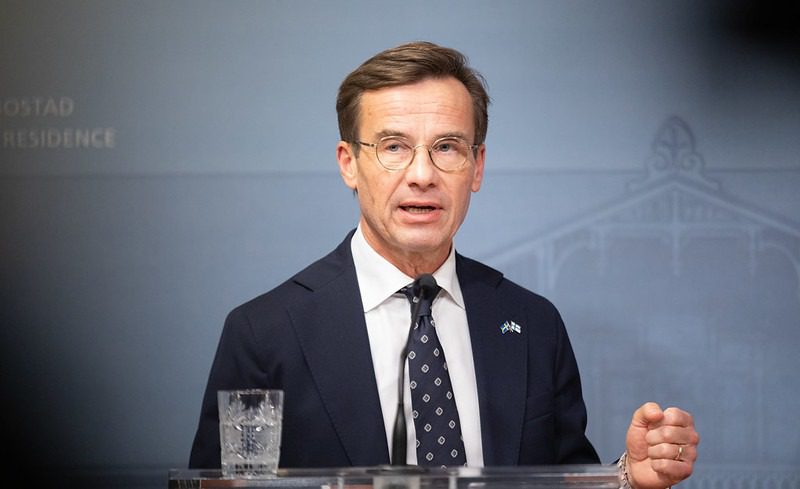
Image: Prime Minister of Sweden Ulf Kristersson – Lauri Heikkinen / Valtioneuvoston Kanslia
Hungary’s parliamentary election, expected in 2026, sits at the heart of Europe’s eastern security dilemma. Positioned as a geographic and political barrier between Russia and Western Europe, Hungary’s alignment carries strategic weight. Under Viktor Orbán, Budapest has pursued a right-wing nationalist model sceptical of EU authority and ambivalent towards Moscow, often complicating European consensus on sanctions and security policy.
A renewed right-wing mandate would likely entrench this posture, weakening Europe’s eastern defence cohesion. A shift towards a left-wing or centrist government, while unlikely to dismantle Orbán’s system overnight, could realign Hungary more firmly with EU and NATO priorities, strengthening the continent’s collective response to Russian pressure. Hungary’s vote therefore represents a choice between acting as a barrier against Russian influence, or continuing to dilute Europe’s strategic unity.
Featured Image via Annika Haas (EU2017EE)